Tse Gary, Lai Eric T H, Lee Alex P W, Yan Bryan P, Wong Sunny H
Li Ka Shing Faculty of Medicine, School of Biomedical Sciences, The University of Hong KongHong Kong, China; Department of Medicine and Therapeutics, The Chinese University of Hong KongHong Kong, China.
Li Ka Shing Faculty of Medicine, School of Biomedical Sciences, The University of Hong Kong Hong Kong, China.
Front Physiol. 2016 Jun 14;7:230. doi: 10.3389/fphys.2016.00230. eCollection 2016.
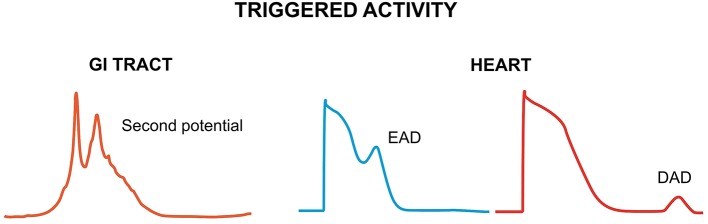
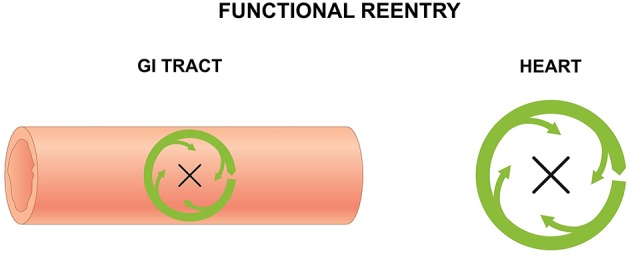
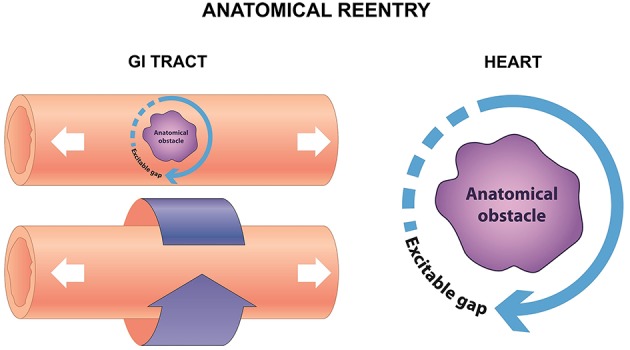
Disruptions in the orderly activation and recovery of electrical excitation traveling through the heart and the gastrointestinal (GI) tract can lead to arrhythmogenesis. For example, cardiac arrhythmias predispose to thromboembolic events resulting in cerebrovascular accidents and myocardial infarction, and to sudden cardiac death. By contrast, arrhythmias in the GI tract are usually not life-threatening and much less well characterized. However, they have been implicated in the pathogenesis of a number of GI motility disorders, including gastroparesis, dyspepsia, irritable bowel syndrome, mesenteric ischaemia, Hirschsprung disease, slow transit constipation, all of which are associated with significant morbidity. Both cardiac and gastrointestinal arrhythmias can broadly be divided into non-reentrant and reentrant activity. The aim of this paper is to compare and contrast the mechanisms underlying arrhythmogenesis in both systems to provide insight into the pathogenesis of GI motility disorders and potential molecular targets for future therapy.
电兴奋在心脏和胃肠道中有序激活与恢复过程的中断可导致心律失常的发生。例如,心脏心律失常易引发血栓栓塞事件,导致脑血管意外和心肌梗死,甚至心脏性猝死。相比之下,胃肠道中的心律失常通常不会危及生命,其特征也远未明确。然而,它们与多种胃肠动力障碍的发病机制有关,包括胃轻瘫、消化不良、肠易激综合征、肠系膜缺血、先天性巨结肠、慢传输型便秘,所有这些都与显著的发病率相关。心脏和胃肠道心律失常大体上都可分为非折返性和折返性活动。本文旨在比较和对比这两个系统中心律失常发生的潜在机制,以深入了解胃肠动力障碍的发病机制以及未来治疗的潜在分子靶点。