Lopes Leal Patrícia, Varón-López Maryeimy, Gonçalves de Oliveira Prado Isabelle, Valentim Dos Santos Jessé, Fonsêca Sousa Soares Cláudio Roberto, Siqueira José Oswaldo, de Souza Moreira Fatima Maria
Universidade Federal de Lavras, Soil Science Department, Graduate Programme of Soil Science, Lavras, MG, Brazil; Universidade Federal da Bahia, Multidisciplinary Institute in Health, Vitória da Conquista, BA, Brazil.
Universidade Federal de Lavras, Programme of Agricultural Microbiology Biology Department, Lavras, MG, Brazil(1).
Braz J Microbiol. 2016 Oct-Dec;47(4):853-862. doi: 10.1016/j.bjm.2016.06.001. Epub 2016 Jun 24.
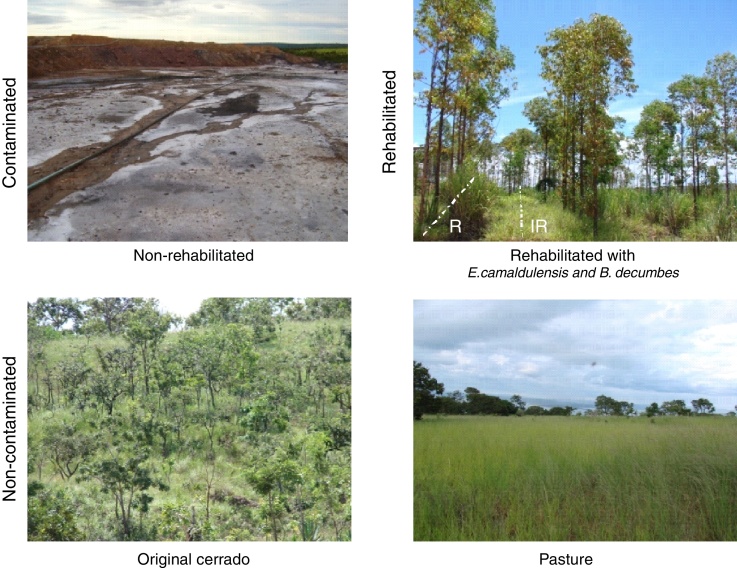
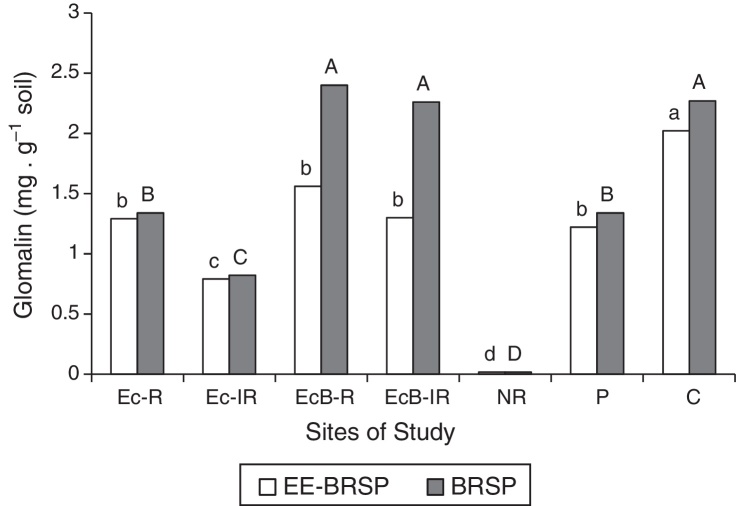
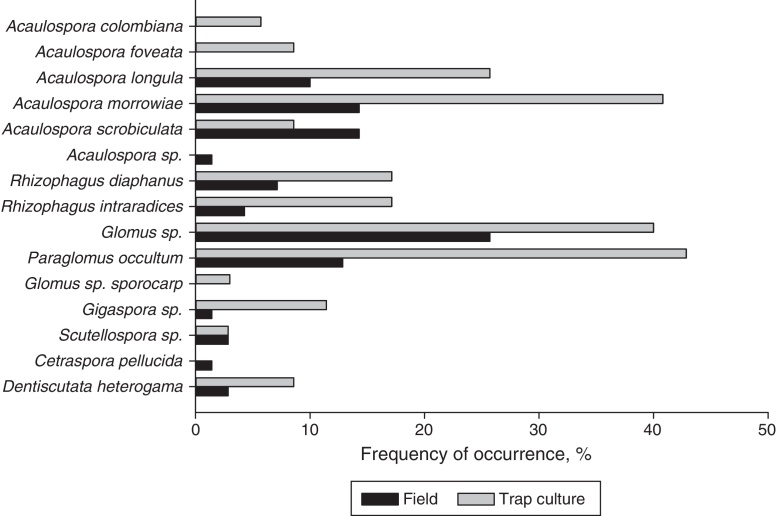
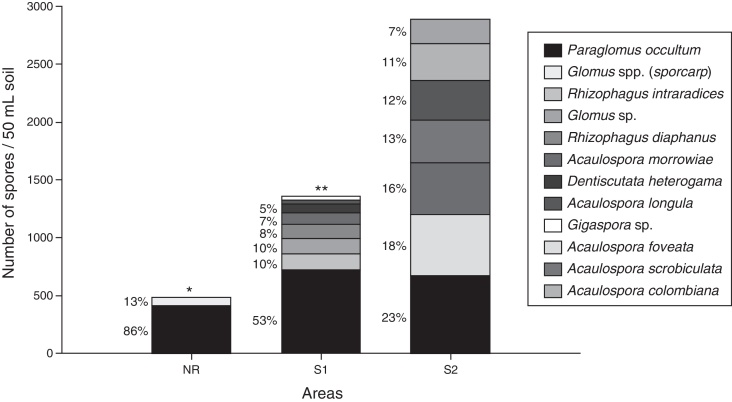
Spore counts, species composition and richness of arbuscular mycorrhizal fungi, and soil glomalin contents were evaluated in a soil contaminated with Zn, Cu, Cd and Pb after rehabilitation by partial replacement of the contaminated soil with non-contaminated soil, and by Eucalyptus camaldulensis planting with and without Brachiaria decumbens sowing. These rehabilitation procedures were compared with soils from contaminated non-rehabilitated area and non-contaminated adjacent soils. Arbuscular mycorrhizal fungi communities attributes were assessed by direct field sampling, trap culture technique, and by glomalin contents estimate. Arbuscular mycorrhizal fungi was markedly favored by rehabilitation, and a total of 15 arbuscular mycorrhizal fungi morphotypes were detected in the studied area. Species from the Glomus and Acaulospora genera were the most common mycorrhizal fungi. Number of spores was increased by as much as 300-fold, and species richness almost doubled in areas rehabilitated by planting Eucalyptus in rows and sowing B. decumbens in inter-rows. Contents of heavy metals in the soil were negatively correlated with both species richness and glomalin contents. Introduction of B. decumbens together with Eucalyptus causes enrichment of arbuscular mycorrhizal fungi species and a more balanced community of arbuscular mycorrhizal fungi spores in contaminated soil.
通过用未受污染土壤部分替代受污染土壤,以及在种植和未种植俯仰臂形草的情况下种植赤桉,对锌、铜、镉和铅污染土壤修复后的丛枝菌根真菌的孢子数量、物种组成和丰富度以及土壤球囊霉素含量进行了评估。将这些修复程序与来自未修复污染区域的土壤和相邻未受污染土壤进行了比较。通过直接田间采样、诱捕培养技术以及球囊霉素含量估算来评估丛枝菌根真菌群落属性。修复措施对丛枝菌根真菌有显著促进作用,研究区域共检测到15种丛枝菌根真菌形态型。球囊霉属和无梗囊霉属的物种是最常见的菌根真菌。在成行种植赤桉并在行间距播种俯仰臂形草的修复区域,孢子数量增加了多达300倍,物种丰富度几乎翻倍。土壤中重金属含量与物种丰富度和球囊霉素含量均呈负相关。将俯仰臂形草与赤桉一起引入可使丛枝菌根真菌物种富集,并使污染土壤中丛枝菌根真菌孢子群落更加平衡。