Mitch William E, Remuzzi Giuseppe
Department of Medicine, Nephrology Division, Selzman Institute for Kidney Health, Baylor College of Medicine, M/S: BCM 395, One Baylor Plaza, ABBR R703, Houston, TX, 77030, USA.
IRCCS - Istituto di Ricerche Farmacologiche Mario Negri, Bergamo, Italy.
BMC Nephrol. 2016 Jul 11;17(1):80. doi: 10.1186/s12882-016-0283-x.
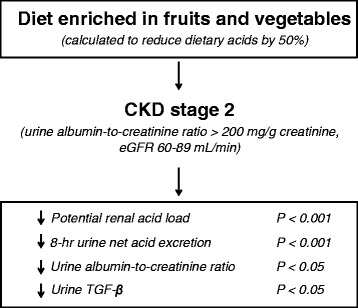
Here we revisit how dietary factors could affect the treatment of patients with complications of chronic kidney disease (CKD), bringing to the attention of the reader the most recent developments in the field. We will briefly discuss five CKD-induced complications that are substantially improved by dietary manipulation: 1) metabolic acidosis and the progression of CKD; 2) improving the diet to take advantage of the benefits of angiotensin converting enzyme inhibitors (ACEi) on slowing the progression of CKD; 3) the diet and mineral bone disorders in CKD; 4) the safety of nutritional methods utilizing dietary protein restriction; and 5) evidence that new strategies can treat the loss of lean body mass that is commonly present in patients with CKD.
在此,我们重新审视饮食因素如何影响慢性肾脏病(CKD)并发症患者的治疗,让读者关注该领域的最新进展。我们将简要讨论五种通过饮食调控可显著改善的CKD引发的并发症:1)代谢性酸中毒与CKD的进展;2)改善饮食以利用血管紧张素转换酶抑制剂(ACEi)对减缓CKD进展的益处;3)CKD中的饮食与矿物质骨病;4)采用饮食蛋白质限制的营养方法的安全性;5)新策略可治疗CKD患者中常见的瘦体重丢失的证据。