Jafari Tahereh, Moharreri Ehsan, Amin Alireza Shirazi, Miao Ran, Song Wenqiao, Suib Steven L
Institute of Materials Science, University of Connecticut, 91 North Eagleville Road, Storrs, CT 06269-3222, USA.
Department of Chemistry, University of Connecticut, 55 North Eagleville Road, Storrs, CT 06269-3060, USA.
Molecules. 2016 Jul 9;21(7):900. doi: 10.3390/molecules21070900.
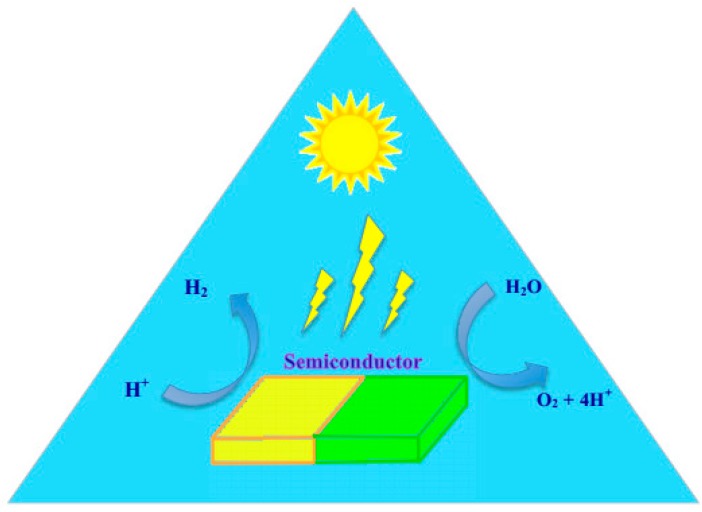
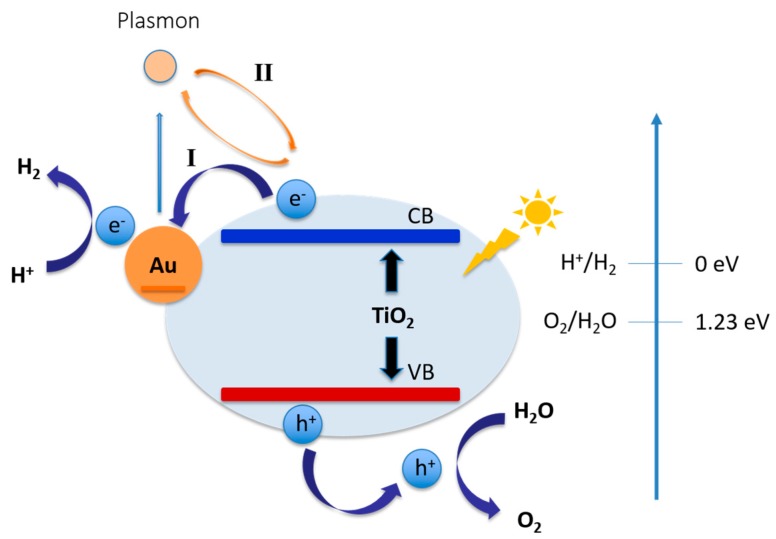
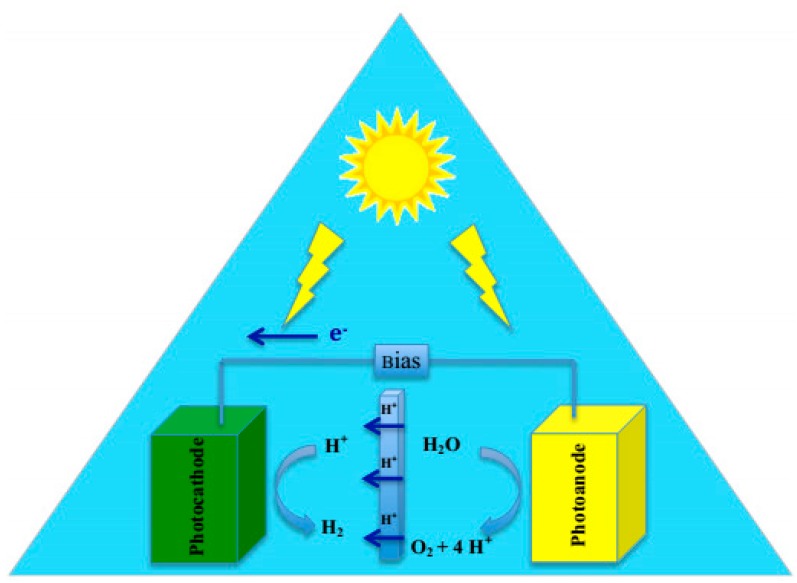
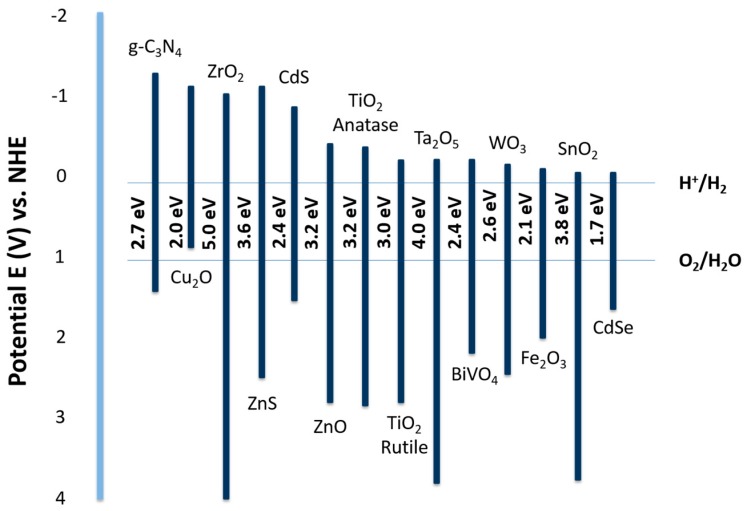
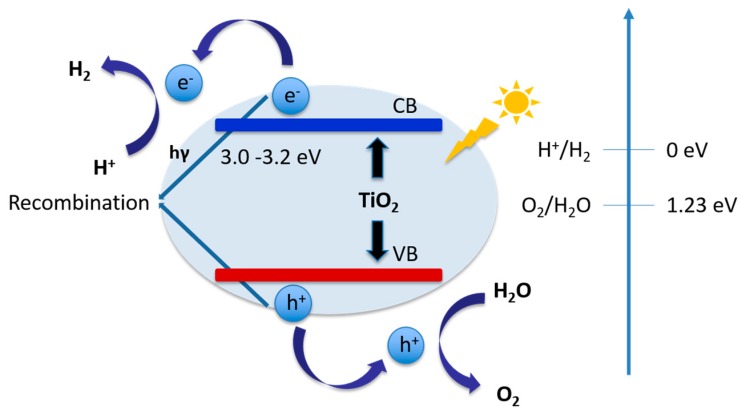
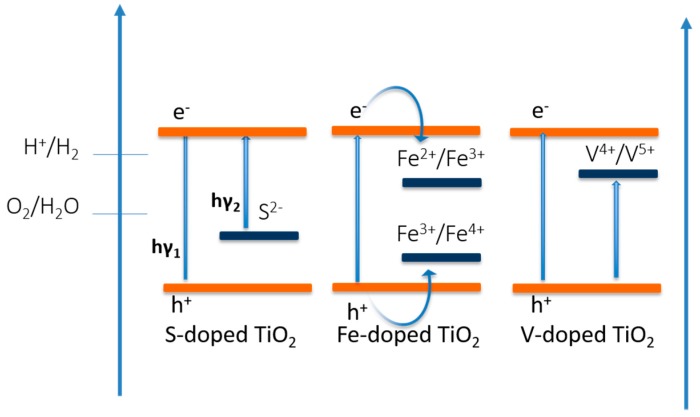
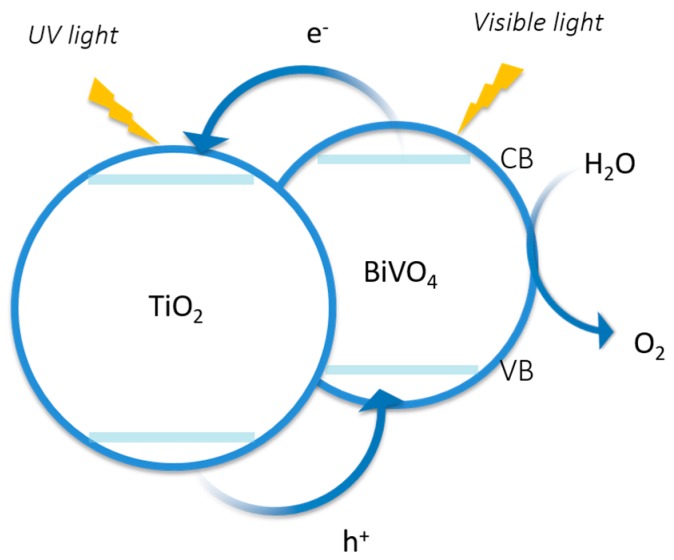
Photocatalytic water splitting using sunlight is a promising technology capable of providing high energy yield without pollutant byproducts. Herein, we review various aspects of this technology including chemical reactions, physiochemical conditions and photocatalyst types such as metal oxides, sulfides, nitrides, nanocomposites, and doped materials followed by recent advances in computational modeling of photoactive materials. As the best-known catalyst for photocatalytic hydrogen and oxygen evolution, TiO₂ is discussed in a separate section, along with its challenges such as the wide band gap, large overpotential for hydrogen evolution, and rapid recombination of produced electron-hole pairs. Various approaches are addressed to overcome these shortcomings, such as doping with different elements, heterojunction catalysts, noble metal deposition, and surface modification. Development of a photocatalytic corrosion resistant, visible light absorbing, defect-tuned material with small particle size is the key to complete the sunlight to hydrogen cycle efficiently. Computational studies have opened new avenues to understand and predict the electronic density of states and band structure of advanced materials and could pave the way for the rational design of efficient photocatalysts for water splitting. Future directions are focused on developing innovative junction architectures, novel synthesis methods and optimizing the existing active materials to enhance charge transfer, visible light absorption, reducing the gas evolution overpotential and maintaining chemical and physical stability.
利用阳光进行光催化水分解是一项很有前景的技术,能够在不产生污染物副产物的情况下提供高能量产出。在此,我们综述了该技术的各个方面,包括化学反应、物理化学条件以及光催化剂类型,如金属氧化物、硫化物、氮化物、纳米复合材料和掺杂材料,随后介绍了光活性材料计算建模的最新进展。作为光催化析氢和析氧最著名的催化剂,TiO₂ 在单独的一节中进行了讨论,同时也探讨了它所面临的挑战,如宽带隙、析氢过电位大以及产生的电子 - 空穴对快速复合。文中探讨了各种克服这些缺点的方法,如不同元素掺杂、异质结催化剂、贵金属沉积和表面改性。开发一种具有光催化耐腐蚀、可见光吸收、缺陷调控且粒径小的材料是有效完成阳光到氢气循环的关键。计算研究为理解和预测先进材料的态密度和能带结构开辟了新途径,并可能为合理设计用于水分解的高效光催化剂铺平道路。未来的方向集中在开发创新的结结构、新颖的合成方法以及优化现有的活性材料,以增强电荷转移、可见光吸收、降低析气过电位并保持化学和物理稳定性。