Kyrchanova Olga, Mogila Vladic, Wolle Daniel, Deshpande Girish, Parshikov Alexander, Cléard Fabienne, Karch Francois, Schedl Paul, Georgiev Pavel
Department of Genetics, Institute of Gene Biology, Russian Academy of Sciences, Moscow, Russia.
Department of Molecular Biology, Princeton University, Princeton, New Jersey, United States of America.
PLoS Genet. 2016 Jul 18;12(7):e1006188. doi: 10.1371/journal.pgen.1006188. eCollection 2016 Jul.
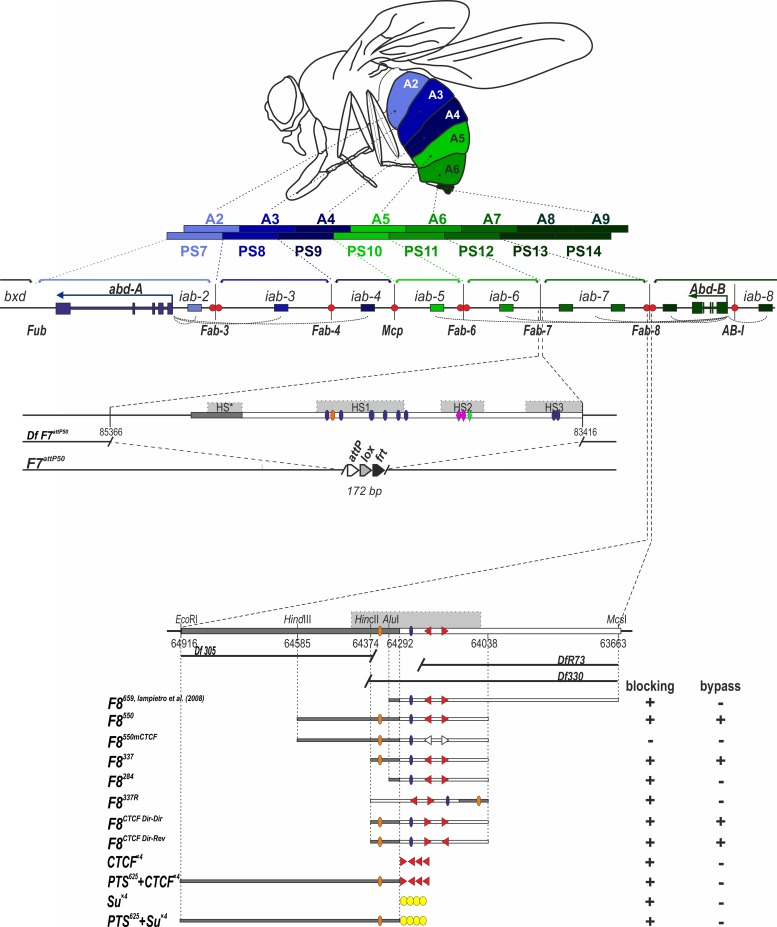
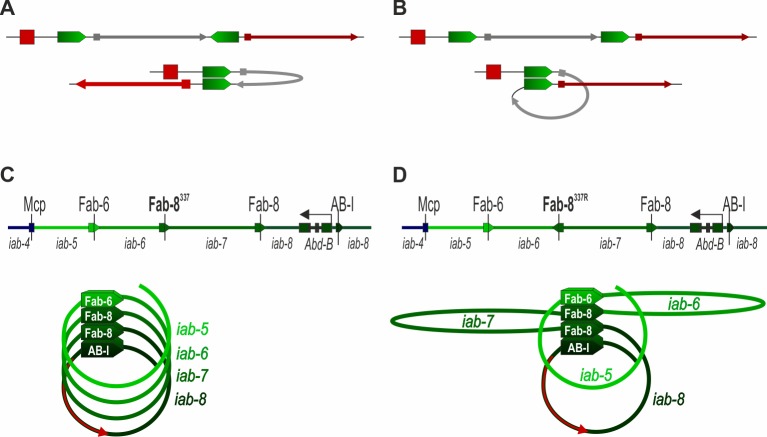
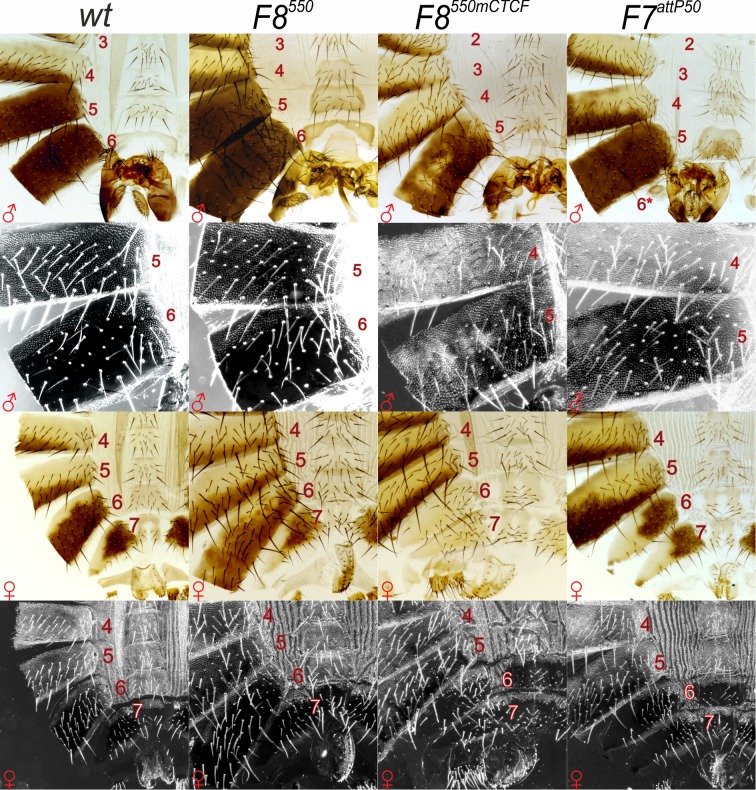
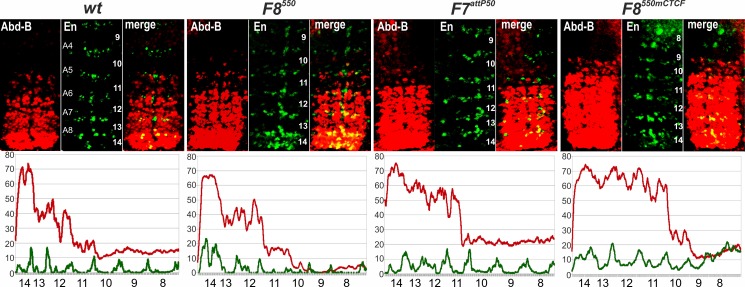
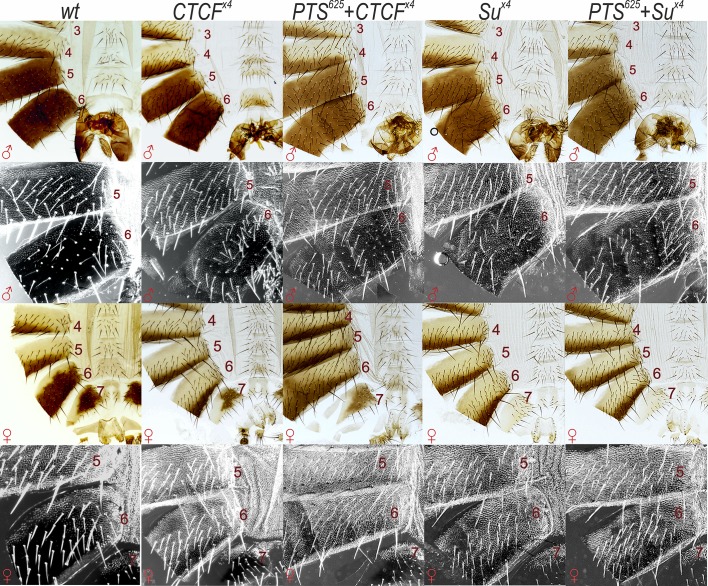
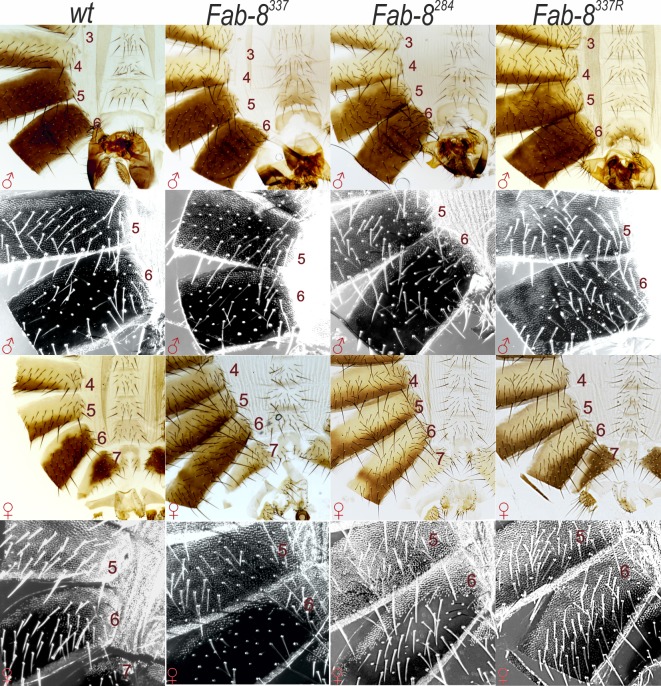
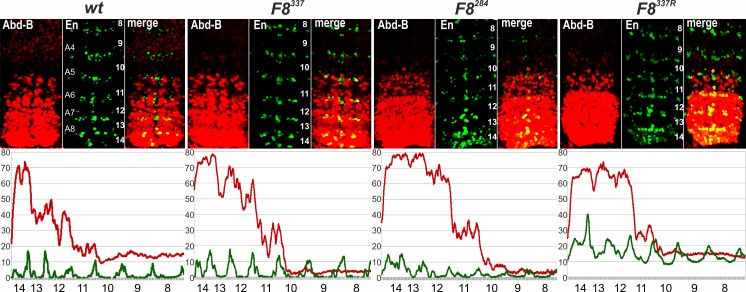
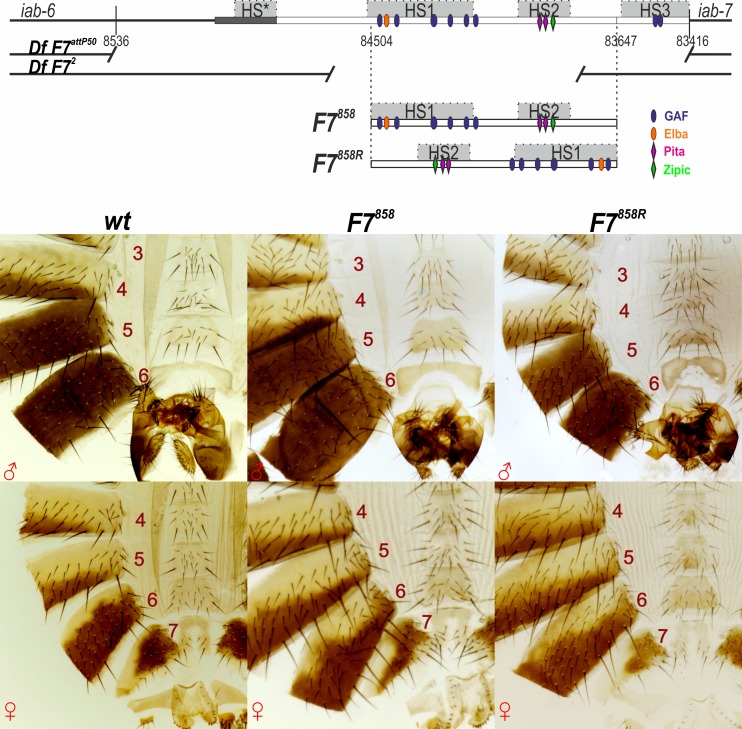
Functionally autonomous regulatory domains direct the parasegment-specific expression of the Drosophila Bithorax complex (BX-C) homeotic genes. Autonomy is conferred by boundary/insulator elements that separate each regulatory domain from its neighbors. For six of the nine parasegment (PS) regulatory domains in the complex, at least one boundary is located between the domain and its target homeotic gene. Consequently, BX-C boundaries must not only block adventitious interactions between neighboring regulatory domains, but also be permissive (bypass) for regulatory interactions between the domains and their gene targets. To elucidate how the BX-C boundaries combine these two contradictory activities, we have used a boundary replacement strategy. We show that a 337 bp fragment spanning the Fab-8 boundary nuclease hypersensitive site and lacking all but 83 bp of the 625 bp Fab-8 PTS (promoter targeting sequence) fully rescues a Fab-7 deletion. It blocks crosstalk between the iab-6 and iab-7 regulatory domains, and has bypass activity that enables the two downstream domains, iab-5 and iab-6, to regulate Abdominal-B (Abd-B) transcription in spite of two intervening boundary elements. Fab-8 has two dCTCF sites and we show that they are necessary both for blocking and bypass activity. However, CTCF sites on their own are not sufficient for bypass. While multimerized dCTCF (or Su(Hw)) sites have blocking activity, they fail to support bypass. Moreover, this bypass defect is not rescued by the full length PTS. Finally, we show that orientation is critical for the proper functioning the Fab-8 replacement. Though the inverted Fab-8 boundary still blocks crosstalk, it disrupts the topology of the Abd-B regulatory domains and does not support bypass. Importantly, altering the orientation of the Fab-8 dCTCF sites is not sufficient to disrupt bypass, indicating that orientation dependence is conferred by other factors.
功能自主的调控结构域指导果蝇双胸复合体(BX-C)同源异型基因的副节特异性表达。自主性由边界/绝缘子元件赋予,这些元件将每个调控结构域与其相邻结构域分隔开。在该复合体的九个副节(PS)调控结构域中的六个中,至少有一个边界位于该结构域与其靶同源异型基因之间。因此,BX-C边界不仅必须阻止相邻调控结构域之间的偶然相互作用,而且对于结构域与其基因靶标之间的调控相互作用必须是允许的(绕过)。为了阐明BX-C边界如何结合这两种相互矛盾的活性,我们采用了边界替换策略。我们表明,一个跨越Fab-8边界核酸酶超敏位点的337 bp片段,除了625 bp的Fab-8 PTS(启动子靶向序列)中的83 bp外其余全部缺失,能够完全挽救Fab-7缺失。它阻止了iab-6和iab-7调控结构域之间的串扰,并且具有绕过活性,尽管有两个中间边界元件,仍能使两个下游结构域iab-5和iab-6调控腹部B(Abd-B)转录。Fab-8有两个dCTCF位点,我们表明它们对于阻断和绕过活性都是必需的。然而,仅CTCF位点不足以实现绕过。虽然多聚化的dCTCF(或Su(Hw))位点具有阻断活性,但它们不能支持绕过。此外,全长PTS不能挽救这种绕过缺陷。最后,我们表明方向对于Fab-8替换的正常功能至关重要。虽然倒置的Fab-8边界仍然阻止串扰,但它破坏了Abd-B调控结构域的拓扑结构,不支持绕过。重要的是,改变Fab-8 dCTCF位点的方向不足以破坏绕过,这表明方向依赖性是由其他因素赋予的。