Naranjo-Gil David, Sánchez-Expósito María Jesús, Gómez-Ruiz Laura
Pablo de Olavide University, Carretera de Utrera Km 1, 41013 Sevilla, Spain.
Int J Environ Res Public Health. 2016 Jul 14;13(7):713. doi: 10.3390/ijerph13070713.
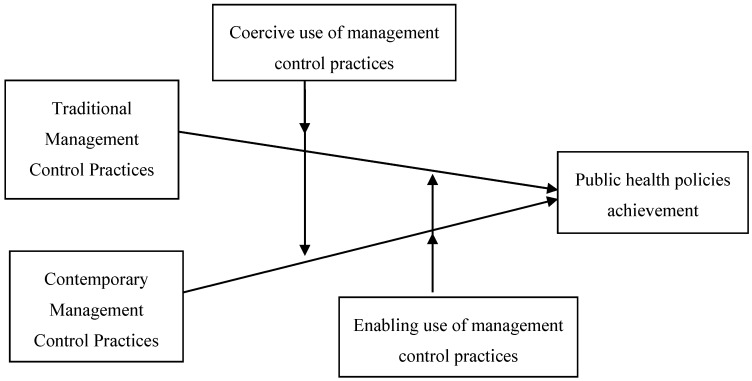
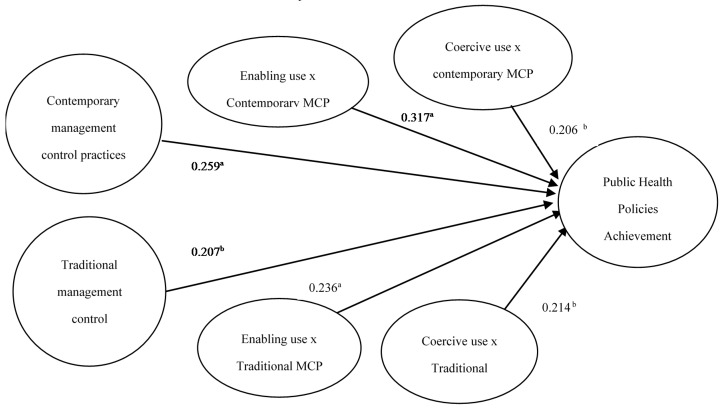
Public health policies must address multiple goals and complex community health needs. Recently, management control practices have emerged to provide a broader type of information for evaluating the effectiveness of healthcare policies, and relate activities and processes to multiple strategic outcomes. This study compares the effect of traditional and contemporary management control practices on the achievement of public health policies. It is also analyzed how two different uses of such practices (enabling vs. coercive) facilitate the achievement of public health policies. Relationships are explored using data collected from managers from public health agencies and public hospitals in Spain. The findings show that contemporary management control practices are more suitable than traditional practices to achieve public health policies. Furthermore, results show that public health policies are better achieved when managers use management control practices in an enabling way rather than in a coercive way.
公共卫生政策必须兼顾多重目标和复杂的社区卫生需求。近来,管理控制措施应运而生,旨在提供更广泛的信息以评估医疗政策的有效性,并将活动和流程与多重战略成果联系起来。本研究比较了传统和当代管理控制措施对公共卫生政策实施效果的影响。同时,还分析了此类措施的两种不同用途(赋能型与强制型)如何促进公共卫生政策的实施。研究利用从西班牙公共卫生机构和公立医院管理人员处收集的数据,探究了其间的关系。研究结果表明,当代管理控制措施比传统措施更适合实现公共卫生政策。此外,结果显示,当管理人员以赋能而非强制的方式运用管理控制措施时,公共卫生政策能得到更好的实施。