Bu Jiyuan, Dou Yang, Tian Xiaodi, Wang Zhong, Chen Gang
Department of Neurosurgery & Brain and Nerve Research Laboratory, The First Affiliated Hospital of Soochow University, 188 Shizi Street, Suzhou 215006, China.
Oxid Med Cell Longev. 2016;2016:6906712. doi: 10.1155/2016/6906712. Epub 2016 Jun 28.
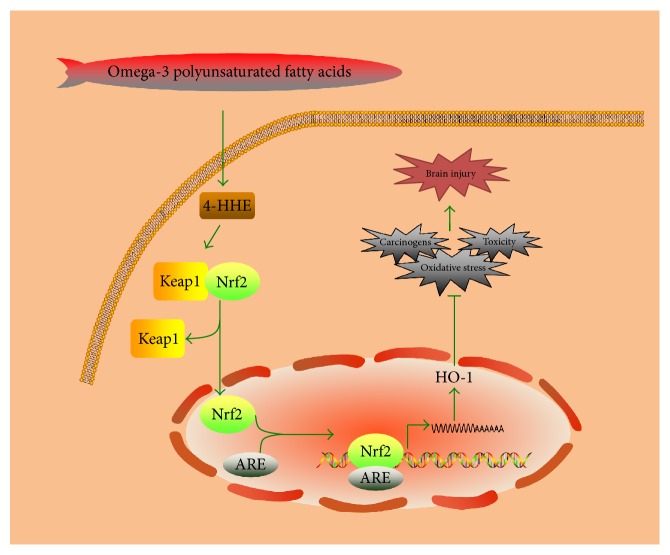
Stroke is the third commonest cause of death following cardiovascular diseases and cancer. In particular, in recent years, the morbidity and mortality of stroke keep remarkable growing. However, stroke still captures people attention far less than cardiovascular diseases and cancer. Past studies have shown that oxidative stress and inflammation play crucial roles in the progress of cerebral injury induced by stroke. Evidence is accumulating that the dietary supplementation of fish oil exhibits beneficial effects on several diseases, such as cardiovascular diseases, metabolic diseases, and cancer. Omega-3 polyunsaturated fatty acids (n-3 PUFAs), the major component of fish oil, have been found against oxidative stress and inflammation in cardiovascular diseases. And the potential of n-3 PUFAs in stroke treatment is attracting more and more attention. In this review, we will review the effects of n-3 PUFAs on stroke and mainly focus on the antioxidant and anti-inflammatory effects of n-3 PUFAs.
中风是继心血管疾病和癌症之后第三大常见死因。特别是近年来,中风的发病率和死亡率持续显著增长。然而,中风仍然远不如心血管疾病和癌症那样引起人们的关注。过去的研究表明,氧化应激和炎症在中风诱发的脑损伤进展中起关键作用。越来越多的证据表明,饮食中补充鱼油对多种疾病,如心血管疾病、代谢性疾病和癌症,具有有益作用。ω-3多不饱和脂肪酸(n-3 PUFAs)是鱼油的主要成分,已被发现在心血管疾病中具有对抗氧化应激和炎症的作用。而且n-3 PUFAs在中风治疗中的潜力正吸引着越来越多的关注。在这篇综述中,我们将回顾n-3 PUFAs对中风的影响,并主要聚焦于n-3 PUFAs的抗氧化和抗炎作用。