Department of Neurology, Juntendo University Faculty of Medicine, Tokyo 113-8421, Japan.
Stroke Center and Division of Neurology, Department of Medicine, Jichi Medical University, Tochigi 329-0498, Japan.
Int J Mol Sci. 2019 Nov 7;20(22):5549. doi: 10.3390/ijms20225549.
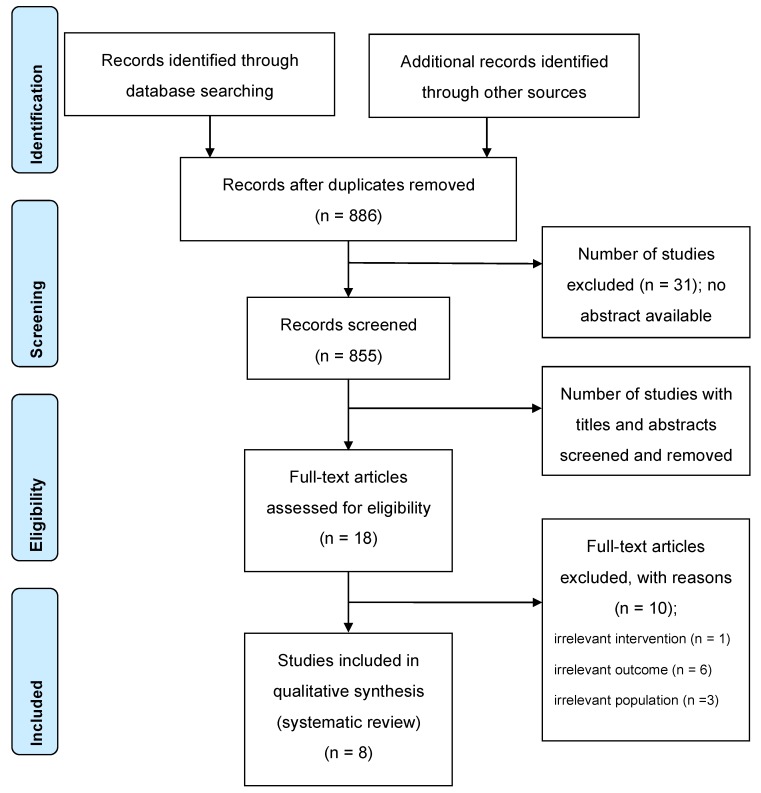
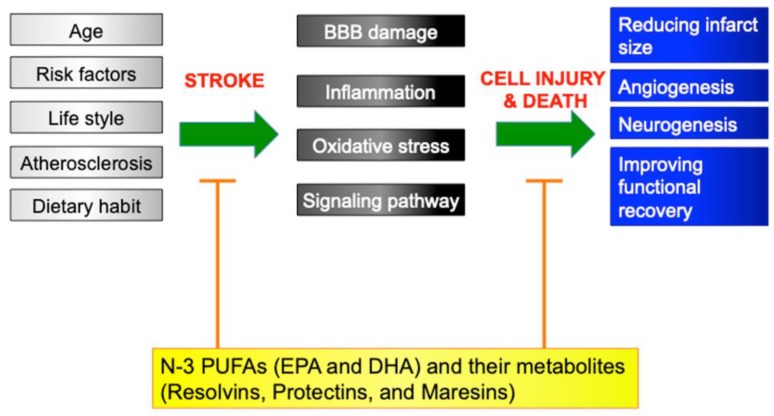
Stroke is a major leading cause of death and disability worldwide. N-3 polyunsaturated fatty acids (PUFAs) including eicosapentaenoic acid and docosahexaenoic acid have potent anti-inflammatory effects, reduce platelet aggregation, and regress atherosclerotic plaques. Since the discovery that the Greenland Eskimo population, whose diet is high in marine n-3 PUFAs, have a lower incidence of coronary heart disease than Western populations, numerous epidemiological studies to explore the associations of dietary intakes of fish and n-3 PUFAs with cardiovascular diseases, and large-scale clinical trials to identify the benefits of treatment with n-3 PUFAs have been conducted. In most of these studies the incidence and mortality of stroke were also evaluated mainly as secondary endpoints. Thus, a systematic literature review regarding the association of dietary intake of n-3 PUFAs with stroke in the epidemiological studies and the treatment effects of n-3 PUFAs in the clinical trials was conducted. Moreover, recent experimental studies were also reviewed to explore the molecular mechanisms of the neuroprotective effects of n-3 PUFAs after stroke.
中风是全球范围内主要的致死和致残原因。n-3 多不饱和脂肪酸(PUFA),包括二十碳五烯酸(EPA)和二十二碳六烯酸(DHA),具有强大的抗炎作用,可减少血小板聚集并使动脉粥样硬化斑块消退。自从发现格陵兰爱斯基摩人的饮食富含海洋 n-3 PUFAs,其冠心病的发病率低于西方人群以来,已经进行了大量的流行病学研究,以探讨鱼类和 n-3 PUFAs 的饮食摄入量与心血管疾病的关联,并进行了大规模的临床试验以确定 n-3 PUFAs 治疗的益处。在这些研究中,中风的发病率和死亡率也主要作为次要终点进行评估。因此,进行了一项系统的文献综述,以评估流行病学研究中 n-3 PUFAs 的饮食摄入与中风的关系,以及临床试验中 n-3 PUFAs 的治疗效果。此外,还回顾了最近的实验研究,以探讨 n-3 PUFAs 在中风后神经保护作用的分子机制。