Gautier Mathieu, Moazami-Goudarzi Katayoun, Levéziel Hubert, Parinello Hugues, Grohs Cécile, Rialle Stéphanie, Kowalczyk Rafał, Flori Laurence
CBGP, INRA, CIRAD, IRD, Supagro, Montferrier-sur-Lez, France IBC, Institut de Biologie Computationnelle, Montpellier, France.
GABI, INRA, AgroParisTech, Université Paris-Saclay, Jouy-en-Josas, France.
Mol Biol Evol. 2016 Nov;33(11):2801-2814. doi: 10.1093/molbev/msw144. Epub 2016 Jul 19.
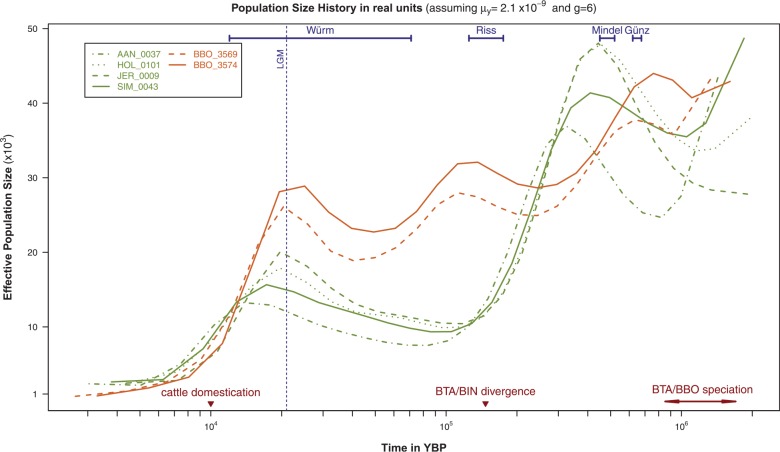
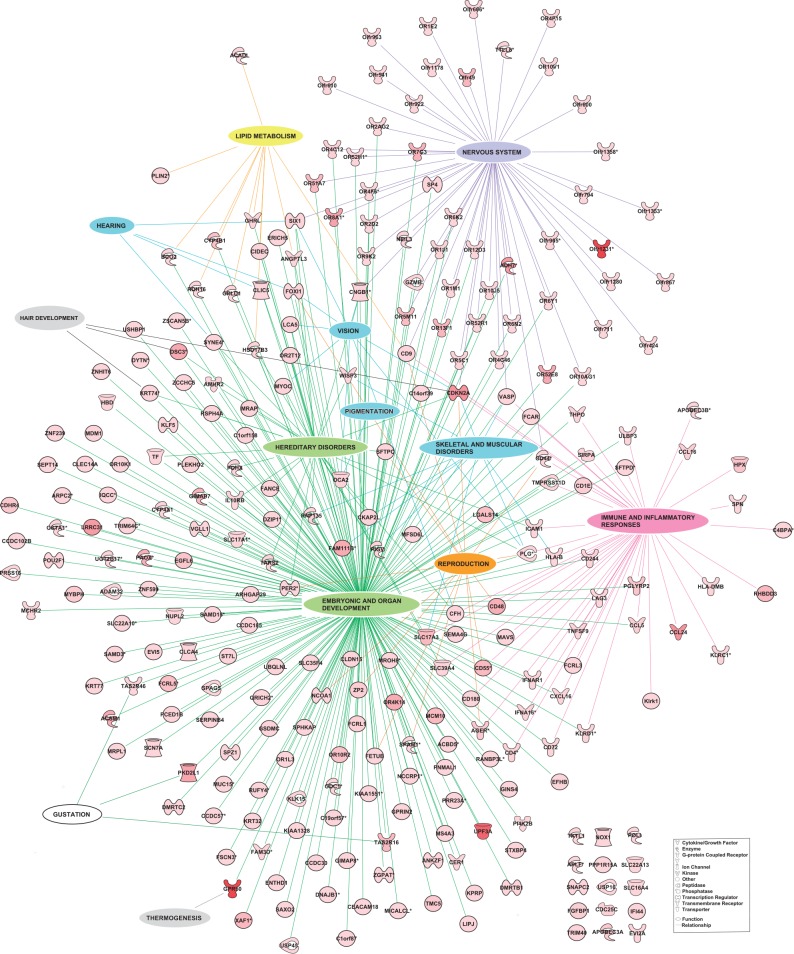
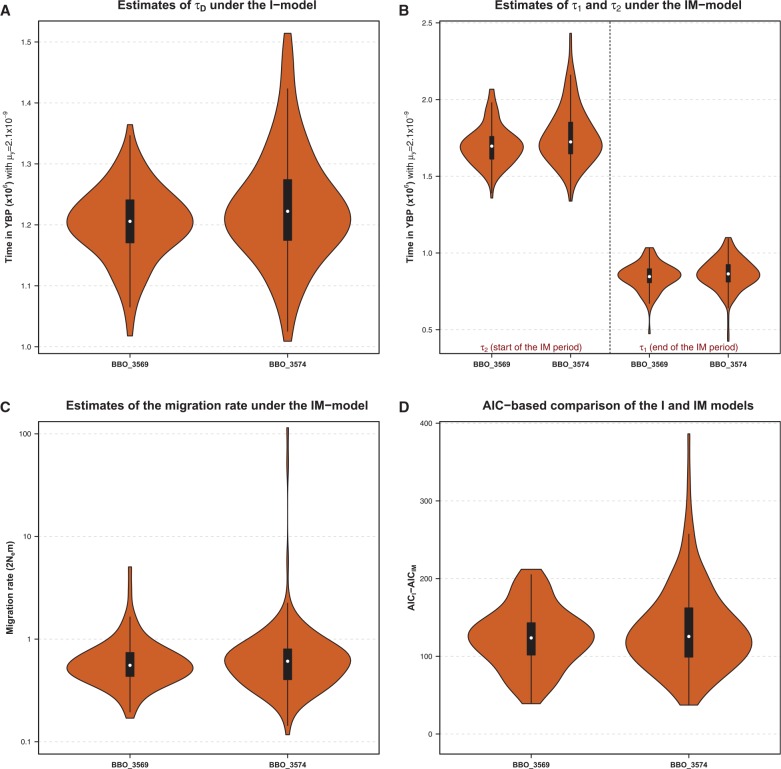
As the largest European herbivore, the wisent (Bison bonasus) is emblematic of the continent wildlife but has unclear origins. Here, we infer its demographic and adaptive histories from two individual whole-genome sequences via a detailed comparative analysis with bovine genomes. We estimate that the wisent and bovine species diverged from 1.7 × 10 to 850,000 years before present (YBP) through a speciation process involving an extended period of limited gene flow. Our data further support the occurrence of more recent secondary contacts, posterior to the Bos taurus and Bos indicus divergence (∼150,000 YBP), between the wisent and (European) taurine cattle lineages. Although the wisent and bovine population sizes experienced a similar sharp decline since the Last Glacial Maximum, we find that the wisent demography remained more fluctuating during the Pleistocene. This is in agreement with a scenario in which wisents responded to successive glaciations by habitat fragmentation rather than southward and eastward migration as for the bovine ancestors. We finally detect 423 genes under positive selection between the wisent and bovine lineages, which shed a new light on the genome response to different living conditions (temperature, available food resource, and pathogen exposure) and on the key gene functions altered by the domestication process.
作为欧洲最大的食草动物,欧洲野牛(Bison bonasus)是该大陆野生动物的象征,但其起源尚不清楚。在此,我们通过与牛基因组进行详细的比较分析,从两个个体的全基因组序列中推断其种群统计学和适应性历史。我们估计,欧洲野牛和牛物种在距今17万至85万年前通过一个涉及长期有限基因流动的物种形成过程而分化。我们的数据进一步支持了在欧洲野牛和(欧洲)黄牛谱系之间,在瘤牛和印度瘤牛分化(约15万年前)之后发生了更近的二次接触。尽管自末次盛冰期以来,欧洲野牛和牛的种群数量都经历了类似的急剧下降,但我们发现欧洲野牛的种群统计学在更新世期间仍然更加波动。这与一种情况相符,即欧洲野牛通过栖息地破碎化而非像牛的祖先那样向南和向东迁移来应对连续的冰川作用。我们最终在欧洲野牛和牛的谱系之间检测到423个受到正选择的基因,这为基因组对不同生活条件(温度、可用食物资源和病原体暴露)的反应以及驯化过程中改变的关键基因功能提供了新的线索。