Department of Bioengineering, University of Texas at Dallas, 800 W. Campbell Rd., Richardson, TX 75080, USA.
EnLiSense LLC, 1813 Audubon Pond way, Allen, TX 75013, USA.
Biosensors (Basel). 2016 Jul 18;6(3):36. doi: 10.3390/bios6030036.
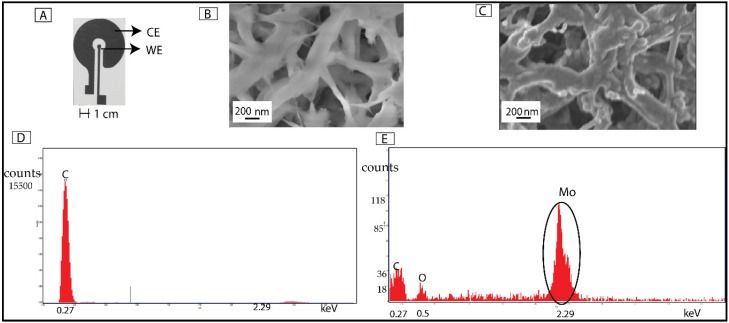
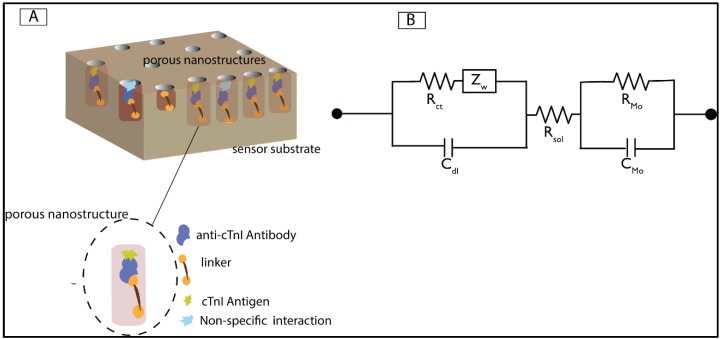
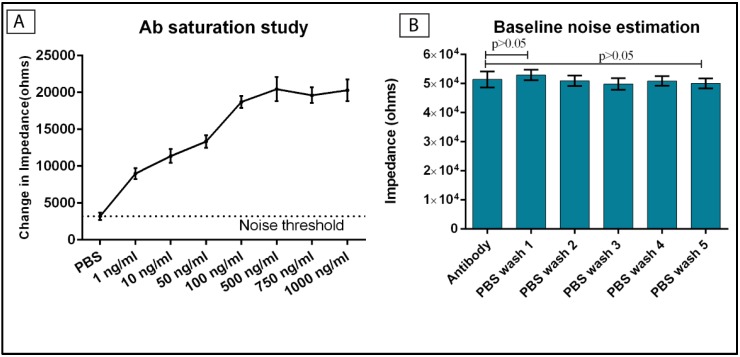
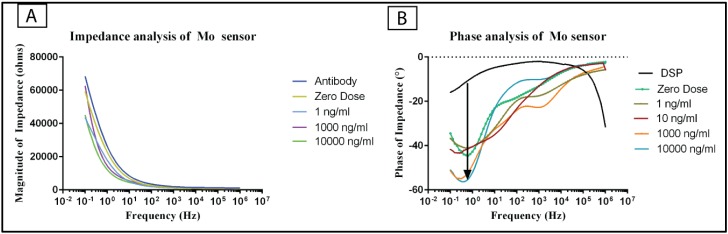
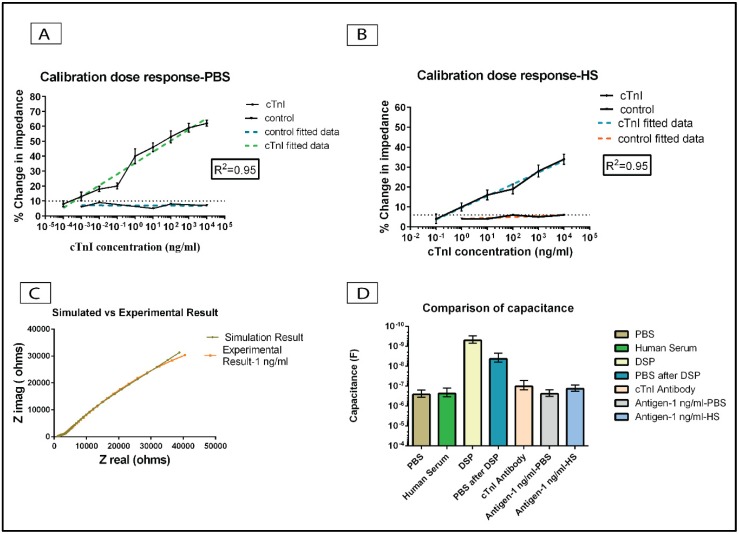
Molybdenum electrode based flexible biosensor on porous polyamide substrates has been fabricated and tested for its functionality as a protein affinity based biosensor. The biosensor performance was evaluated using a key cardiac biomarker; cardiac Troponin-I (cTnI). Molybdenum is a transition metal and demonstrates electrochemical behavior upon interaction with an electrolyte. We have leveraged this property of molybdenum for designing an affinity based biosensor using electrochemical impedance spectroscopy. We have evaluated the feasibility of detection of cTnI in phosphate-buffered saline (PBS) and human serum (HS) by measuring impedance changes over a frequency window from 100 mHz to 1 MHz. Increasing changes to the measured impedance was correlated to the increased dose of cTnI molecules binding to the cTnI antibody functionalized molybdenum surface. We achieved cTnI detection limit of 10 pg/mL in PBS and 1 ng/mL in HS medium. The use of flexible substrates for designing the biosensor demonstrates promise for integration with a large-scale batch manufacturing process.
基于钼电极的多孔聚酰胺基底柔性生物传感器已经制备并测试了其作为基于蛋白质亲和力的生物传感器的功能。使用关键的心脏生物标志物;心肌肌钙蛋白 I(cTnI)来评估生物传感器的性能。钼是一种过渡金属,与电解质相互作用时表现出电化学行为。我们利用钼的这种特性,通过电化学阻抗谱设计了一种基于亲和力的生物传感器。我们通过测量 100 mHz 至 1 MHz 频率范围内的阻抗变化,评估了在磷酸盐缓冲盐水(PBS)和人血清(HS)中检测 cTnI 的可行性。测量阻抗的变化与结合到 cTnI 抗体功能化钼表面的 cTnI 分子的剂量增加呈正相关。我们在 PBS 中实现了 cTnI 的检测限为 10 pg/mL,在 HS 介质中为 1 ng/mL。使用柔性基底设计生物传感器有望与大规模批量制造工艺集成。