Kim Soo Mi
Department of Physiology, Chonbuk National University Medical School, Jeonju 561-180, Korea.
Int J Mol Sci. 2016 Jul 19;17(7):1155. doi: 10.3390/ijms17071155.
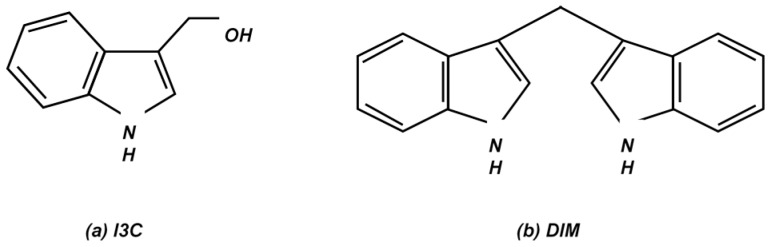
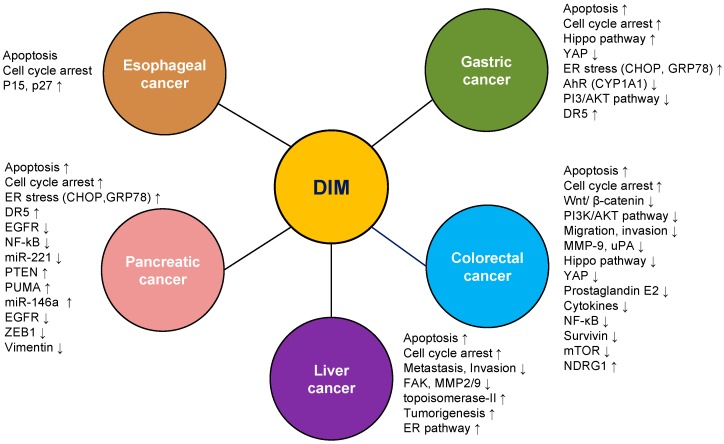
Studies in humans have shown that 3,3'-diindolylmethane (DIM), which is found in cruciferous vegetables, such as cabbage and broccoli, is effective in the attenuation of gastrointestinal cancers. This review presents the latest findings on the use, targets, and modes of action of DIM for the treatment of human gastrointestinal cancers. DIM acts upon several cellular and molecular processes in gastrointestinal cancer cells, including apoptosis, autophagy, invasion, cell cycle regulation, metastasis, angiogenesis, and endoplasmic reticulum (ER) stress. In addition, DIM increases the efficacy of other drugs or therapeutic chemicals when used in combinatorial treatment for gastrointestinal cancer. The studies to date offer strong evidence to support the use of DIM as an anticancer and therapeutic agent for gastrointestinal cancer. Therefore, this review provides a comprehensive understanding of the preventive and therapeutic properties of DIM in addition to its different perspective on the safety of DIM in clinical applications for the treatment of gastrointestinal cancers.
针对人类的研究表明,在十字花科蔬菜(如卷心菜和西兰花)中发现的3,3'-二吲哚甲烷(DIM)对减轻胃肠道癌症有效。本综述介绍了DIM在治疗人类胃肠道癌症方面的用途、靶点和作用方式的最新研究结果。DIM作用于胃肠道癌细胞的多个细胞和分子过程,包括细胞凋亡、自噬、侵袭、细胞周期调控、转移、血管生成和内质网(ER)应激。此外,DIM在用于胃肠道癌症的联合治疗时,可提高其他药物或治疗性化学物质的疗效。迄今为止的研究提供了有力证据,支持将DIM用作胃肠道癌症的抗癌和治疗剂。因此,本综述除了全面介绍DIM在临床应用于治疗胃肠道癌症时的安全性的不同观点外,还对DIM的预防和治疗特性进行了全面解读。