Yeap Swee Keong, Abu Nadiah, Akthar Nadeem, Ho Wan Yong, Ky Huynh, Tan Sheau Wei, Alitheen Noorjahan Banu, Kamarul Tunku
1 Universiti Putra Malaysia, Serdang, Selangor, Malaysia.
2 Universiti Kebangsaan Malaysia Medical Centre, Kuala Lumpur, Malaysia.
Integr Cancer Ther. 2017 Sep;16(3):373-384. doi: 10.1177/1534735416660383. Epub 2016 Jul 24.
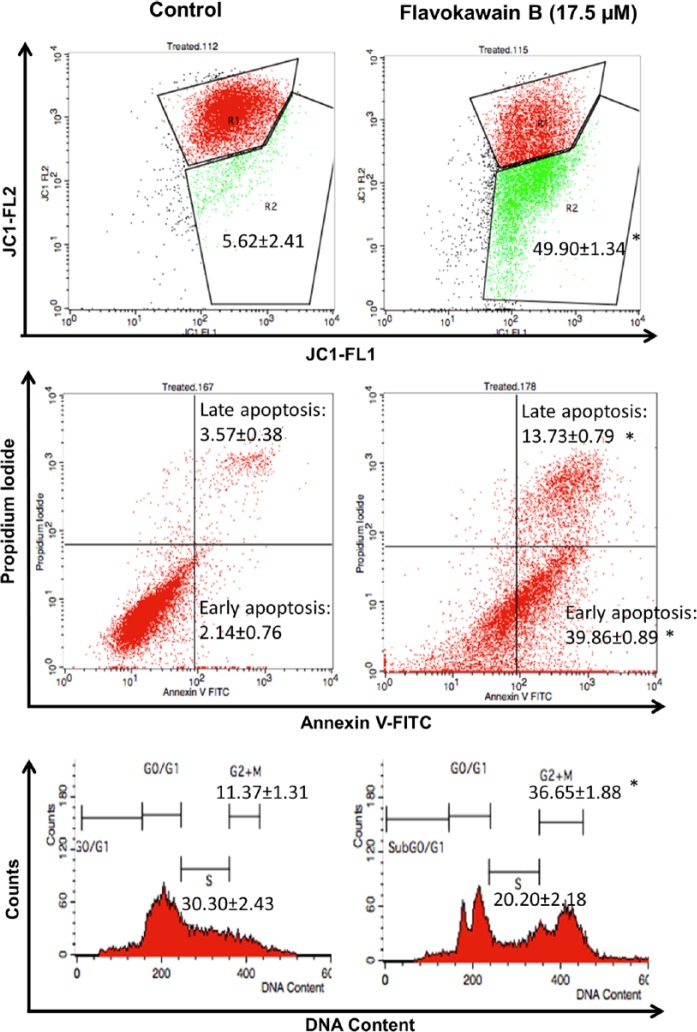
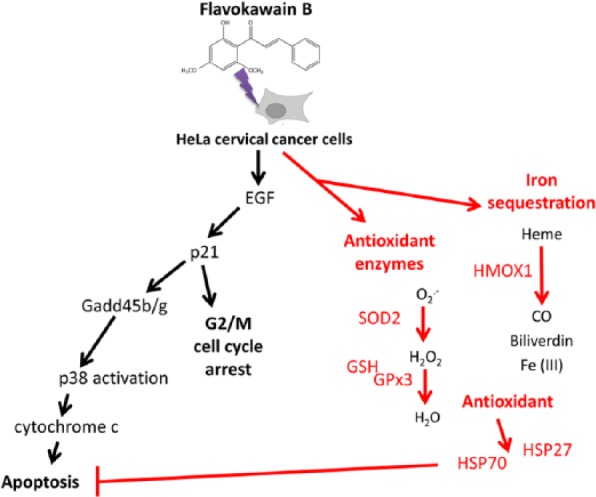
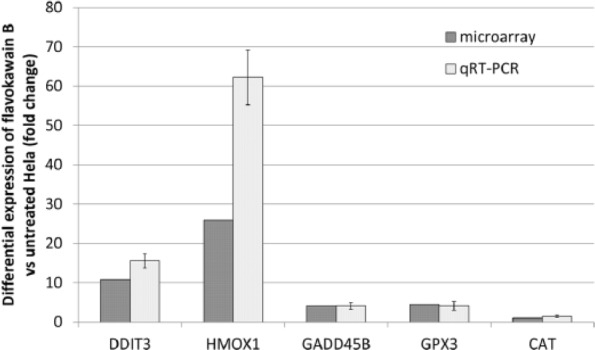
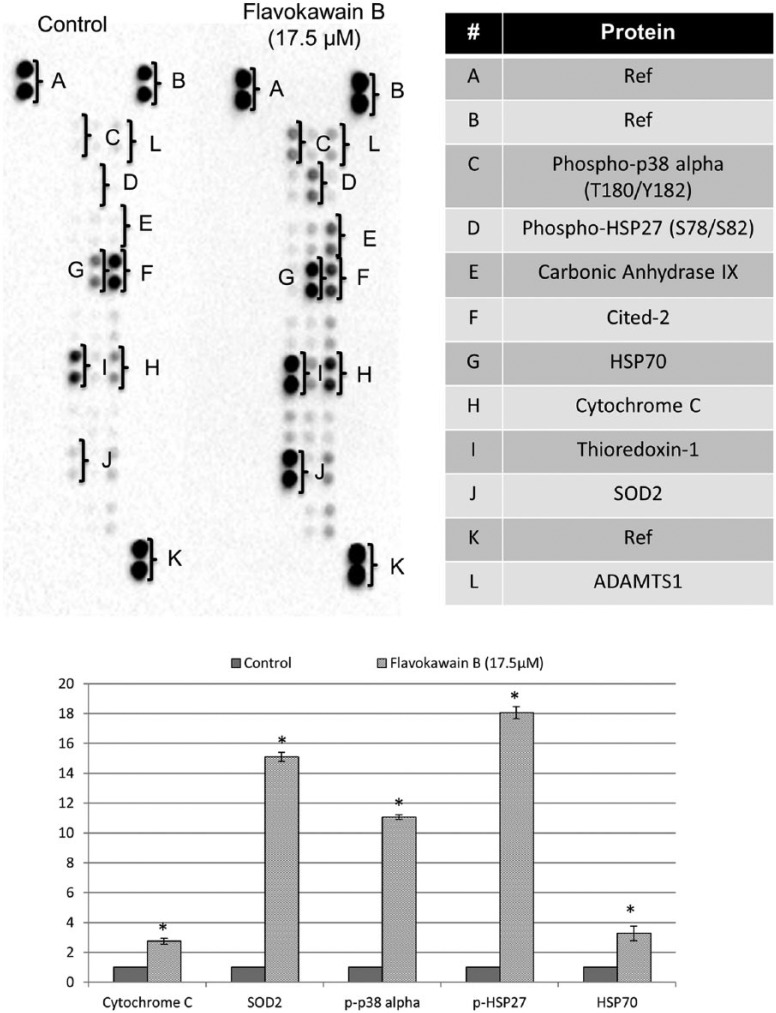
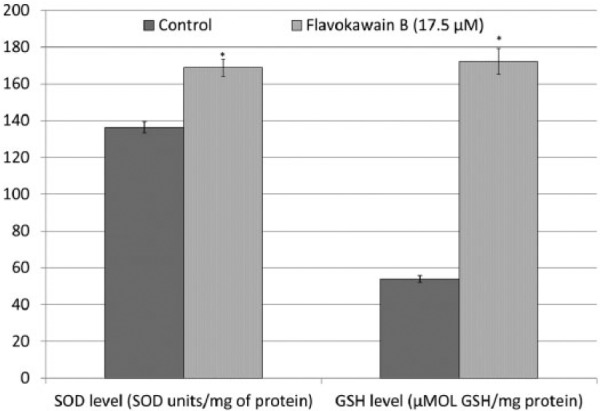
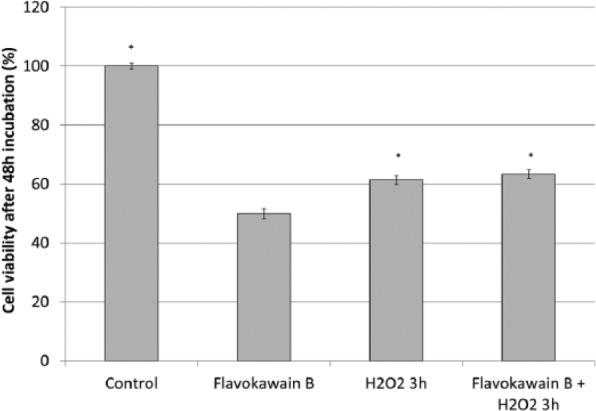
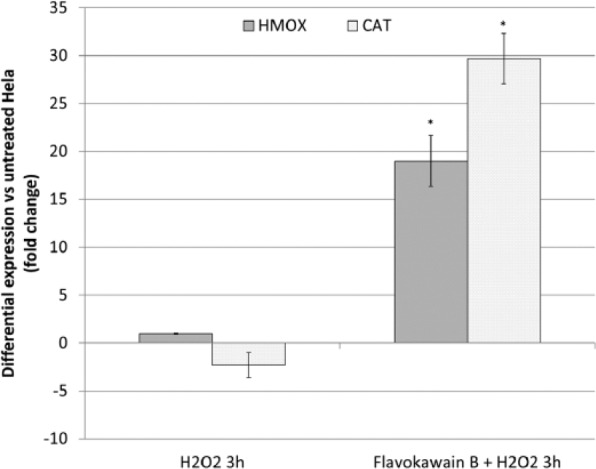
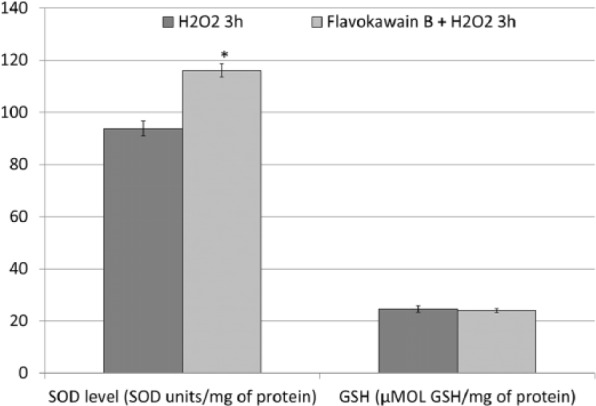
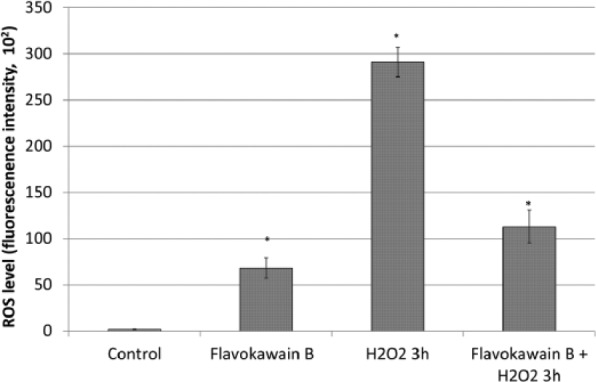
Flavokawain B (FKB) is known to possess promising anticancer abilities. This is demonstrated in various cancer cell lines including HeLa cells. Cervical cancer is among the most widely diagnosed cancer among women today. Though FKB has been shown to be effective in treating cancer cells, the exact molecular mechanism is still unknown. This study is aimed at understanding the effects of FKB on HeLa cells using a microarray-based mRNA expression profiling and proteome profiling of stress-related proteins. The results of this study suggest that FKB induced cell death through p21-mediated cell cycle arrest and activation of p38. However, concurrent activation of antioxidant-related pathways and iron sequestration pathway followed by activation of ER-resident stress proteins clearly indicate that FKB failed to induce apoptosis in HeLa cells via oxidative stress. This effect implies that the protection of HeLa cells by FKB from HO-induced cell death is via neutralization of reactive oxygen species.
已知黄樟素B(FKB)具有良好的抗癌能力。这在包括HeLa细胞在内的多种癌细胞系中得到了证实。宫颈癌是当今女性中诊断最为广泛的癌症之一。尽管FKB已被证明对治疗癌细胞有效,但其确切的分子机制仍不清楚。本研究旨在通过基于微阵列的mRNA表达谱分析和应激相关蛋白的蛋白质组分析,了解FKB对HeLa细胞的影响。本研究结果表明,FKB通过p21介导的细胞周期阻滞和p38的激活诱导细胞死亡。然而,抗氧化相关途径和铁螯合途径的同时激活,随后内质网驻留应激蛋白的激活,清楚地表明FKB未能通过氧化应激在HeLa细胞中诱导凋亡。这种效应意味着FKB对HeLa细胞免受HO诱导的细胞死亡的保护作用是通过中和活性氧来实现的。