Sayegh Suzan, Van Der Walt Mercia, Al-Kuwari Mohamed Ghaith
Exercise is Medicine Department, Aspetar Orthopedic and Sports Medicine Hospital, Doha, Qatar.
Int J Womens Health. 2016 Jul 19;8:287-93. doi: 10.2147/IJWH.S99943. eCollection 2016.
Physical inactivity is a growing health concern and has been identified as the fourth leading risk factor for global mortality. The Arab region includes countries with some of the world's highest physical inactivity levels, such as Qatar, more specifically the Qatari female population.
The objective of this study is to assess the physical activity levels of Qatari national female adults during a 1-year pedometer-based program.
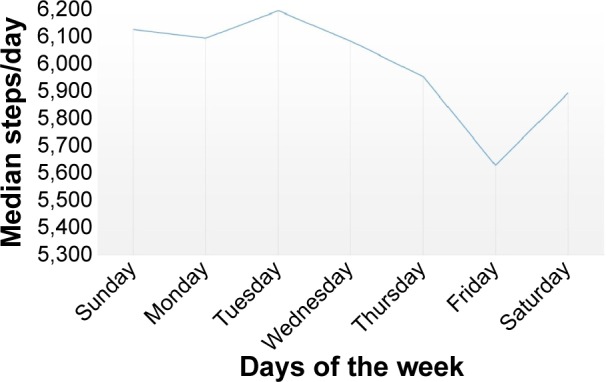
A total of 549 Qatari national females aged between 18 years and 64 years were included. Data extracted from "Step into Health" program web database in Qatar were used for analyses. Daily habitual physical activity (daily total step count and aerobic steps) was assessed through the Omron HJ-324U pedometer. Step counts were classified as follows: <5,000 steps/d, sedentary; 5,000-7,499 steps/d, low active; and ≥7,500 steps/d, physically active. Statistical significance was set at P-value ≤0.05. Descriptive statistics were used, and habitual physical activity was calculated through repeated measures analysis of variance to determine the difference across the monitored days.
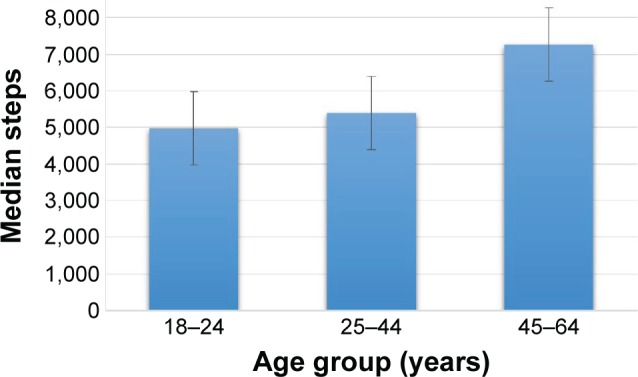
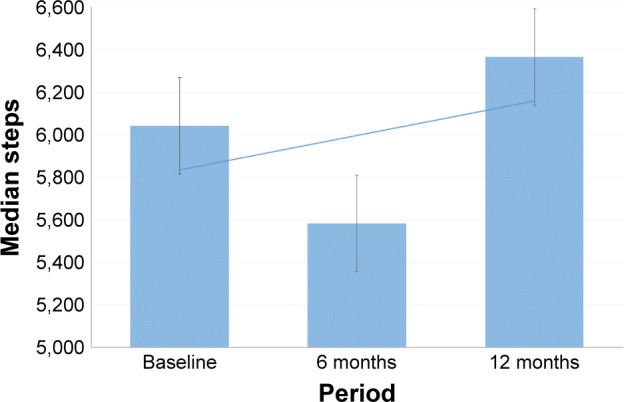
Mean age was 37.4±11.7 years, and median body mass index of 28.8 kg/m(2) (interquartile range 24.8-33.5). Daily steps for the overall population ranged from 3,505 steps/d to 10,010 steps/d, with a median of 6,008 steps/d. A total of 242 (44.1%) females were sedentary, 178 (32.4%) were low active, and 129 (23.5%) were physically active. The physically active group showed a median of 927 aerobic steps/d (interquartile range 0-4,248).
Based on the results of this study, Qatari females are not meeting the global recommendations of physical activity. Future research might need to consider barriers to physical activity as well as social, cultural, and environmental factors.
缺乏身体活动对健康的影响日益受到关注,已被确定为全球死亡的第四大主要风险因素。阿拉伯地区包括一些世界上身体活动水平最高的国家,如卡塔尔,尤其是卡塔尔女性人口。
本研究的目的是评估在一项为期1年的基于计步器的项目中卡塔尔成年女性的身体活动水平。
共纳入549名年龄在18岁至64岁之间的卡塔尔成年女性。从卡塔尔“走进健康”项目网络数据库中提取的数据用于分析。通过欧姆龙HJ - 324U计步器评估日常习惯性身体活动(每日总步数和有氧运动步数)。步数分类如下:<5000步/天,久坐不动;5000 - 7499步/天,低活动量;≥7500步/天,身体活跃。统计学显著性设定为P值≤0.05。采用描述性统计,通过重复测量方差分析计算习惯性身体活动,以确定监测天数之间的差异。
平均年龄为37.4±11.7岁,体重指数中位数为28.8 kg/m²(四分位间距24.8 - 33.5)。总体人群的每日步数范围为3505步/天至10010步/天,中位数为6008步/天。共有242名(44.1%)女性久坐不动,178名(32.4%)低活动量,129名(23.5%)身体活跃。身体活跃组的有氧运动步数中位数为927步/天(四分位间距0 - 4248)。
基于本研究结果,卡塔尔女性未达到全球身体活动建议水平。未来的研究可能需要考虑身体活动的障碍以及社会、文化和环境因素。