Wong Vincent, Cooney Daniel, Bar-Yam Yaneer
New England Complex Systems Institute, Cambridge, MA, USA.
PLoS Curr. 2016 May 19;8:ecurrents.outbreaks.322427f4c3cc2b9c1a5b3395e7d20894. doi: 10.1371/currents.outbreaks.322427f4c3cc2b9c1a5b3395e7d20894.
The 2014 Ebola outbreak in West Africa raised many questions about the control of infectious disease in an increasingly connected global society. Limited availability of contact information made contact tracing diffcult or impractical in combating the outbreak.
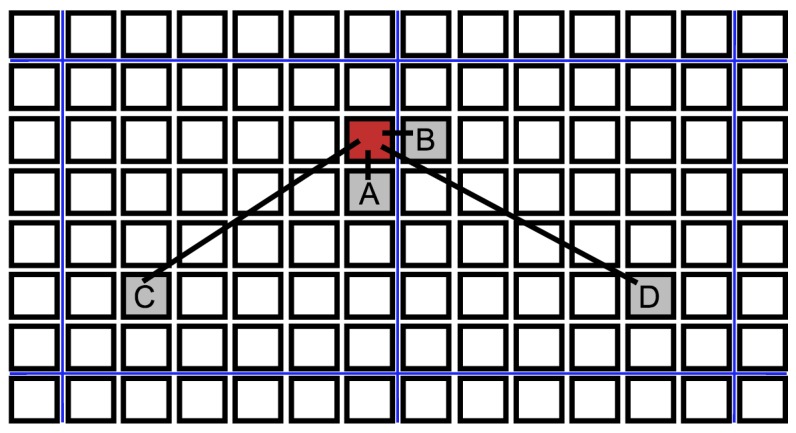
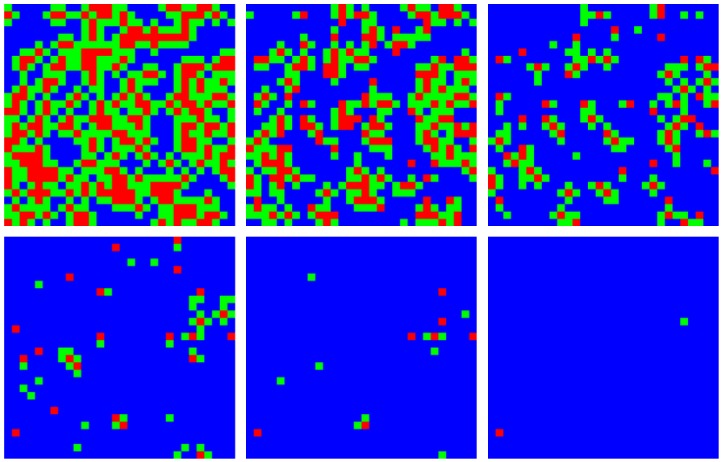
We consider the development of multi-scale public health strategies that act on individual and community levels. We simulate policies for community-level response aimed at early screening all members of a community, as well as travel restrictions to prevent inter-community transmission.
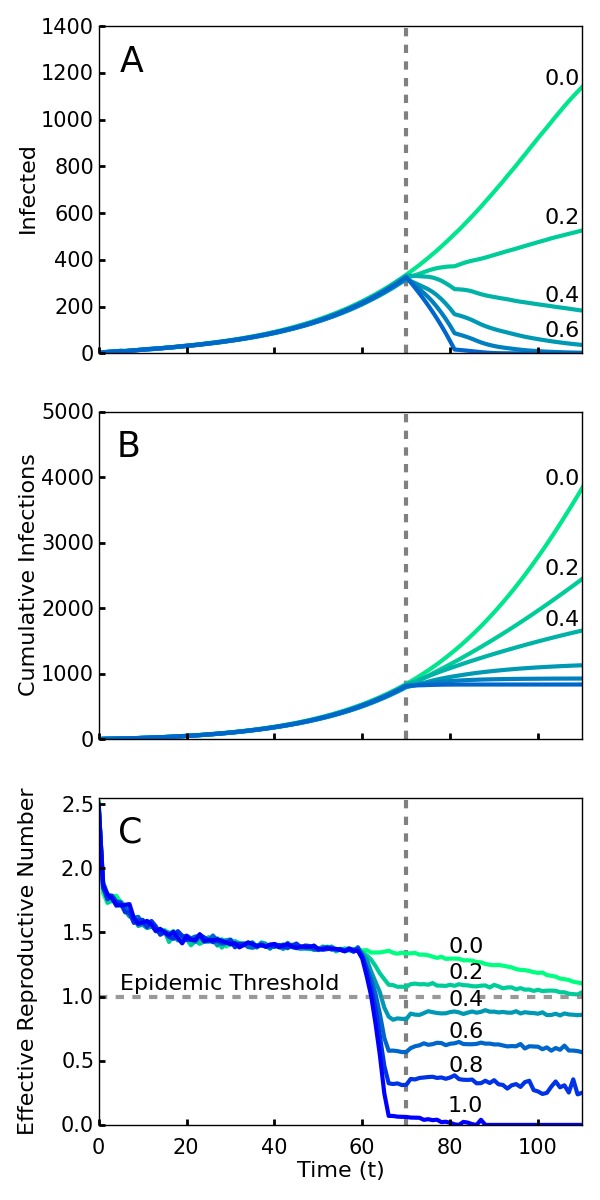
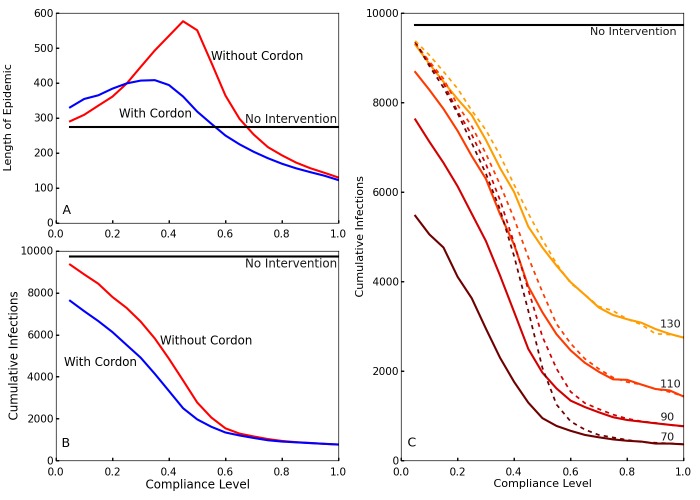
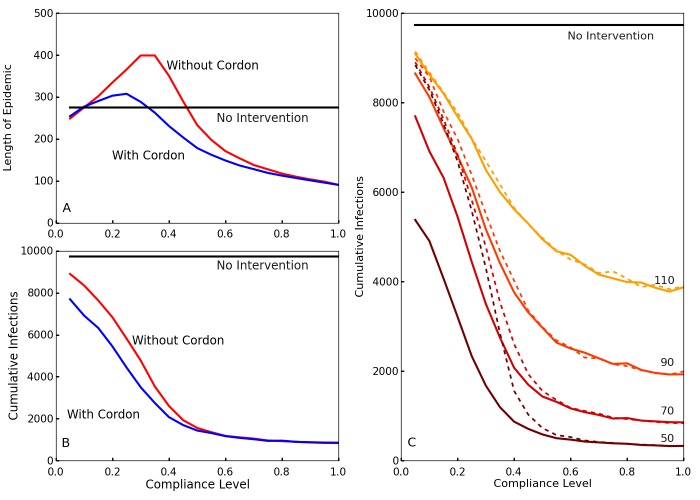
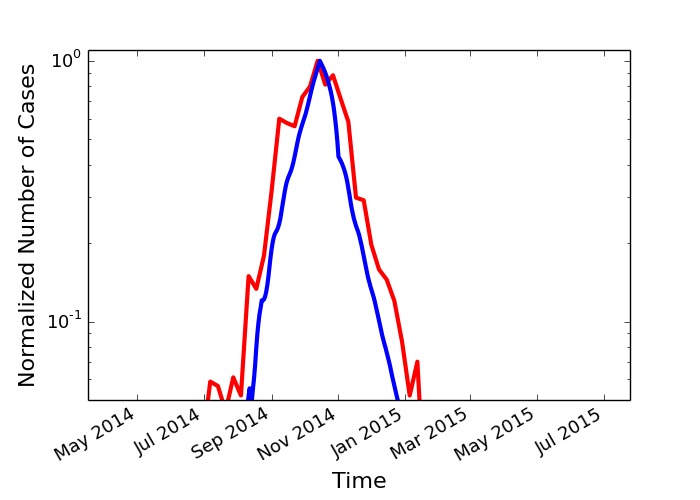
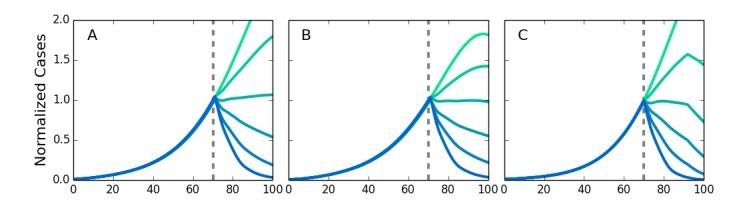
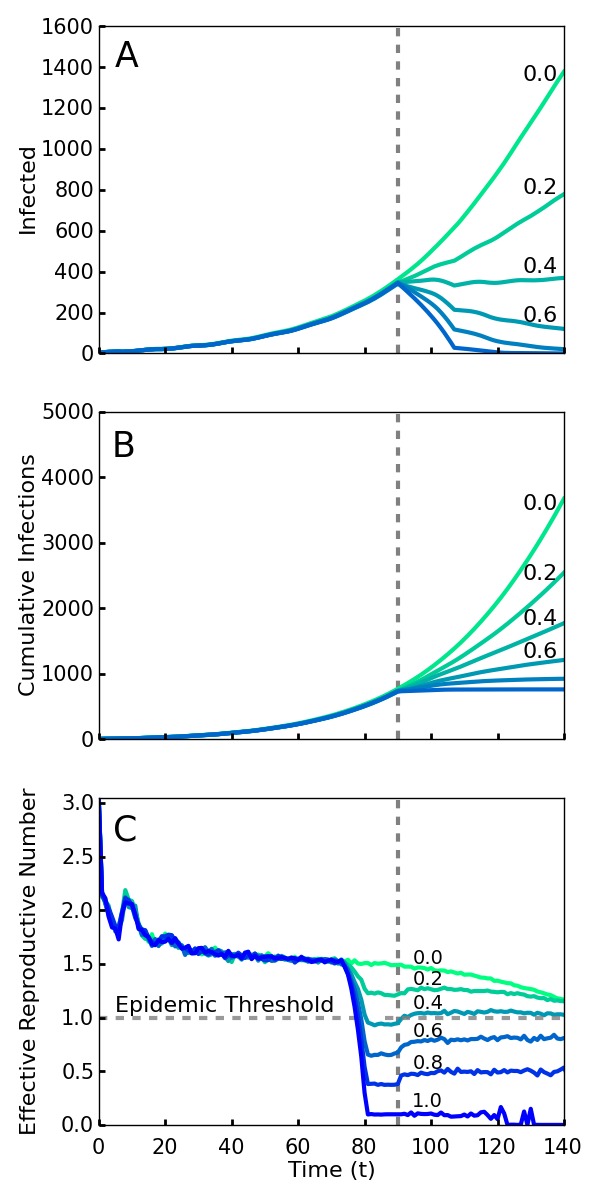
Our analysis shows the policies to be effective even at a relatively low level of compliance and for a variety of local and long range contact transmission networks. In our simulations, 40% of individuals conforming to these policies is enough to stop the outbreak. Simulations with a 50% compliance rate are consistent with the case counts in Liberia during the period of rapid decline after mid September, 2014. We also find the travel restriction to be effective at reducing the risks associated with compliance substantially below the 40% level, shortening the outbreak and enabling efforts to be focused on affected areas.
Our results suggest that the multi-scale approach can be used to further evolve public health strategy for defeating emerging epidemics.
2014年西非埃博拉疫情爆发引发了诸多关于在日益紧密相连的全球社会中控制传染病的问题。在抗击疫情过程中,由于联系信息获取有限,接触者追踪变得困难或不切实际。
我们考虑制定在个人和社区层面发挥作用的多尺度公共卫生策略。我们模拟了旨在对社区所有成员进行早期筛查以及实施旅行限制以防止社区间传播的社区层面应对政策。
我们的分析表明,即使在相对较低的合规水平以及针对各种本地和远程接触传播网络的情况下,这些政策也是有效的。在我们的模拟中,40%的个体遵守这些政策就足以阻止疫情爆发。2014年9月中旬后疫情快速下降期间,利比里亚的病例数与50%合规率的模拟结果一致。我们还发现旅行限制在将与合规相关的风险大幅降低至40%水平以下方面是有效的,缩短了疫情爆发时间,并使工作能够集中在受影响地区。
我们的结果表明,多尺度方法可用于进一步完善战胜新出现疫情的公共卫生策略。