Dagnelie Gislin, Christopher Punita, Arditi Aries, da Cruz Lyndon, Duncan Jacque L, Ho Allen C, Olmos de Koo Lisa C, Sahel José-Alain, Stanga Paulo E, Thumann Gabriele, Wang Yizhong, Arsiero Maura, Dorn Jessy D, Greenberg Robert J
Lions Vision Research and Rehab Center, Johns Hopkins University, Baltimore, Maryland, USA.
Second Sight Medical Products Inc, Sylmar, California, USA.
Clin Exp Ophthalmol. 2017 Mar;45(2):152-159. doi: 10.1111/ceo.12812. Epub 2016 Sep 7.
The main objective of this study was to test Argus II subjects on three real-world functional vision tasks.
The study was designed to be randomized and prospective. Testing was conducted in a hospital/research laboratory setting at the various participating centres.
Twenty eight Argus II subjects, all profoundly blind, participated in this study.
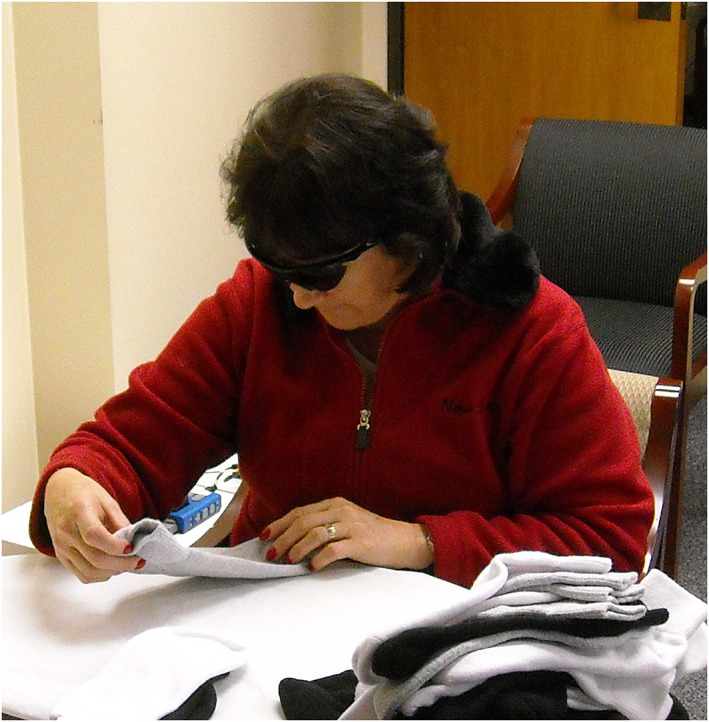
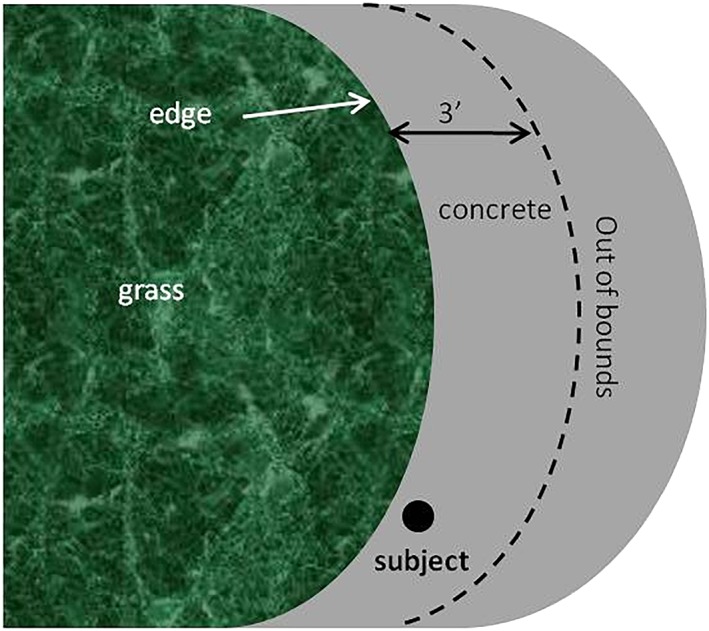
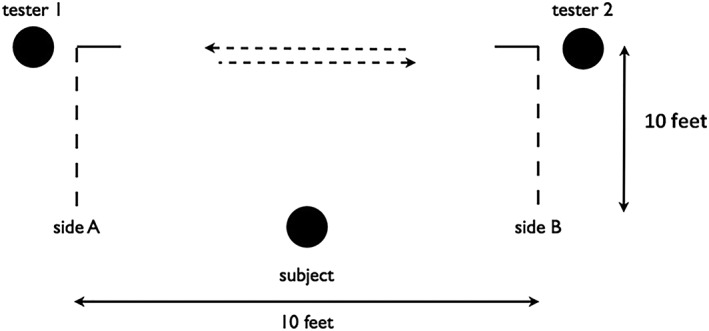
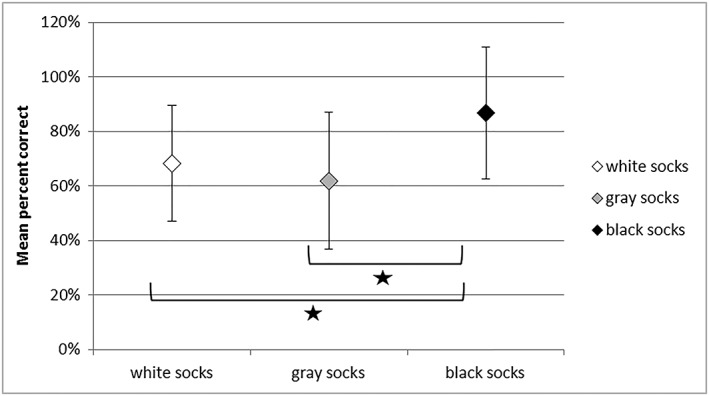
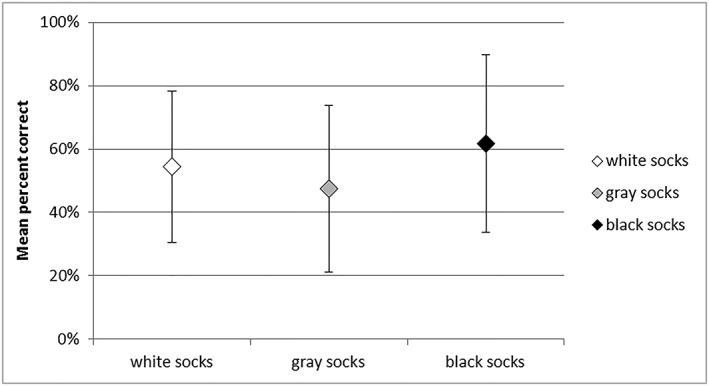
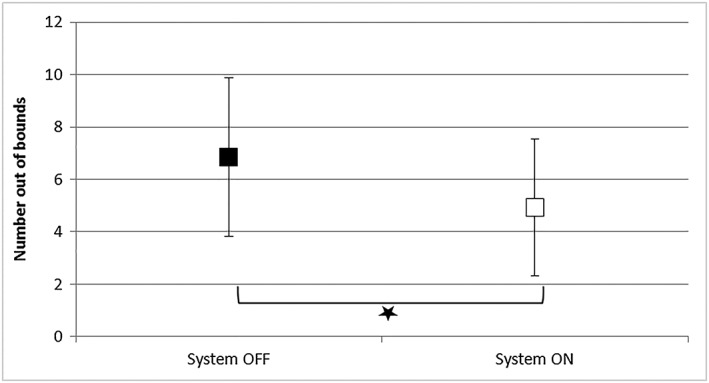
Subjects were tested on the three real-world functional vision tasks: Sock Sorting, Sidewalk Tracking and Walking Direction Discrimination task MAIN OUTCOME MEASURES: For the Sock Sorting task, percentage correct was computed based on how accurately subjects sorted the piles on a cloth-covered table and on a bare table. In the Sidewalk Tracking task, an 'out of bounds' count was recorded, signifying how often the subject veered away from the test course. During the Walking Direction Discrimination task, subjects were tested on the number of times they correctly identified the direction of testers walking across their field of view.
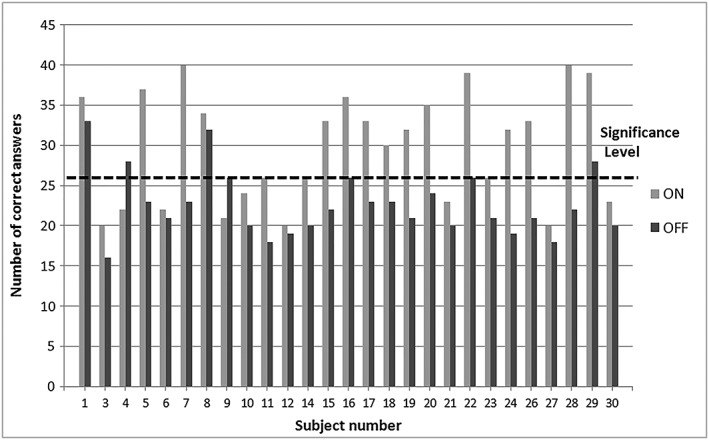
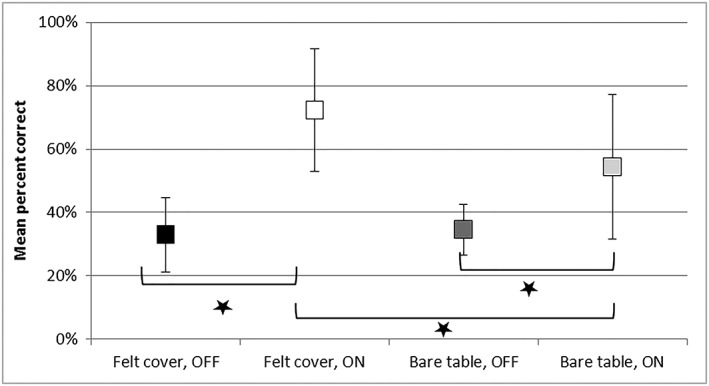
The mean percentage correct OFF versus ON for the Sock Sorting task was found to be significantly different for both testing conditions (t-test, P < 0.01). On the Sidewalk Tracking task, subjects performed significantly better with the system ON than they did with the system OFF (t-test, P < 0.05). Eighteen (18) of 27 subjects (67%) performed above chance with the system ON, and 6 (22%) did so with system OFF on the Walking Direction Discrimination task.
Argus II subjects performed better on all three tasks with their systems ON than they did with their systems OFF.
本研究的主要目的是对接受阿尔戈斯二代(Argus II)植入的受试者进行三项现实世界功能性视觉任务测试。
本研究设计为随机前瞻性研究。测试在各参与中心的医院/研究实验室环境中进行。
28名接受阿尔戈斯二代植入的受试者参与了本研究,他们均为深度失明患者。
受试者接受三项现实世界功能性视觉任务测试:袜子分类、人行道跟踪和行走方向辨别任务。主要观察指标:在袜子分类任务中,根据受试者在铺有布的桌子和光桌上对袜子堆分类的准确程度计算正确百分比。在人行道跟踪任务中,记录“越界”次数,即受试者偏离测试路线的频率。在行走方向辨别任务中,测试受试者正确识别测试者穿过其视野方向的次数。
在袜子分类任务中,两种测试条件下开启与关闭系统时的平均正确百分比差异显著(t检验,P < 0.01)。在人行道跟踪任务中,受试者开启系统时的表现明显优于关闭系统时(t检验,P < 0.05)。在行走方向辨别任务中,27名受试者中有18名(67%)在开启系统时表现高于随机水平,6名(22%)在关闭系统时表现高于随机水平。
接受阿尔戈斯二代植入的受试者在开启系统时在所有三项任务中的表现均优于关闭系统时。