Lewis Ames Cheryl, Ryan Joseph F, Bely Alexandra E, Cartwright Paulyn, Collins Allen G
Department of Invertebrate Zoology, National Museum of Natural History, Smithsonian Institution, Washington, DC, 20013, USA.
Biological Sciences Graduate Program, University of Maryland, College Park, MD, 20742, USA.
BMC Genomics. 2016 Aug 17;17:650. doi: 10.1186/s12864-016-2944-3.
Cubozoans (box jellyfish) are cnidarians that have evolved a number of distinguishing features. Many cubozoans have a particularly potent sting, effected by stinging structures called nematocysts; cubozoans have well-developed light sensation, possessing both image-forming lens eyes and light-sensitive eye spots; and some cubozoans have complex mating behaviors, including aggregations, copulation and internal fertilization. The cubozoan Alatina alata is emerging as a cnidarian model because it forms predictable monthly nearshore breeding aggregations in tropical to subtropical waters worldwide, making both adult and larval material reliably accessible. To develop resources for A. alata, this study generated a functionally annotated transcriptome of adult and larval tissue, applying preliminary differential expression analyses to identify candidate genes involved in nematogenesis and venom production, vision and extraocular sensory perception, and sexual reproduction, which for brevity we refer to as "venom", "vision" and "sex".
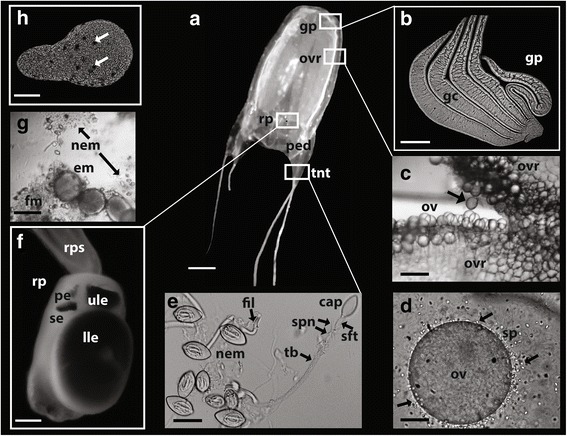
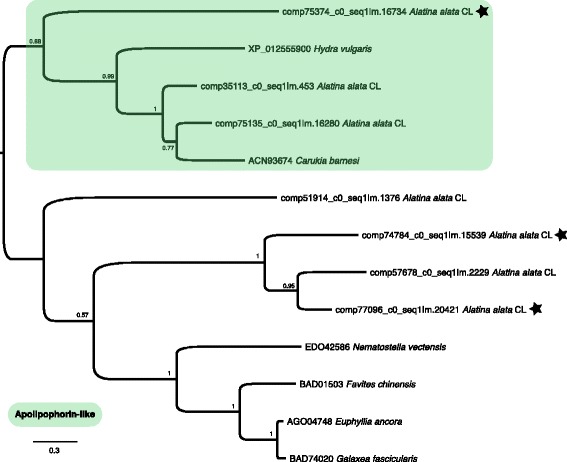
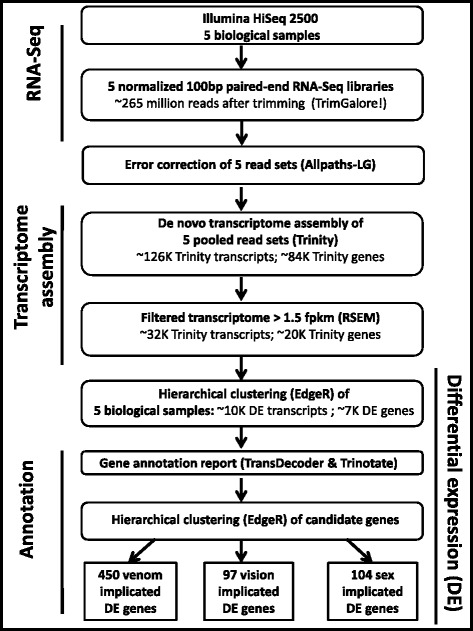
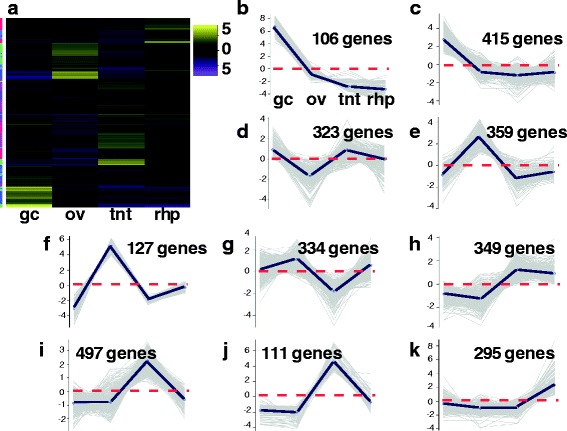
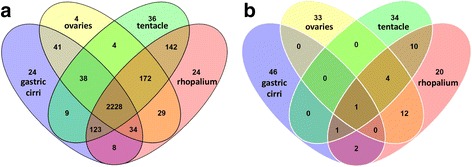
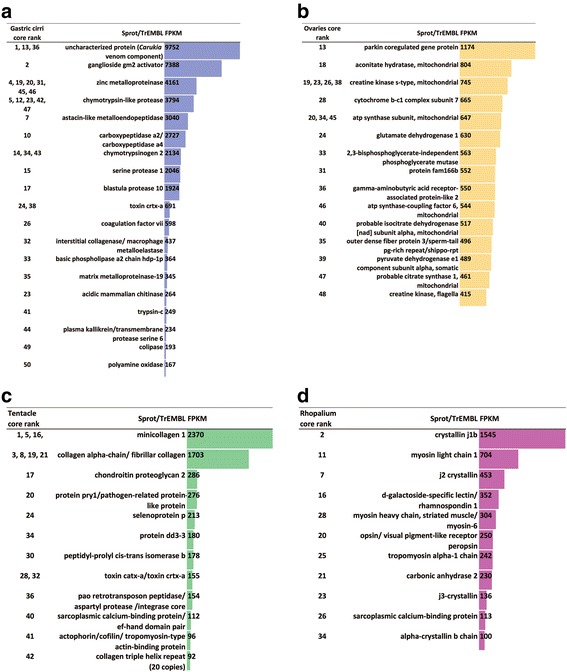
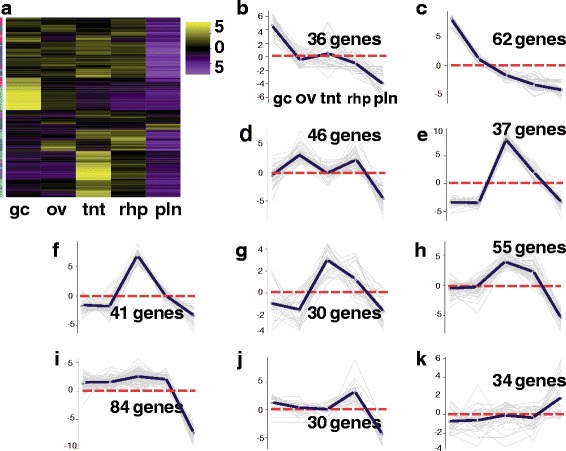
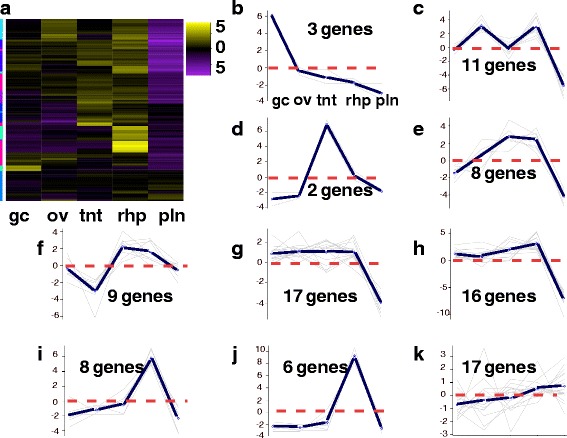
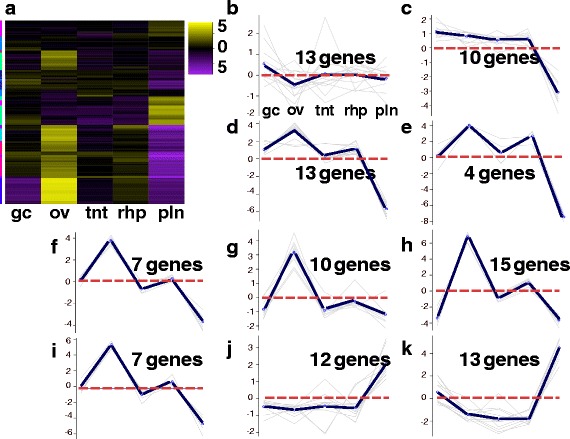
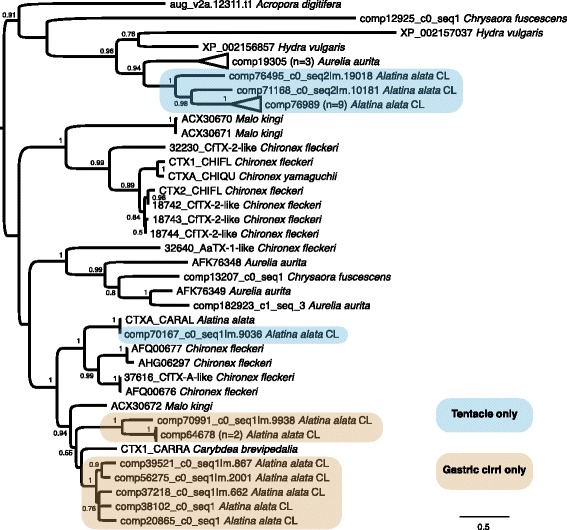
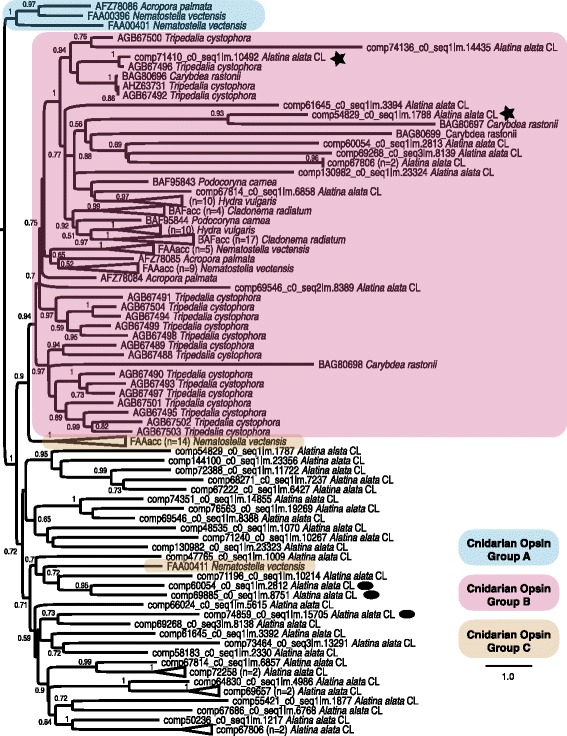
We assembled a transcriptome de novo from RNA-Seq data pooled from multiple body parts (gastric cirri, ovaries, tentacle (with pedalium base) and rhopalium) of an adult female A. alata medusa and larval planulae. Our transcriptome comprises ~32 K transcripts, after filtering, and provides a basis for analyzing patterns of gene expression in adult and larval box jellyfish tissues. Furthermore, we annotated a large set of candidate genes putatively involved in venom, vision and sex, providing an initial molecular characterization of these complex features in cubozoans. Expression profiles and gene tree reconstruction provided a number of preliminary insights into the putative sites of nematogenesis and venom production, regions of phototransduction activity and fertilization dynamics in A. alata.
Our Alatina alata transcriptome significantly adds to the genomic resources for this emerging cubozoan model. This study provides the first annotated transcriptome from multiple tissues of a cubozoan focusing on both the adult and larvae. Our approach of using multiple body parts and life stages to generate this transcriptome effectively identified a broad range of candidate genes for the further study of coordinated processes associated with venom, vision and sex. This new genomic resource and the candidate gene dataset are valuable for further investigating the evolution of distinctive features of cubozoans, and of cnidarians more broadly.
立方水母纲(箱型水母)是刺胞动物门的一类,进化出了许多独特的特征。许多立方水母具有特别强烈的刺蜇能力,由称为刺丝囊的刺蜇结构发挥作用;立方水母具有发达的光感,拥有成像晶状体眼和感光眼点;一些立方水母具有复杂的交配行为,包括聚集、交配和体内受精。阿拉蒂纳翼水母作为一种刺胞动物模型正在兴起,因为它在全球热带至亚热带水域形成可预测的每月近岸繁殖聚集,使得成年个体和幼体材料都能可靠获取。为了开发阿拉蒂纳翼水母的研究资源,本研究生成了成年和幼体组织的功能注释转录组,进行初步差异表达分析以鉴定参与刺丝囊形成和毒液产生、视觉和眼外感觉感知以及有性生殖的候选基因,为简洁起见,我们将其称为“毒液”、“视觉”和“性别”。
我们从成年雌性阿拉蒂纳翼水母水母体和幼体浮浪幼虫的多个身体部位(胃丝、卵巢、触手(带柄基部)和平衡囊)汇集的RNA测序数据中从头组装了一个转录组。经过筛选后,我们的转录组包含约32,000个转录本,为分析成年和幼体箱型水母组织中的基因表达模式提供了基础。此外,我们注释了大量可能参与毒液、视觉和性别的候选基因,对立方水母纲中这些复杂特征进行了初步分子表征。表达谱和基因树重建为阿拉蒂纳翼水母刺丝囊形成和毒液产生的假定位点、光转导活性区域和受精动态提供了一些初步见解。
我们的阿拉蒂纳翼水母转录组显著增加了这种新兴立方水母纲模型的基因组资源。本研究提供了首个来自立方水母纲多个组织的注释转录组,同时关注成年个体和幼虫。我们使用多个身体部位和生命阶段来生成这个转录组的方法有效地鉴定了广泛的候选基因,用于进一步研究与毒液、视觉和性别相关的协调过程。这种新的基因组资源和候选基因数据集对于进一步研究立方水母纲以及更广泛的刺胞动物门独特特征的进化具有重要价值。