Wellcome Trust Centre for Mitochondrial Research, Institute for Neuroscience, Medical School, Newcastle University, United Kingdom.
Musculoskeletal Research Group, Medical School, Newcastle University, United Kingdom.
Sci Rep. 2016 Aug 24;6:31907. doi: 10.1038/srep31907.
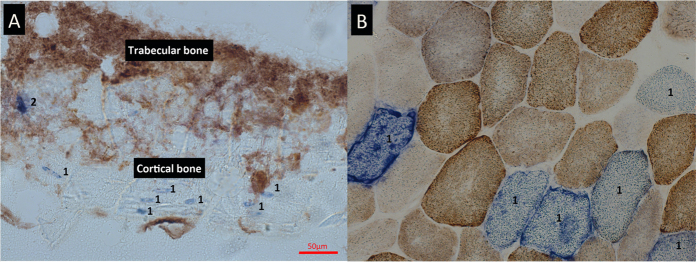
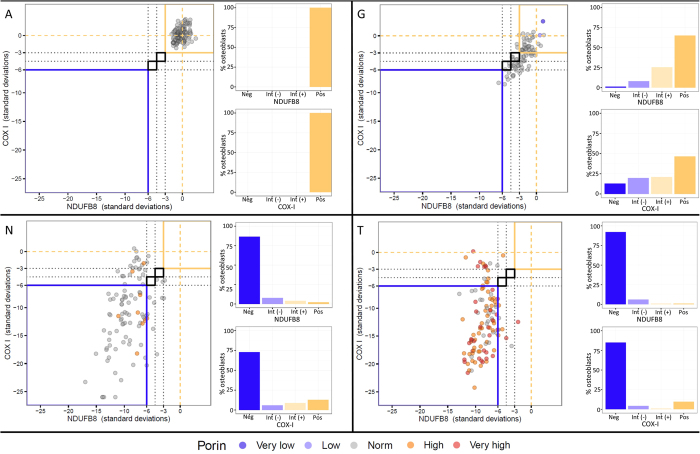
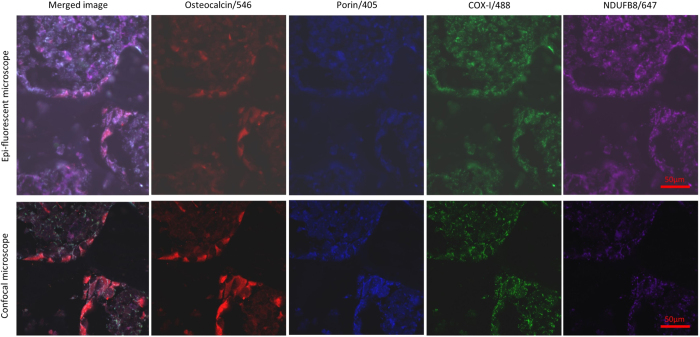
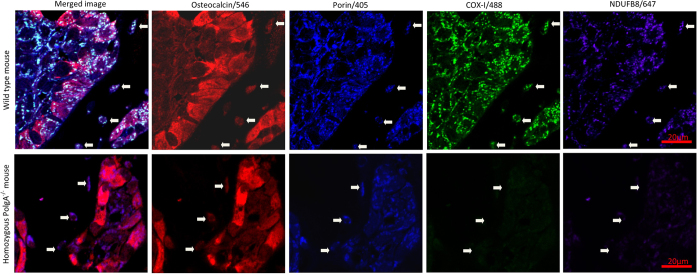
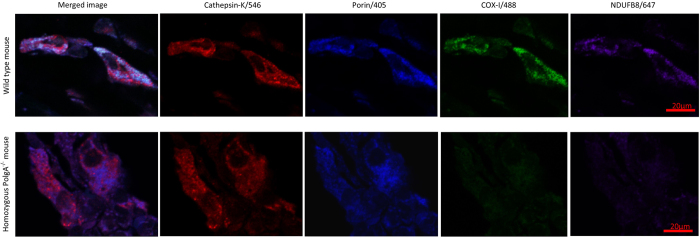
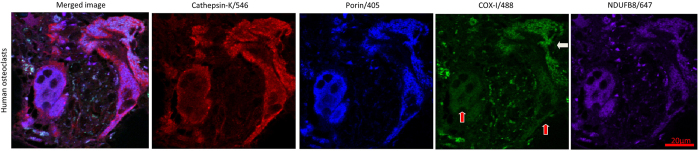
Fragility fractures caused by osteoporosis affect millions of people worldwide every year with significant levels of associated morbidity, mortality and costs to the healthcare economy. The pathogenesis of declining bone mineral density is poorly understood but it is inherently related to increasing age. Growing evidence in recent years, especially that provided by mouse models, suggest that accumulating somatic mitochondrial DNA mutations may cause the phenotypic changes associated with the ageing process including osteoporosis. Methods to study mitochondrial abnormalities in individual osteoblasts, osteoclasts and osteocytes are limited and impair our ability to assess the changes seen with age and in animal models of ageing. To enable the assessment of mitochondrial protein levels, we have developed a quadruple immunofluorescence method to accurately quantify the presence of mitochondrial respiratory chain components within individual bone cells. We have applied this technique to a well-established mouse model of ageing and osteoporosis and show respiratory chain deficiency.
骨质疏松症导致的脆性骨折每年影响全球数百万人,给医疗经济带来了严重的发病率、死亡率和成本。骨密度下降的发病机制还不清楚,但与年龄的增长有内在联系。近年来越来越多的证据表明,特别是小鼠模型提供的证据表明,积累的体线粒体 DNA 突变可能导致与衰老过程相关的表型变化,包括骨质疏松症。研究单个成骨细胞、破骨细胞和成骨细胞中线粒体异常的方法有限,这限制了我们评估年龄变化和衰老动物模型中所见变化的能力。为了能够评估线粒体蛋白水平,我们开发了一种四重免疫荧光方法,可准确量化单个骨细胞中线粒体呼吸链成分的存在。我们将该技术应用于一种成熟的衰老和骨质疏松症小鼠模型,并显示出呼吸链缺陷。