Barnhoorn Jonathan S, Döhring Falko R, Van Asseldonk Edwin H F, Verwey Willem B
Cognitive Psychology and Ergonomics, MIRA Institute, University of Twente Enschede, Netherlands.
Sportwissenschaftliches Institut, Universität des Saarlandes Saarbrücken, Germany.
Front Psychol. 2016 Aug 23;7:1125. doi: 10.3389/fpsyg.2016.01125. eCollection 2016.
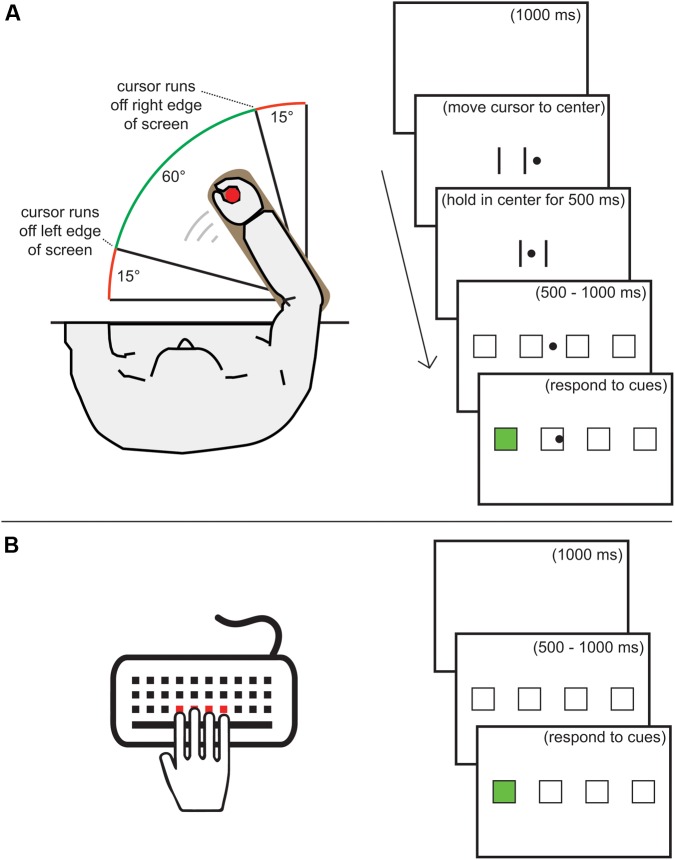
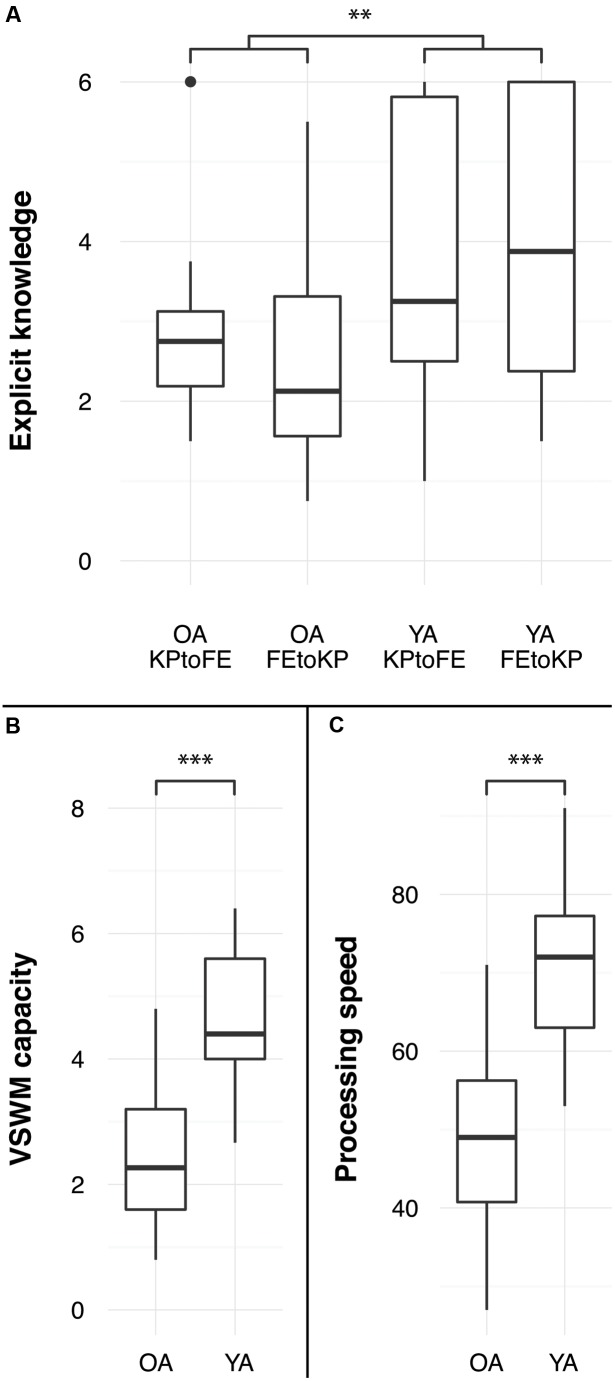
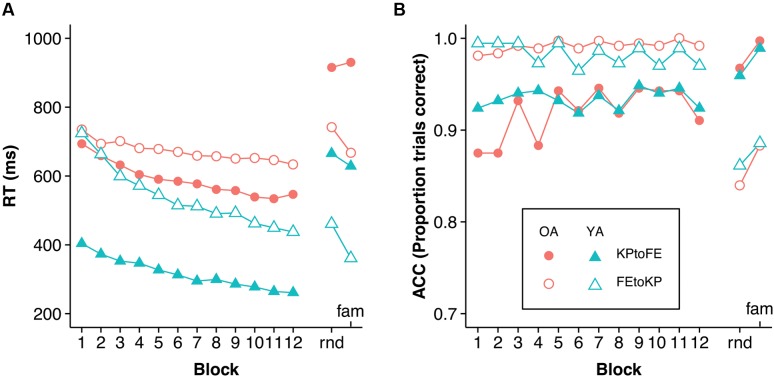
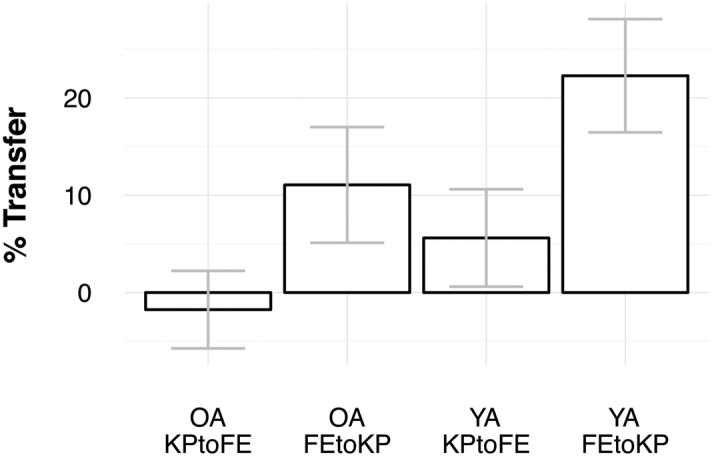
Older adults show reduced motor performance and changes in motor skill development. To better understand these changes, we studied differences in sequence knowledge representations between young and older adults using a transfer task. Transfer, or the ability to apply motor skills flexibly, is highly relevant in day-to-day motor activity and facilitates generalization of learning to new contexts. By using movement types that are completely unrelated in terms of muscle activation and response location, we focused on transfer facilitated by the early, visuospatial system. We tested 32 right-handed older adults (65-75) and 32 young adults (18-30). During practice of a discrete sequence production task, participants learned two six-element sequences using either unimanual key-presses (KPs) or by moving a lever with lower arm flexion-extension (FE) movements. Each sequence was performed 144 times. They then performed a test phase consisting of familiar and random sequences performed with the type of movements not used during practice. Both age groups displayed transfer from FE to KP movements as indicated by faster performance on the familiar sequences in the test phase. Only young adults transferred their sequence knowledge from KP to FE movements. In both directions, the young showed higher transfer than older adults. These results suggest that the older participants, like the young, represented their sequences in an abstract visuospatial manner. Transfer was asymmetric in both age groups: there was more transfer from FE to KP movements than vice versa. This similar asymmetry is a further indication that the types of representations that older adults develop are comparable to those that young adults develop. We furthermore found that older adults improved less during FE practice, gained less explicit knowledge, displayed a smaller visuospatial working memory capacity and had lower processing speed than young adults. Despite the many differences between young and older adults, the ability to apply sequence knowledge in a flexible way appears to be partly preserved in older adults.
老年人表现出运动能力下降和运动技能发展的变化。为了更好地理解这些变化,我们使用一项迁移任务研究了年轻人和老年人在序列知识表征方面的差异。迁移,即灵活应用运动技能的能力,在日常运动活动中高度相关,并有助于将学习推广到新的情境中。通过使用在肌肉激活和反应位置方面完全不相关的运动类型,我们关注由早期视觉空间系统促进的迁移。我们测试了32名右利手老年人(65 - 75岁)和32名年轻人(18 - 30岁)。在离散序列生成任务的练习过程中,参与者通过单手按键(KPs)或通过前臂屈伸(FE)运动移动杠杆来学习两个六元素序列。每个序列执行144次。然后他们进行一个测试阶段,包括用练习期间未使用的运动类型执行熟悉的和随机的序列。两个年龄组在测试阶段都表现出从FE到KP运动的迁移,这表现为熟悉序列的执行速度更快。只有年轻人将他们的序列知识从KP迁移到FE运动。在两个方向上,年轻人的迁移都比老年人高。这些结果表明,老年参与者与年轻人一样,以抽象的视觉空间方式表征他们的序列。两个年龄组的迁移都是不对称的:从FE到KP运动的迁移比从KP到FE运动的迁移更多。这种相似的不对称进一步表明,老年人发展的表征类型与年轻人发展的表征类型是可比的。我们还发现,与年轻人相比,老年人在FE练习期间进步较小,获得的显性知识较少,视觉空间工作记忆容量较小,处理速度较低。尽管年轻人和老年人之间存在许多差异,但老年人似乎部分保留了以灵活方式应用序列知识的能力。