Más Vicente, Rodriguez Laura, Olmedillas Eduardo, Cano Olga, Palomo Concepción, Terrón María C, Luque Daniel, Melero José A, McLellan Jason S
Unidad de Biología Viral, Centro Nacional de Microbiología and CIBER de Enfermedades Respiratorias, Instituto de Salud Carlos III, Majadahonda, Madrid, Spain.
Unidad de Microscopía Electrónica y Confocal, Centro Nacional de Microbiología, Instituto de Salud Carlos III, Majadahonda, Madrid, Spain.
PLoS Pathog. 2016 Sep 9;12(9):e1005859. doi: 10.1371/journal.ppat.1005859. eCollection 2016 Sep.
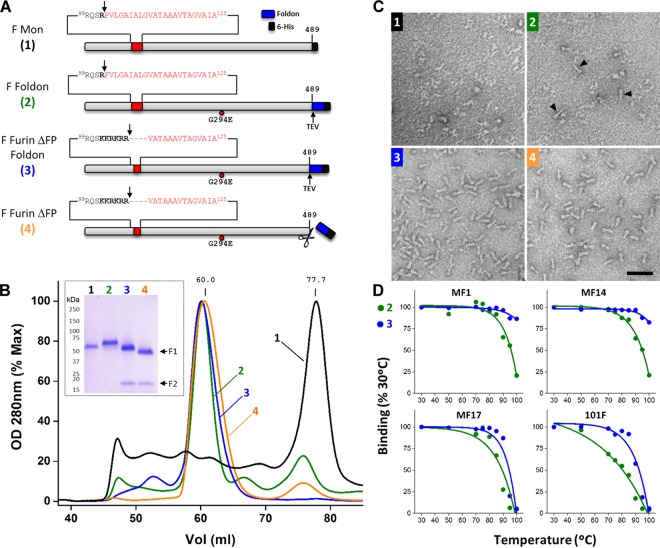
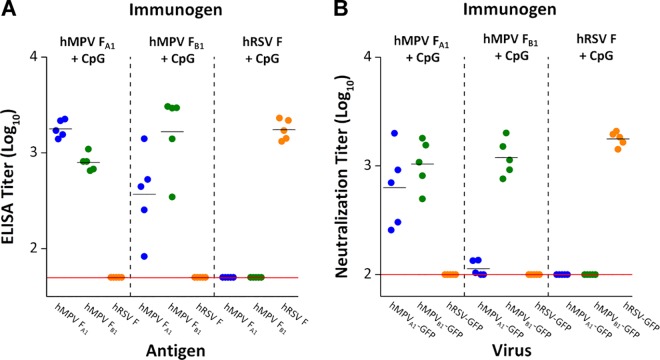
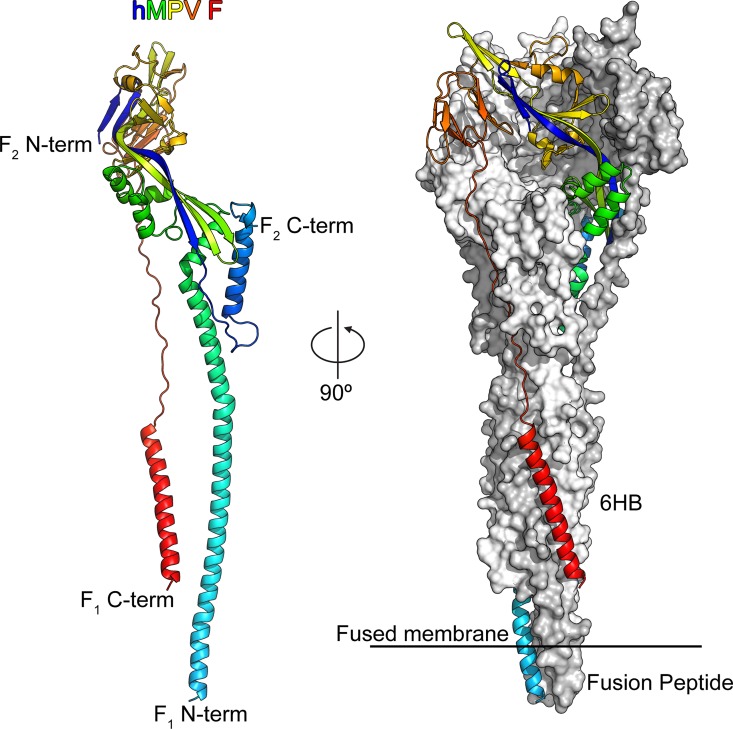
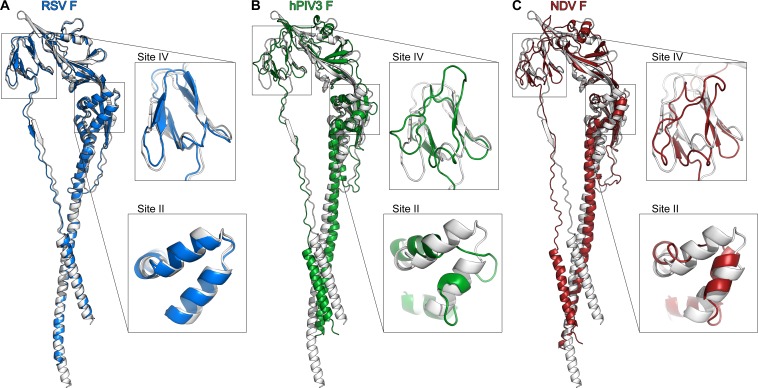
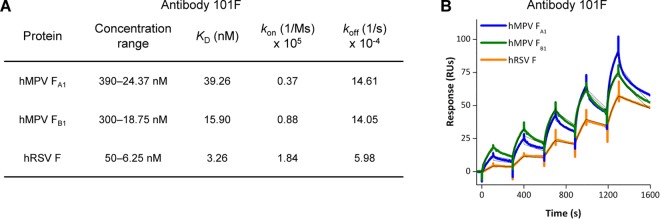
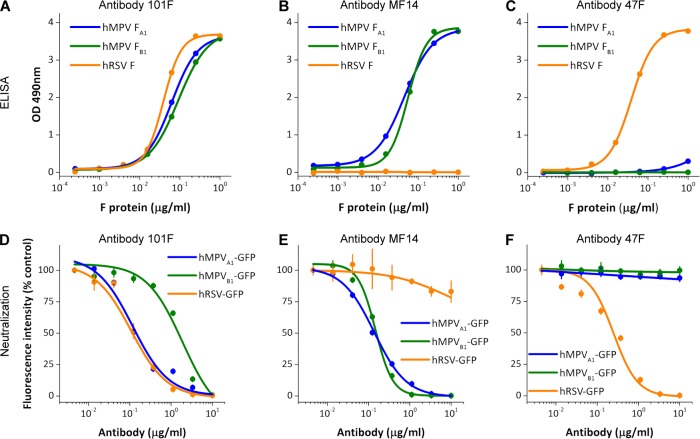
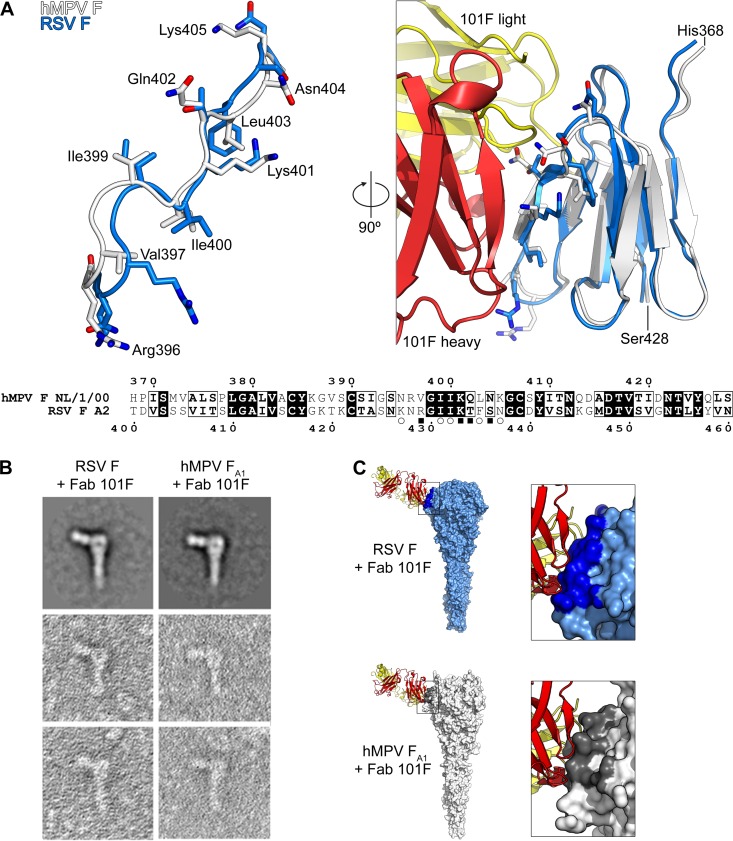
Human metapneumovirus (hMPV) is a paramyxovirus that is a common cause of bronchiolitis and pneumonia in children less than five years of age. The hMPV fusion (F) glycoprotein is the primary target of neutralizing antibodies and is thus a critical vaccine antigen. To facilitate structure-based vaccine design, we stabilized the ectodomain of the hMPV F protein in the postfusion conformation and determined its structure to a resolution of 3.3 Å by X-ray crystallography. The structure resembles an elongated cone and is very similar to the postfusion F protein from the related human respiratory syncytial virus (hRSV). In contrast, significant differences were apparent with the postfusion F proteins from other paramyxoviruses, such as human parainfluenza type 3 (hPIV3) and Newcastle disease virus (NDV). The high similarity of hMPV and hRSV postfusion F in two antigenic sites targeted by neutralizing antibodies prompted us to test for antibody cross-reactivity. The widely used monoclonal antibody 101F, which binds to antigenic site IV of hRSV F, was found to cross-react with hMPV postfusion F and neutralize both hRSV and hMPV. Despite the cross-reactivity of 101F and the reported cross-reactivity of two other antibodies, 54G10 and MPE8, we found no detectable cross-reactivity in the polyclonal antibody responses raised in mice against the postfusion forms of either hMPV or hRSV F. The postfusion-stabilized hMPV F protein did, however, elicit high titers of hMPV-neutralizing activity, suggesting that it could serve as an effective subunit vaccine. Structural insights from these studies should be useful for designing novel immunogens able to induce wider cross-reactive antibody responses.
人偏肺病毒(hMPV)是一种副粘病毒,是5岁以下儿童毛细支气管炎和肺炎的常见病因。hMPV融合(F)糖蛋白是中和抗体的主要靶点,因此是一种关键的疫苗抗原。为了促进基于结构的疫苗设计,我们将hMPV F蛋白的胞外域稳定在融合后构象,并通过X射线晶体学确定其结构,分辨率为3.3 Å。该结构类似于一个细长的圆锥体,与相关的人呼吸道合胞病毒(hRSV)的融合后F蛋白非常相似。相比之下,与其他副粘病毒(如人副流感病毒3型(hPIV3)和新城疫病毒(NDV))的融合后F蛋白存在明显差异。hMPV和hRSV融合后F在两个被中和抗体靶向的抗原位点具有高度相似性,这促使我们测试抗体的交叉反应性。发现广泛使用的单克隆抗体101F与hRSV F的抗原位点IV结合,可与hMPV融合后F发生交叉反应,并中和hRSV和hMPV。尽管101F具有交叉反应性,且另外两种抗体54G10和MPE8也有报道的交叉反应性,但我们发现在小鼠体内针对hMPV或hRSV F融合后形式产生的多克隆抗体反应中没有可检测到的交叉反应性。然而,融合后稳定的hMPV F蛋白确实引发了高滴度的hMPV中和活性,表明它可以作为一种有效的亚单位疫苗。这些研究的结构见解应有助于设计能够诱导更广泛交叉反应性抗体反应的新型免疫原。