Shanghai Biomaterials Research &Testing Center, Shanghai Key Laboratory of Stomatology, Ninth People's Hospital, Shanghai Jiaotong University School of Medicine, Shanghai 200023, China.
School of Pharmacy, Fudan University, Shanghai 201203, China.
Sci Rep. 2016 Sep 15;6:33443. doi: 10.1038/srep33443.
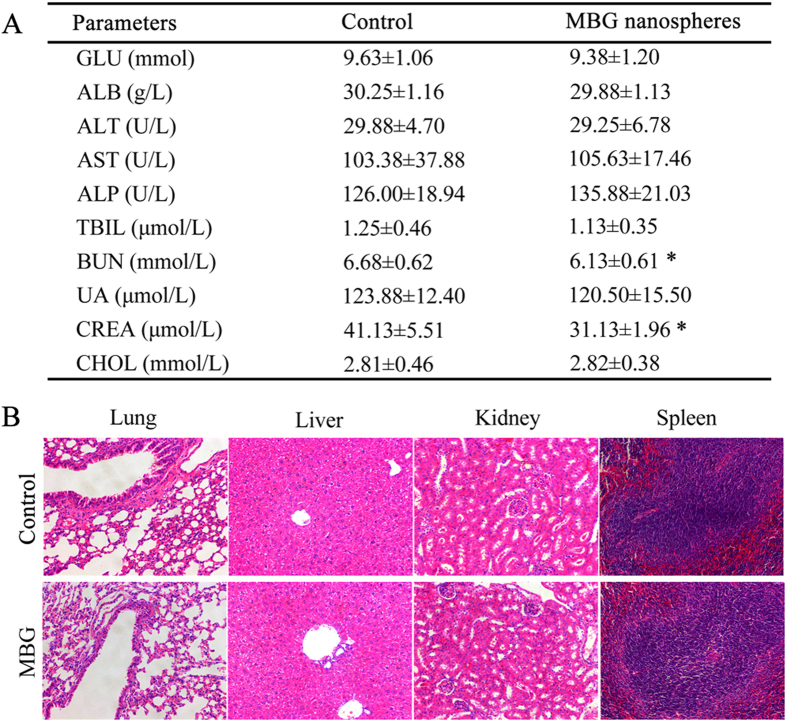
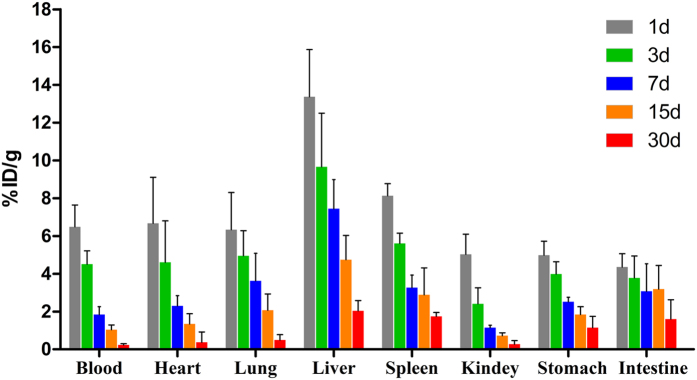
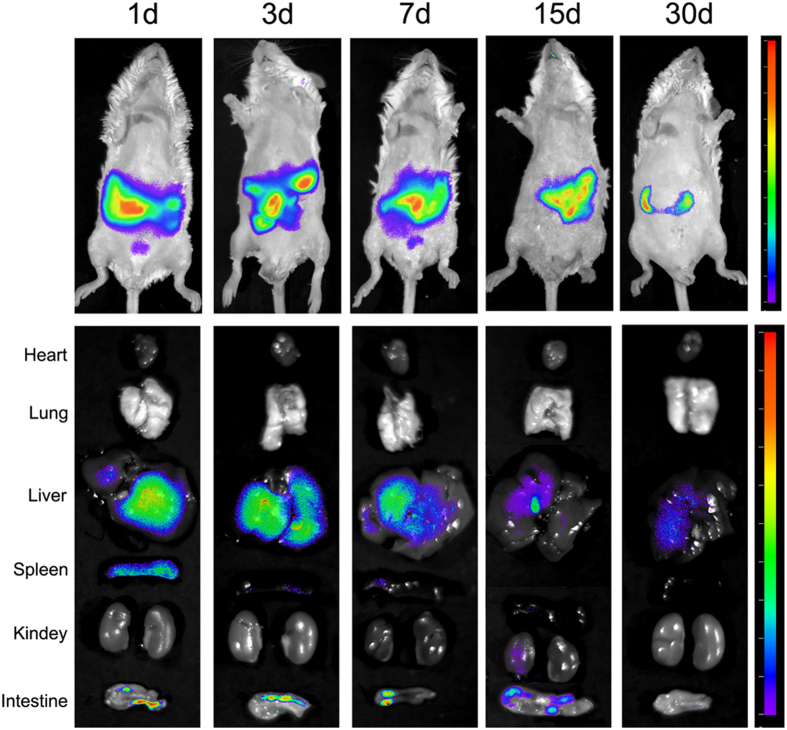
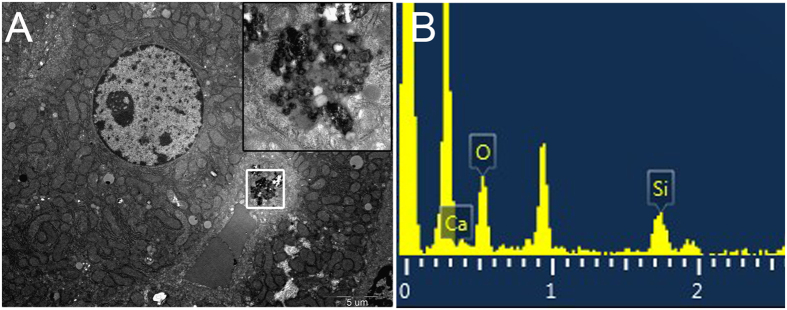
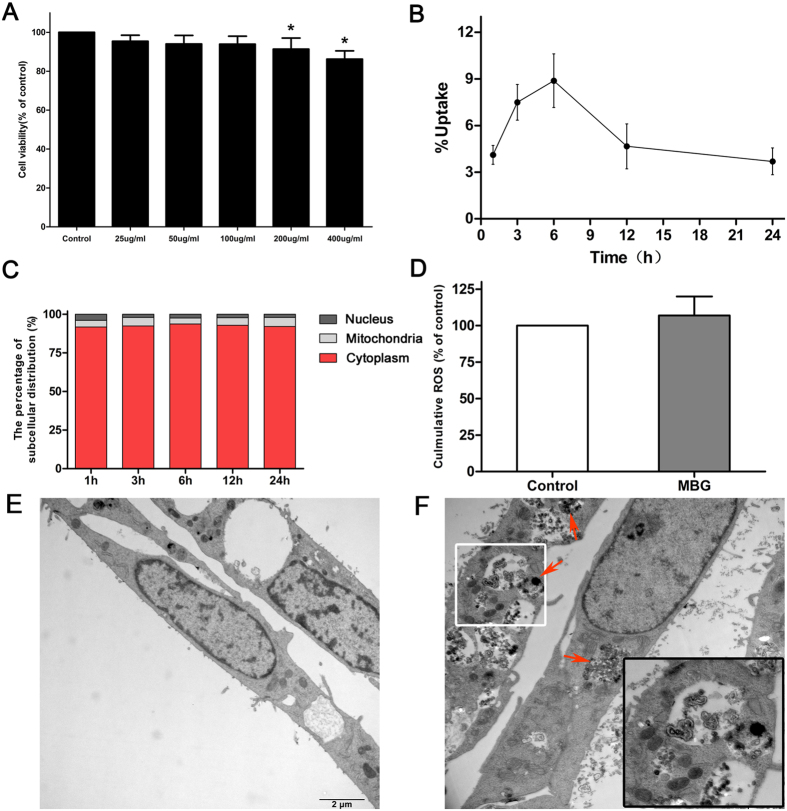
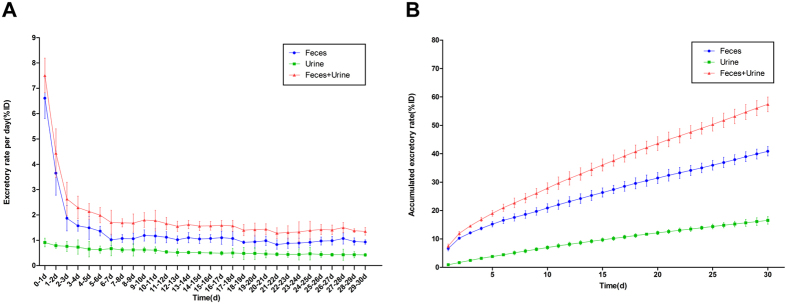
Mesoporous bioactive glass (MBG) nanospheres with excellent drug loading property have attracted significant attention in the field of nano-medicine. However, systemic metabolism and biosafety of MBG nanospheres which are crucial issues for clinical application are yet to be fully understood. Isotope quantitative tracing combined with biochemical parameters and histopatological changes were used to analyze biodistribution, excretion path and the effect on metabolism and major organs, and then we focused on the hepatocellular location and damaging effect of MBG. The results indicated MBG possessed a longer residence time in blood. After being cleared from circulation, nanospheres were mainly distributed in the liver and were slightly internalized in the form of exogenous phagosome by hepatocyte, whereby more than 96% of nanospheres were located in the cytoplasm (nearly no nuclear involvement). A little MBG was transferred into the mitochondria, but did not cause ROS reaction. Furthermore, no abnormal metabolism and histopathological changes was observed. The accumulation of MBG nanospheres in various organs were excreted mainly through feces. This study revealed comprehensively the systemic metabolism of drug-loadable MBG nanospheres and showed nanospheres have no obvious biological risk, which provides a scientific basis for developing MBG nanospheres as a new drug delivery in clinical application.
介孔生物活性玻璃(MBG)纳米球具有优异的载药性能,在纳米医学领域引起了广泛关注。然而,MBG 纳米球的系统代谢和生物安全性是临床应用中亟待解决的关键问题。本研究采用同位素定量示踪结合生化参数和组织病理学变化分析了 MBG 纳米球的生物分布、排泄途径以及对代谢和主要器官的影响,并重点关注 MBG 在肝内的定位和损伤作用。结果表明,MBG 在血液中具有更长的停留时间。从循环中清除后,纳米球主要分布在肝脏中,以异噬体的形式被肝细胞轻微内化,其中超过 96%的纳米球位于细胞质中(几乎没有核内涉及)。少量的 MBG 转移到线粒体中,但没有引起 ROS 反应。此外,没有观察到异常的代谢和组织病理学变化。MBG 纳米球在各器官中的积累主要通过粪便排出。本研究全面揭示了载药 MBG 纳米球的系统代谢情况,表明纳米球没有明显的生物学风险,为开发 MBG 纳米球作为临床应用的新型药物载体提供了科学依据。