Jiménez-Holguín Javier, Sánchez-Salcedo Sandra, Cicuéndez Mónica, Vallet-Regí María, Salinas Antonio J
Departamento de Química en Ciencias Farmacéuticas, Facultad de Farmacia, Universidad Complutense de Madrid, UCM, Instituto de Investigación Hospital 12 de Octubre, Imas12, 28040 Madrid, Spain.
Networking Research Center on Bioengineering, Biomaterials and Nanomedicine, CIBER-BBN, 28040 Madrid, Spain.
Pharmaceutics. 2022 Apr 12;14(4):845. doi: 10.3390/pharmaceutics14040845.
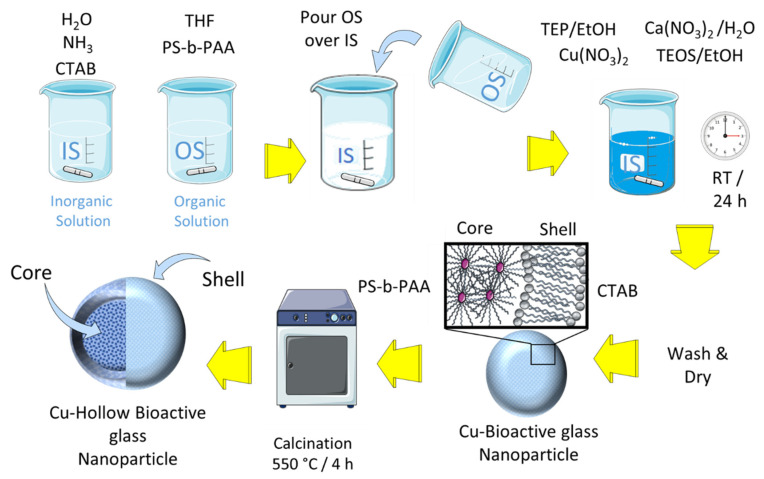
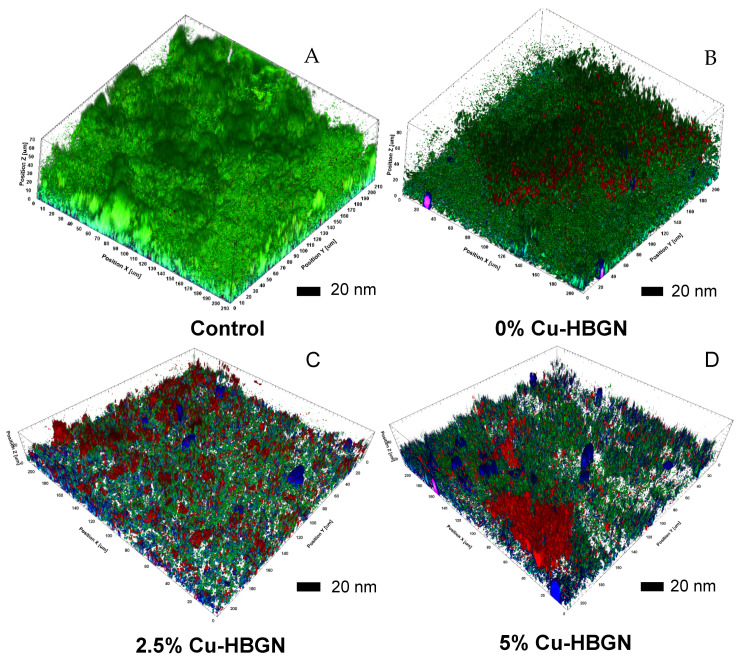
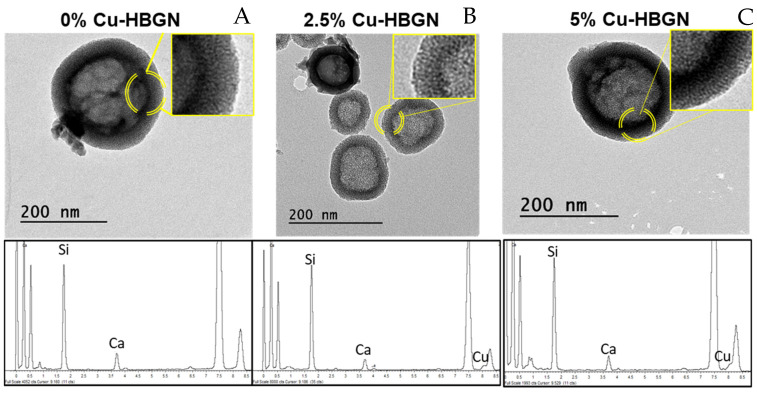
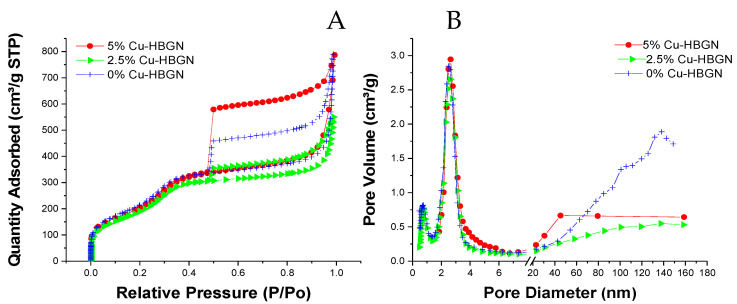
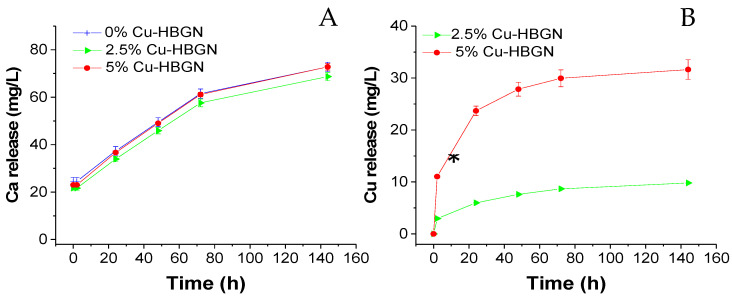
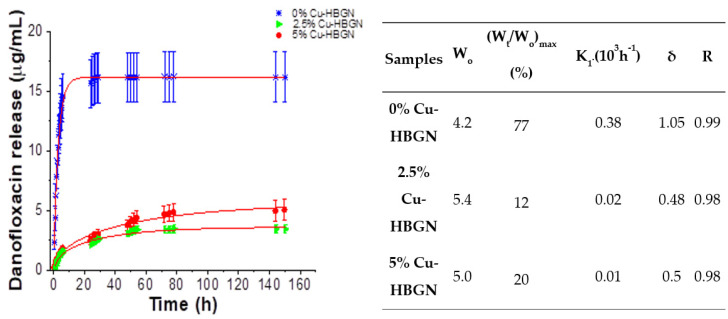
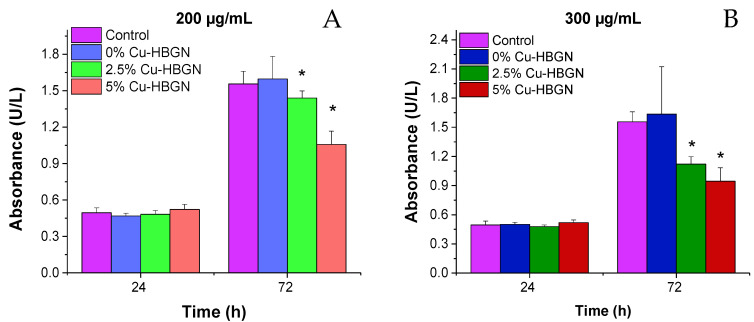
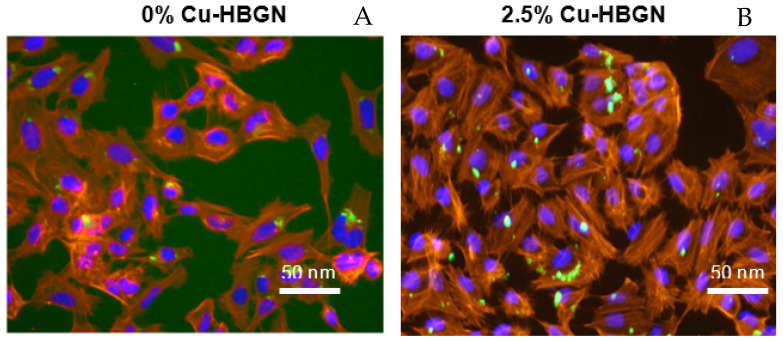
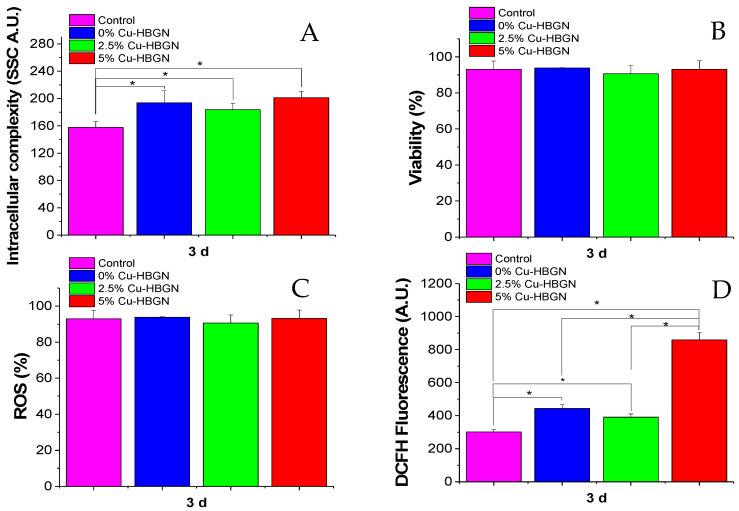
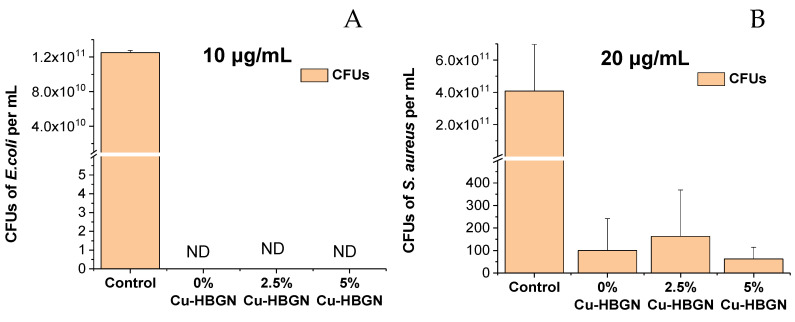
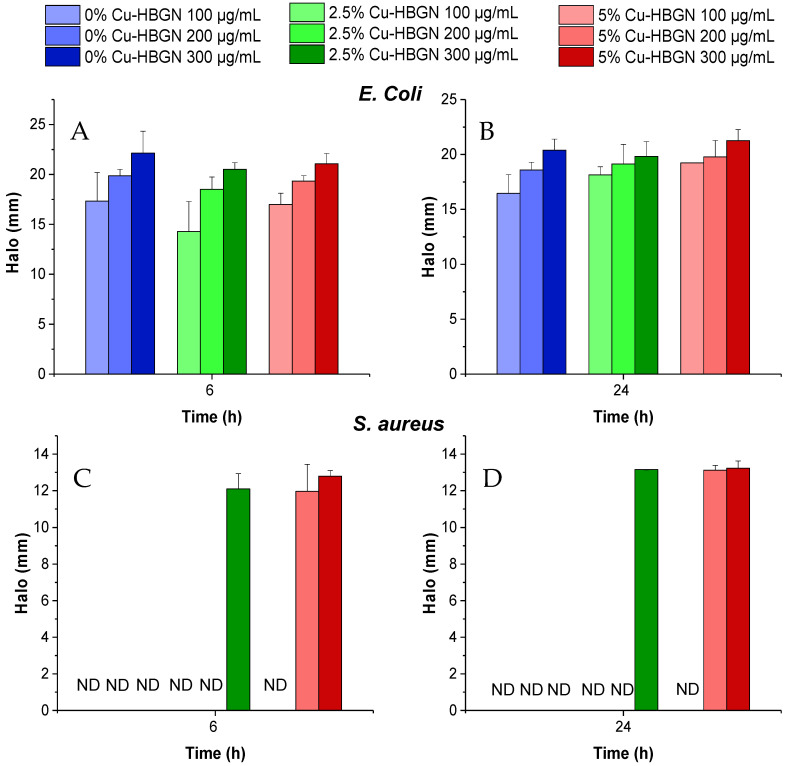
In search of new approaches to treat bone infection and prevent drug resistance development, a nanosystem based on hollow bioactive glass nanoparticles (HBGN) of composition 79.5SiO-(18-x)CaO-2.5PO-xCuO (x = 0, 2.5 or 5 mol-% CuO) was developed. The objective of the study was to evaluate the capacity of the HBGN to be used as a nanocarrier of the broad-spectrum antibiotic danofloxacin and source of bactericidal Cu ions. Core-shell nanoparticles with specific surface areas close to 800 m/g and pore volumes around 1 cm/g were obtained by using hexadecyltrimethylammonium bromide (CTAB) and poly(styrene)-block-poly(acrylic acid) (PS-b-PAA) as structure-directing agents. Flow cytometry studies showed the cytocompatibility of the nanoparticles in MC3T3-E1 pre-osteoblastic cell cultures. Ion release studies confirmed the release of non-cytotoxic concentrations of Cu ions within the therapeutic range. Moreover, it was shown that the inclusion of copper in the system resulted in a more gradual release of danofloxacin that was extended over one week. The bactericidal activity of the nanosystem was evaluated with and strains. Nanoparticles with copper were not able to reduce bacterial viability by themselves and Cu-free HBGN failed to reduce bacterial growth, despite releasing higher antibiotic concentrations. However, HBGN enriched with copper and danofloxacin drastically reduced bacterial growth in sessile, planktonic and biofilm states, which was attributed to a synergistic effect between the action of Cu ions and danofloxacin. Therefore, the nanosystem here investigated is a promising candidate as an alternative for the local treatment of bone infections.
为寻求治疗骨感染和预防耐药性产生的新方法,开发了一种基于组成为79.5SiO-(18-x)CaO-2.5PO-xCuO(x = 0、2.5或5摩尔%CuO)的中空生物活性玻璃纳米颗粒(HBGN)的纳米系统。本研究的目的是评估HBGN作为广谱抗生素达氟沙星的纳米载体和杀菌铜离子来源的能力。通过使用十六烷基三甲基溴化铵(CTAB)和聚(苯乙烯)-嵌段-聚(丙烯酸)(PS-b-PAA)作为结构导向剂,获得了比表面积接近800 m/g且孔体积约为1 cm/g的核壳纳米颗粒。流式细胞术研究表明纳米颗粒在MC3T3-E1前成骨细胞培养物中具有细胞相容性。离子释放研究证实了在治疗范围内释放无细胞毒性浓度的铜离子。此外,研究表明系统中铜的加入导致达氟沙星的释放更加缓慢,且释放时间延长至一周。用 和 菌株评估了纳米系统的杀菌活性。含铜的纳米颗粒本身无法降低细菌活力,不含铜的HBGN尽管释放出更高浓度的抗生素,但也未能抑制细菌生长。然而,富含铜和达氟沙星的HBGN能显著降低固着态、浮游态和生物膜态细菌的生长,这归因于铜离子和达氟沙星作用之间的协同效应。因此,本文研究的纳米系统有望成为局部治疗骨感染的替代方案。