Xie Wen-Jing, Yu Hong-Quan, Zhang Yu, Liu Qun, Meng Hong-Mei
Department of Neurology and Neuroscience Center, First Hospital of Jilin University, Changchun, Jilin Province, China.
Department of Neurosurgery, First Hospital of Jilin University, Changchun, Jilin Province, China.
Neural Regen Res. 2016 Jul;11(7):1122-7. doi: 10.4103/1673-5374.187047.
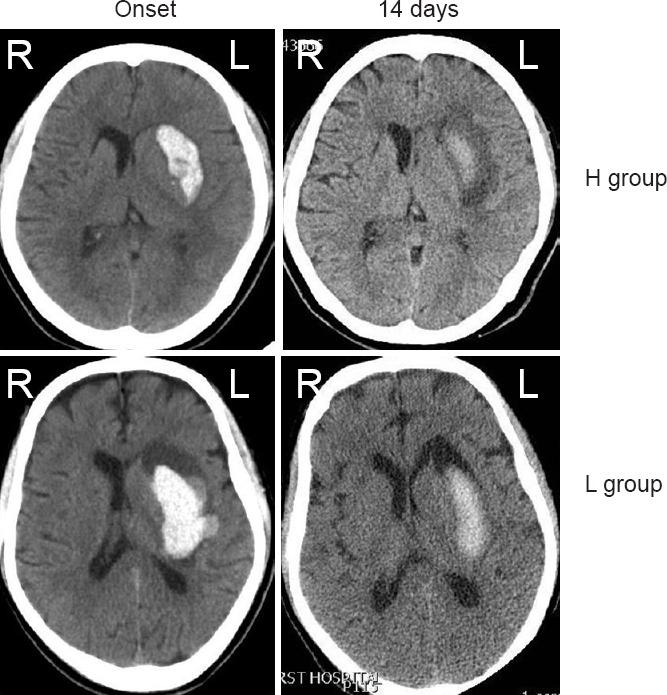
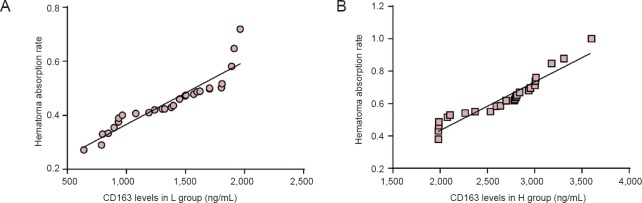
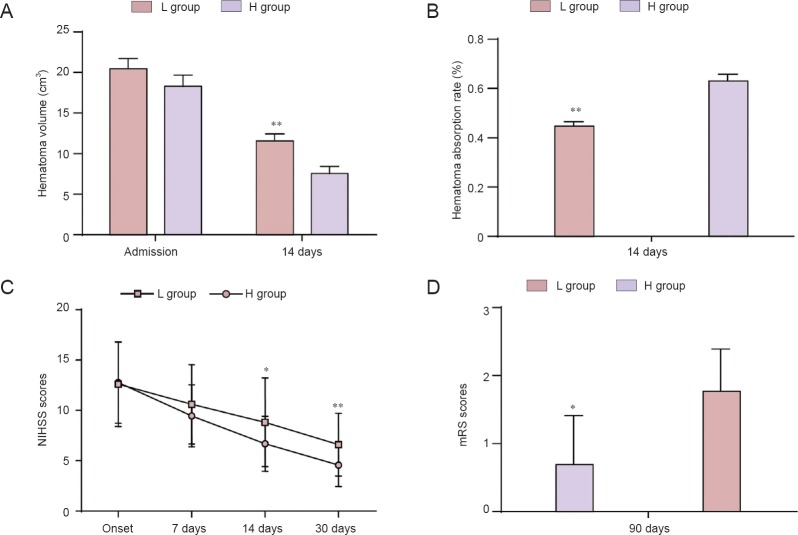
Clinical outcomes are positively associated with hematoma absorption. The monocyte-macrophage scavenger receptor, CD163, plays an important role in the metabolism of hemoglobin, and a soluble form of CD163 is present in plasma and other tissue fluids; therefore, we speculated that serum CD163 affects hematoma absorption after intracerebral hemorrhage. Patients with intracerebral hemorrhage were divided into high- and low-level groups according to the average CD163 level (1,977.79 ± 832.91 ng/mL). Compared with the high-level group, the low-level group had a significantly slower hematoma absorption rate, and significantly increased National Institutes of Health Stroke Scale scores and modified Rankin Scale scores. These results suggest that CD163 promotes hematoma absorption and the recovery of neurological function in patients with intracerebral hemorrhage.
临床结局与血肿吸收呈正相关。单核细胞 - 巨噬细胞清道夫受体CD163在血红蛋白代谢中起重要作用,血浆和其他组织液中存在可溶性CD163;因此,我们推测血清CD163影响脑出血后的血肿吸收。根据平均CD163水平(1,977.79±832.91 ng/mL)将脑出血患者分为高水平组和低水平组。与高水平组相比,低水平组血肿吸收速度明显较慢,美国国立卫生研究院卒中量表评分和改良Rankin量表评分显著增加。这些结果表明,CD163可促进脑出血患者的血肿吸收和神经功能恢复。