Crow Marni S, Lum Krystal K, Sheng Xinlei, Song Bokai, Cristea Ileana M
Department of Molecular Biology, Princeton University, Lewis Thomas Laboratory, Washington Road, Princeton, NJ 08544.
Crit Rev Biochem Mol Biol. 2016 Nov/Dec;51(6):452-481. doi: 10.1080/10409238.2016.1226250. Epub 2016 Sep 21.
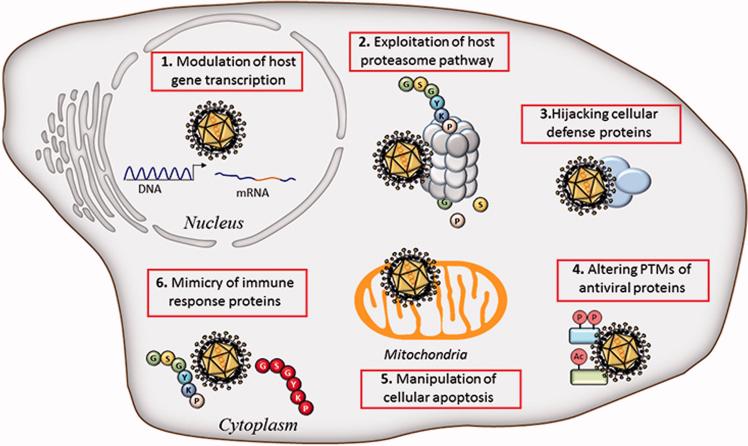
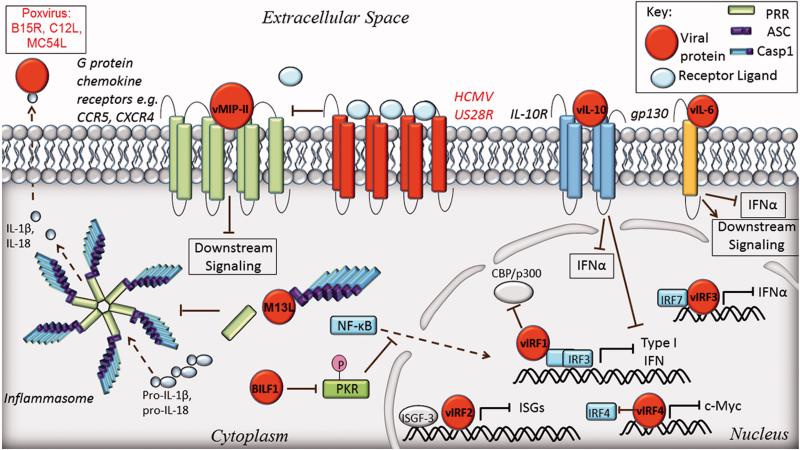
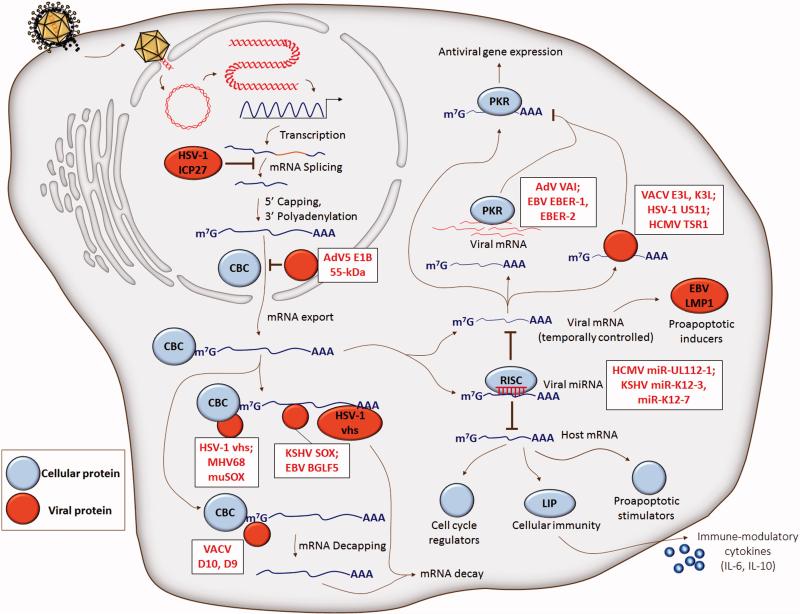
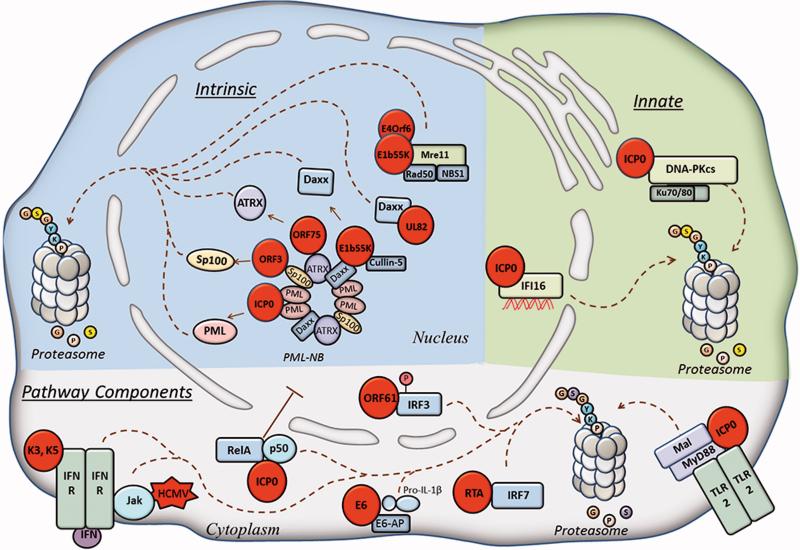
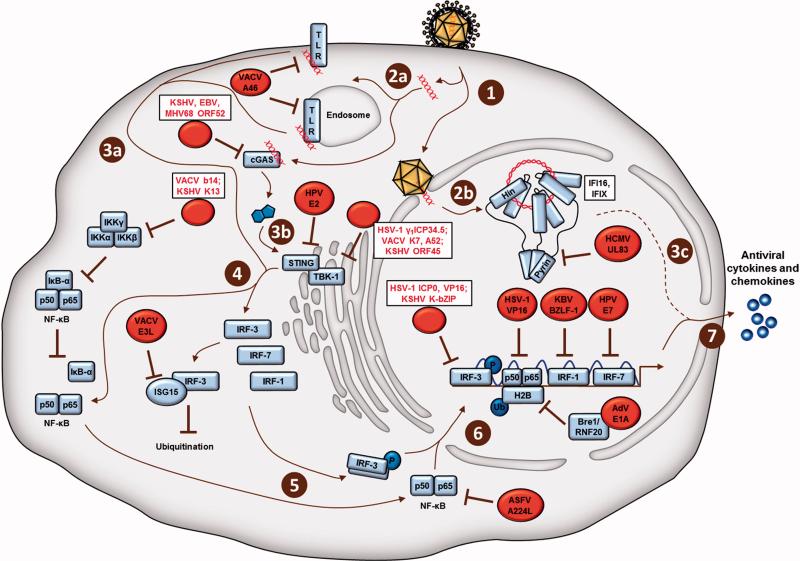
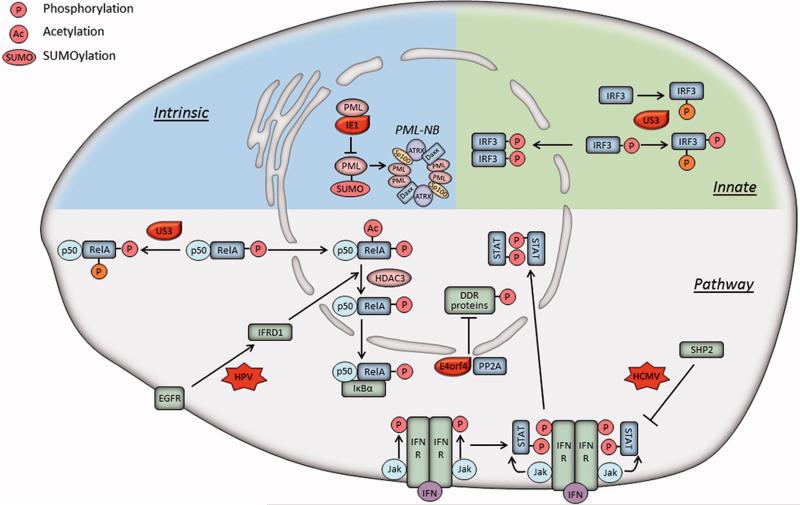
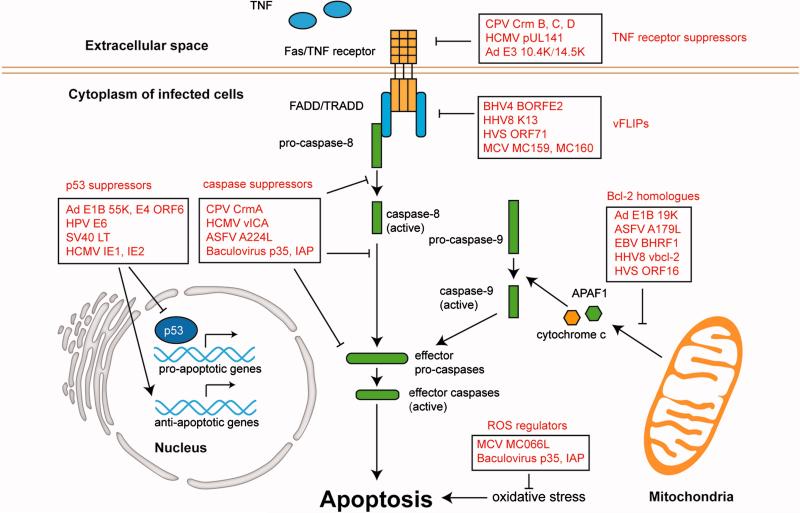
In mammalian cells, early defenses against infection by pathogens are mounted through a complex network of signaling pathways shepherded by immune-modulatory pattern-recognition receptors. As obligate parasites, the survival of viruses is dependent on the evolutionary acquisition of mechanisms that tactfully dismantle and subvert the cellular intrinsic and innate immune responses. Here, we review the diverse mechanisms by which viruses that accommodate DNA genomes are able to circumvent activation of cellular immunity. We start by discussing viral manipulation of host defense protein levels by either transcriptional regulation or protein degradation. We next review viral strategies used to repurpose or inhibit these cellular immune factors by molecular hijacking or by regulating their post-translational modification status. Additionally, we explore the infection-induced temporal modulation of apoptosis to facilitate viral replication and spread. Lastly, the co-evolution of viruses with their hosts is highlighted by the acquisition of elegant mechanisms for suppressing host defenses via viral mimicry of host factors. In closing, we present a perspective on how characterizing these viral evasion tactics both broadens the understanding of virus-host interactions and reveals essential functions of the immune system at the molecular level. This knowledge is critical in understanding the sources of viral pathogenesis, as well as for the design of antiviral therapeutics and autoimmunity treatments.
在哺乳动物细胞中,针对病原体感染的早期防御是通过由免疫调节模式识别受体引导的复杂信号通路网络来进行的。作为专性寄生虫,病毒的生存依赖于其在进化过程中获得的巧妙拆解和颠覆细胞固有免疫和先天性免疫反应的机制。在此,我们综述了容纳DNA基因组的病毒能够规避细胞免疫激活的多种机制。我们首先讨论病毒通过转录调控或蛋白质降解对宿主防御蛋白水平的操纵。接下来,我们综述病毒通过分子劫持或调节其翻译后修饰状态来重新利用或抑制这些细胞免疫因子的策略。此外,我们探讨感染诱导的凋亡的时间调控,以促进病毒的复制和传播。最后,病毒通过模仿宿主因子来抑制宿主防御的精妙机制的获得,凸显了病毒与其宿主的共同进化。最后,我们阐述了一个观点,即了解这些病毒逃避策略如何既能拓宽对病毒-宿主相互作用的理解,又能在分子水平揭示免疫系统的基本功能。这些知识对于理解病毒发病机制的根源以及抗病毒治疗和自身免疫治疗的设计至关重要。