Clinical Outcomes Research Unit, Massachusetts Eye and Ear, United States.
Department of Otolaryngology, Massachusetts Eye and Ear, 243 Charles Street, Boston, MA 02114, United States; Harvard Medical School, Boston, MA, United States.
Prev Med Rep. 2016 Sep 7;4:486-9. doi: 10.1016/j.pmedr.2016.09.003. eCollection 2016 Dec.
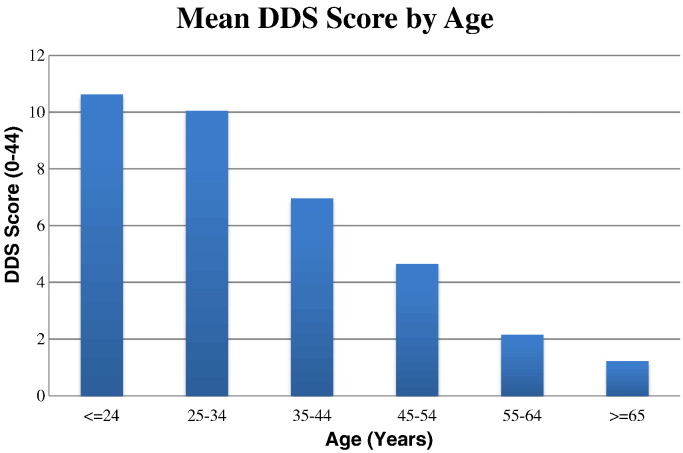
Texting and other cell-phone related distracted driving is estimated to account for thousands of motor vehicle collisions each year but studies examining the specific cell phone reading and writing activities of drivers are limited. The objective of this study was to describe the frequency of cell-phone related distracted driving behaviors. A national, representative, anonymous panel of 1211 United States drivers was recruited in 2015 to complete the Distracted Driving Survey (DDS), an 11-item validated questionnaire examining cell phone reading and writing activities and at what speeds they occur. Higher DDS scores reflect more distraction. DDS scores were analyzed by demographic data and self-reported crash rate. Nearly 60% of respondents reported a cell phone reading or writing activity within the prior 30 days, with reading texts (48%), writing texts (33%) and viewing maps (43%) most frequently reported. Only 4.9% of respondents had enrolled in a program aimed at reducing cell phone related distracted driving. DDS scores were significantly correlated to crash rate (p < 0.0001), with every one point increase associated with an additional 7% risk of a crash (p < 0.0001). DDS scores were inversely correlated to age (p < 0.0001). The DDS demonstrated high internal consistency (Cronbach's alpha = 0.94). High rates of cell phone-related distraction are reported here in a national sample. Distraction is associated with crash rates and occurs across all age groups, but is highest in younger drivers. The DDS can be used to evaluate the impact of public health programs aimed at reducing cell-phone related distracted driving.
文本和其他与手机相关的驾驶分心行为估计每年导致数千起机动车事故,但研究驾驶员特定的手机阅读和写作活动的研究有限。本研究的目的是描述与手机相关的驾驶分心行为的频率。2015 年,一项针对美国 1211 名驾驶员的全国性、代表性、匿名小组研究招募了驾驶员,以完成分心驾驶调查(DDS),这是一个 11 项经验证的问卷,检查手机阅读和写作活动以及它们在什么速度下发生。DDS 得分越高,反映出分心程度越高。根据人口统计数据和自我报告的事故率分析 DDS 得分。近 60%的受访者报告在过去 30 天内有过手机阅读或写作活动,其中阅读短信(48%)、编写短信(33%)和查看地图(43%)最常见。只有 4.9%的受访者参加了旨在减少与手机相关的驾驶分心的项目。DDS 得分与事故率显著相关(p<0.0001),每增加一分,与事故风险增加 7%相关(p<0.0001)。DDS 得分与年龄呈负相关(p<0.0001)。DDS 表现出很高的内部一致性(Cronbach's alpha=0.94)。在全国性样本中,这里报告了很高的手机相关干扰率。分心与事故率有关,并且发生在所有年龄段,但在年轻司机中最高。DDS 可用于评估旨在减少与手机相关的驾驶分心的公共卫生项目的影响。