Tehranian Afsaneh, Esfehani-Mehr Bahareh, Pirjani Reihaneh, Rezaei Negar, Sadat Heidary Somaye, Sepidarkish Mahdi
Department of Obstetrics and Gynecology, Arash Women's Hospital, Tehran University of Medical Sciences, Tehran, IR Iran.
Department of Epidemiology, School of Public Health, Iran University of Medical Sciences, Tehran, IR Iran.
Iran Red Crescent Med J. 2016 May 17;18(7):e34449. doi: 10.5812/ircmj.34449. eCollection 2016 Jul.
Platelet-rich plasma (PRP) is a human plasma product enriched by platelets, growth factors, and fibrinogen with high hemostatic and healing properties.
The aim of this study was to evaluate the effect of autologous PRP on wound healing in high-risk women undergoing cesarean sections.
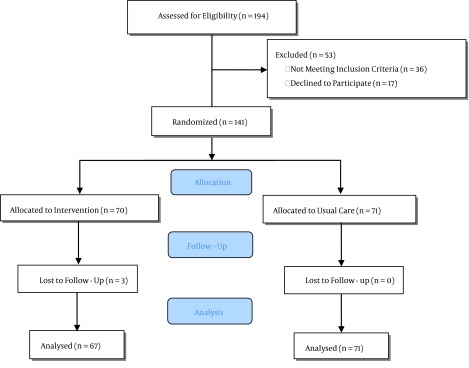
In this balanced, randomized, and controlled trial, 140 patients were admitted to Arash women's hospital, Tehran, Iran from May of 2013 to November of 2014 for elective cesarean surgery. The patients were randomly assigned into two groups. The intervention group received PRP after surgery, whereas the control group received the usual care. All patients were evaluated at baseline, five days, and eight weeks after the cesarean section. The primary endpoint used the REEDA scale for assessing the changes in wound healing. The secondary outcome measures used were the Vancouver scar scale (VSS) and the visual analog scale (VAS). All scale scores were analyzed using a repeated measures test for variance.
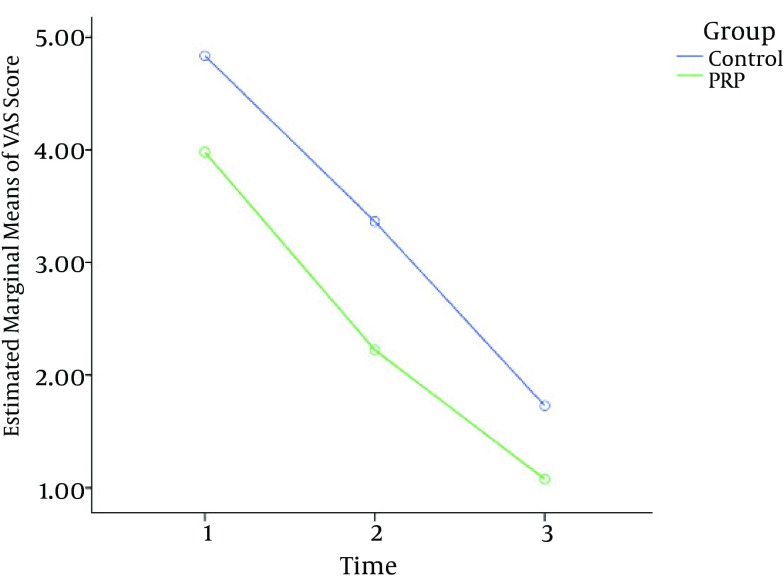
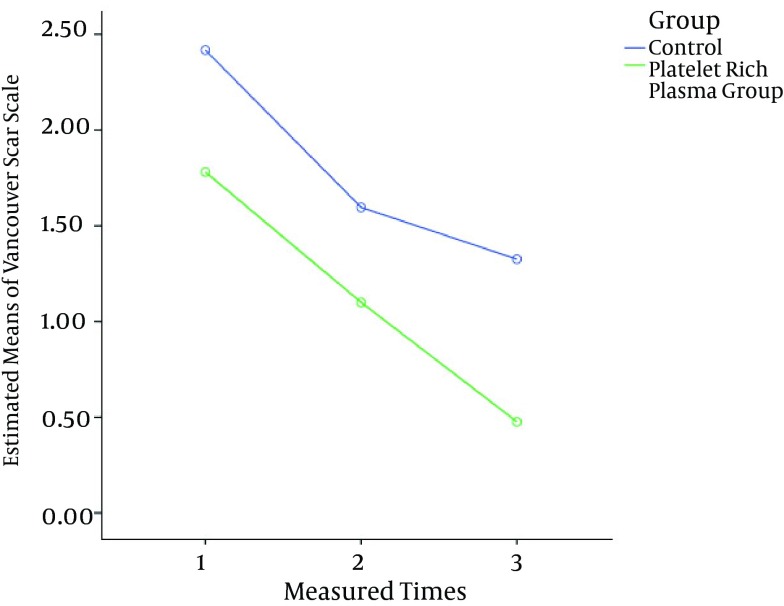
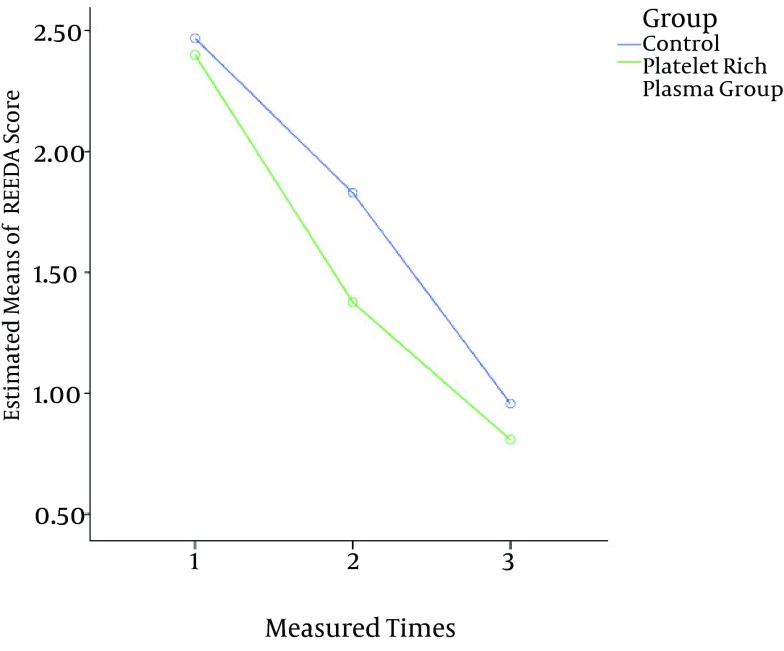
At the end of study, the PRP group showed a greater reduction in the edema ecchymosed discharge approximation (REEDA) score compared to the control group (85.5% reduction in the PRP group; 72% in the control group) (P < 0.001). Compared with the control group, the PRP group had a significantly greater reduction in the VAN score, beginning on the fifth day after the cesarean section (-0.7, 38% reduction in PRP group; -0.8, 33% in control group) (P < 0.001), and this trend was stable at the end of the eighth week (-0.6, 54% reduction in PRP group; -0.3, 18% in control group). Furthermore, patients treated with PRP experienced a 93% reduction in the VAS score at the end of follow-up, but the control group only observed a 79% reduction (P < 0.001).
It seems that applying PRP is an effective therapeutic approach for wound healing, and faster wound healing is expected due to the presence of more platelets and growth factors.
富血小板血浆(PRP)是一种富含血小板、生长因子和纤维蛋白原的人体血浆制品,具有高度止血和愈合特性。
本研究旨在评估自体PRP对接受剖宫产的高危女性伤口愈合的影响。
在这项均衡、随机和对照试验中,2013年5月至2014年11月期间,140例患者入住伊朗德黑兰阿拉什妇女医院接受择期剖宫产手术。患者被随机分为两组。干预组术后接受PRP治疗,而对照组接受常规护理。所有患者在剖宫产术后基线、第5天和第8周进行评估。主要终点使用REEDA量表评估伤口愈合的变化。使用的次要结局指标为温哥华瘢痕量表(VSS)和视觉模拟量表(VAS)。所有量表评分均使用重复测量方差检验进行分析。
研究结束时,与对照组相比,PRP组的水肿、瘀斑、分泌物、近似度(REEDA)评分降低幅度更大(PRP组降低85.5%;对照组降低72%)(P < 0.001)。与对照组相比,PRP组自剖宫产术后第5天起VAN评分显著降低幅度更大(PRP组降低-0.7,降低38%;对照组降低-0.8,降低33%)(P < 0.001),且在第8周结束时这一趋势保持稳定(PRP组降低-0.6,降低54%;对照组降低-0.3,降低18%)。此外,接受PRP治疗的患者在随访结束时VAS评分降低了93%,而对照组仅降低了79%(P < 0.001)。
应用PRP似乎是一种有效的伤口愈合治疗方法,由于存在更多血小板和生长因子,有望实现更快的伤口愈合。