Grabenhenrich L B, Reich A, Bellach J, Trendelenburg V, Sprikkelman A B, Roberts G, Grimshaw K E C, Sigurdardottir S, Kowalski M L, Papadopoulos N G, Quirce S, Dubakiene R, Niggemann B, Fernández-Rivas M, Ballmer-Weber B, van Ree R, Schnadt S, Mills E N C, Keil T, Beyer K
Institute for Social Medicine, Epidemiology and Health Economics, Charité - Universitätsmedizin Berlin, Berlin, Germany.
Department of Paediatric Pneumology and Immunology, Charité - Universitätsmedizin Berlin, Berlin, Germany.
Allergy. 2017 Mar;72(3):453-461. doi: 10.1111/all.13049. Epub 2016 Oct 11.
The conduct of oral food challenges as the preferred diagnostic standard for food allergy (FA) was harmonized over the last years. However, documentation and interpretation of challenge results, particularly in research settings, are not sufficiently standardized to allow valid comparisons between studies. Our aim was to develop a diagnostic toolbox to capture and report clinical observations in double-blind placebo-controlled food challenges (DBPCFC).
A group of experienced allergists, paediatricians, dieticians, epidemiologists and data managers developed generic case report forms and standard operating procedures for DBPCFCs and piloted them in three clinical centres. The follow-up of the EuroPrevall/iFAAM birth cohort and other iFAAM work packages applied these methods.
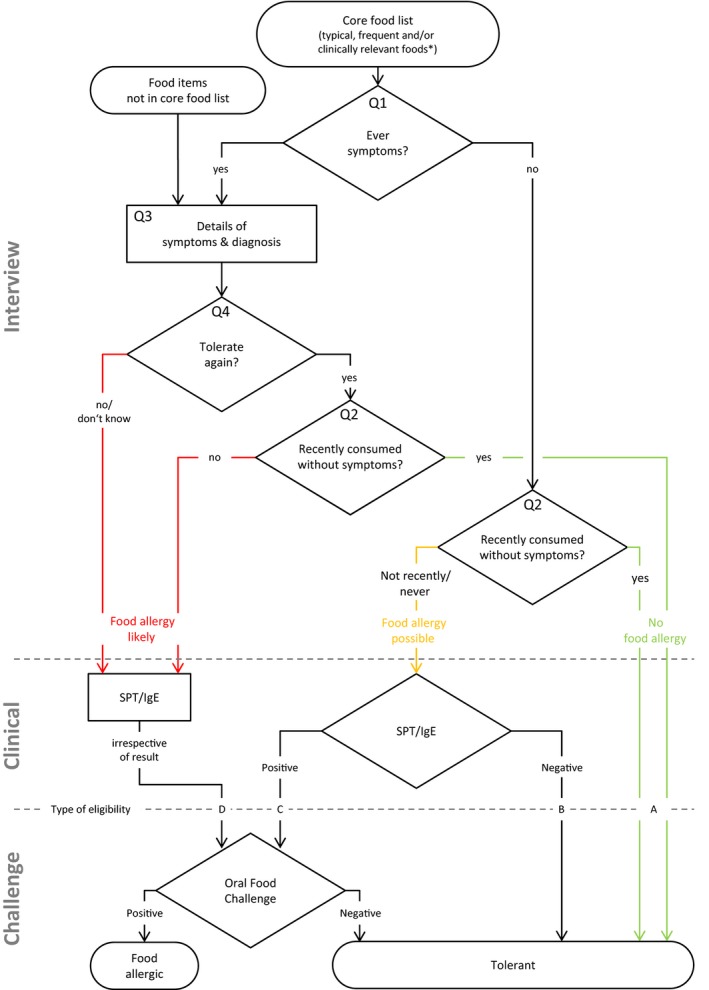
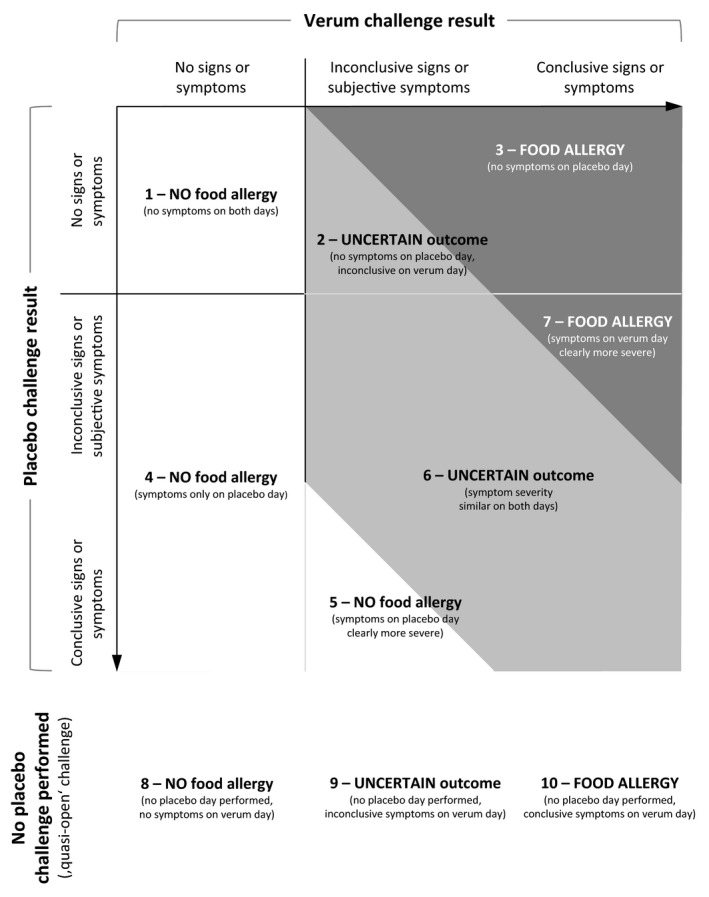
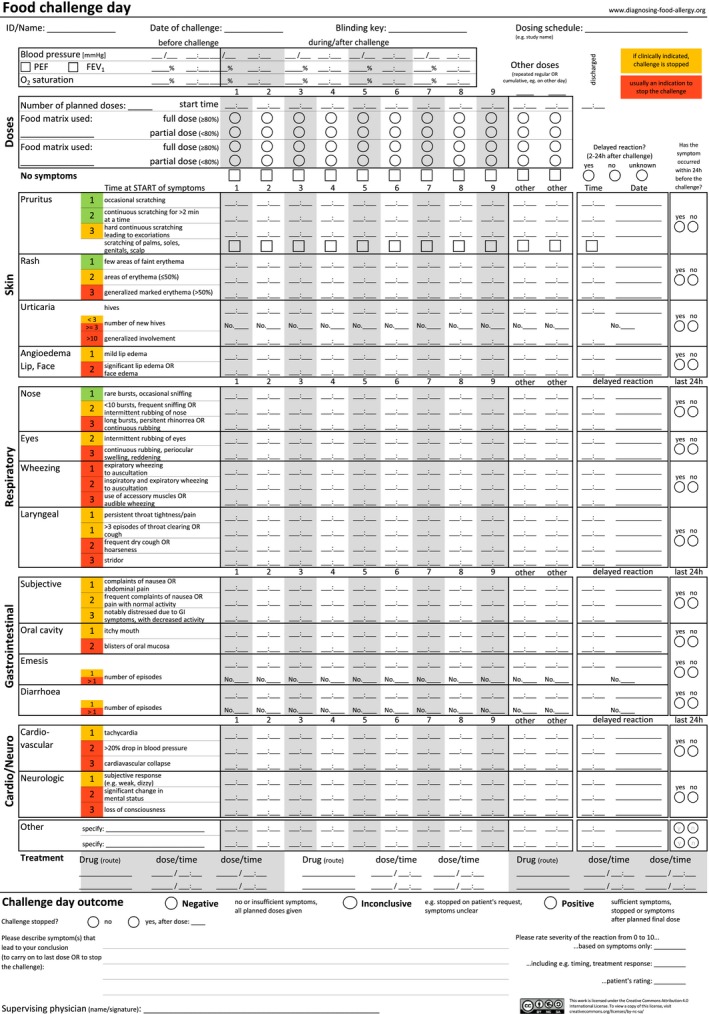
A set of newly developed questionnaire or interview items capture the history of FA. Together with sensitization status, this forms the basis for the decision to perform a DBPCFC, following a standardized decision algorithm. A generic form including details about severity and timing captures signs and symptoms observed during or after the procedures. In contrast to the commonly used dichotomous outcome FA vs no FA, the allergy status is interpreted in multiple categories to reflect the complexity of clinical decision-making.
The proposed toolbox sets a standard for improved documentation and harmonized interpretation of DBPCFCs. By a detailed documentation and common terminology for communicating outcomes, these tools hope to reduce the influence of subjective judgment of supervising physicians. All forms are publicly available for further evolution and free use in clinical and research settings.
在过去几年中,口服食物激发试验作为食物过敏(FA)的首选诊断标准已得到统一。然而,激发试验结果的记录和解读,尤其是在研究环境中,标准化程度不足,无法在不同研究之间进行有效的比较。我们的目标是开发一个诊断工具箱,用于在双盲安慰剂对照食物激发试验(DBPCFC)中记录和报告临床观察结果。
一组经验丰富的过敏症专科医生、儿科医生、营养师、流行病学家和数据管理人员制定了DBPCFC的通用病例报告表和标准操作程序,并在三个临床中心进行了试点。欧洲Prevail/iFAAM出生队列及其他iFAAM工作包的随访应用了这些方法。
一组新开发的问卷或访谈项目用于记录FA病史。结合致敏状态,这构成了依据标准化决策算法决定是否进行DBPCFC的基础。一份包含严重程度和时间细节的通用表格用于记录在试验过程中或之后观察到的体征和症状。与常用的FA与非FA二分结果不同,过敏状态被分为多个类别进行解读,以反映临床决策的复杂性。
所提议的工具箱为改进DBPCFC的记录和统一解读设定了标准。通过详细记录和使用通用术语来传达结果,这些工具希望减少指导医生主观判断的影响。所有表格均可公开获取,以便进一步完善并在临床和研究环境中免费使用。