Pizzolitto Romina P, Herrera Jimena M, Zaio Yesica P, Dambolena Jose S, Zunino Maria P, Gallucci Mauro N, Zygadlo Julio A
Instituto Multidisciplinario de Biología Vegetal (IMBiV-CONICET), Universidad Nacional de Córdoba-(UNC), Avenida Vélez Sarsfield 1611, X5016GCA Córdoba, Argentina.
Instituto de Ciencia y Tecnología de los Alimentos (ICTA), Facultad de Ciencias Exactas, Físicas y Naturales (FCEFyN), UNC, Avenida Vélez Sarsfield 1611, X5016GCA Córdoba, Argentina.
Microorganisms. 2015 Nov 12;3(4):851-65. doi: 10.3390/microorganisms3040851.
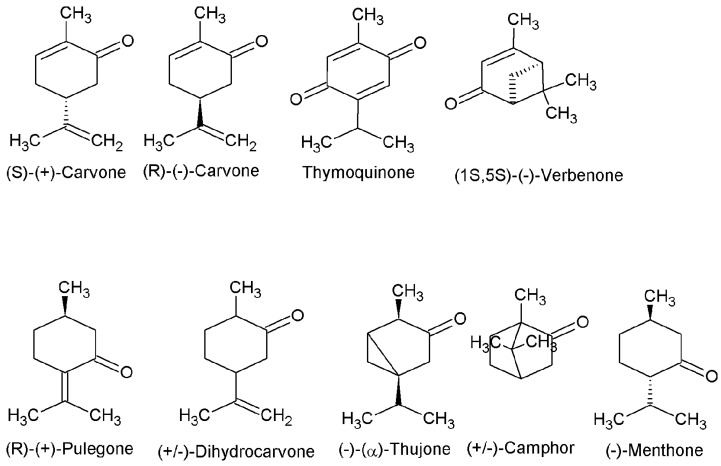
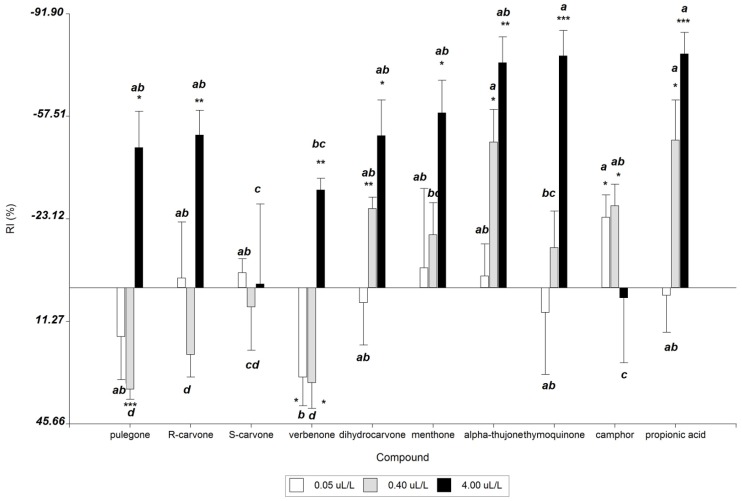
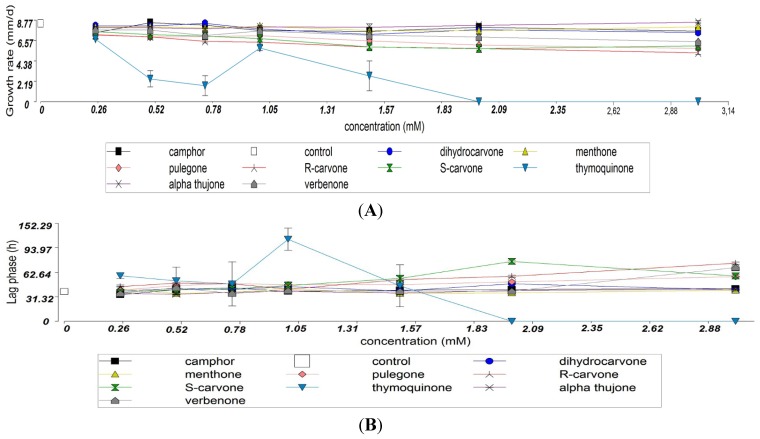
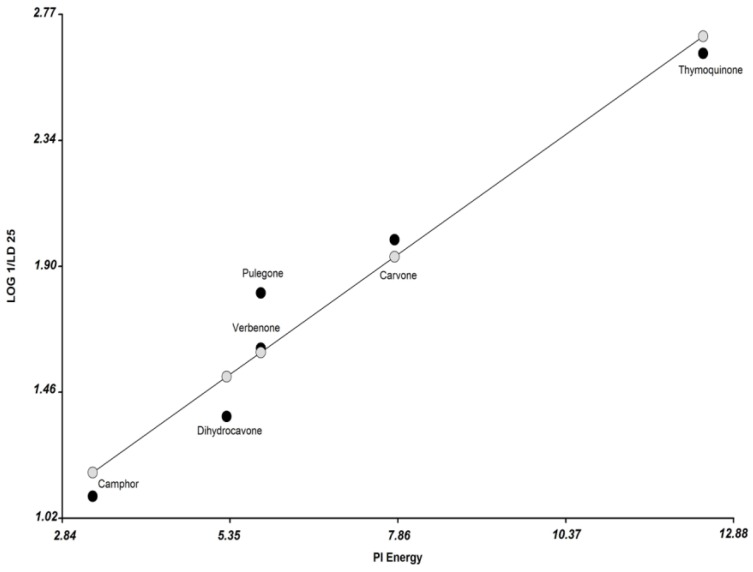
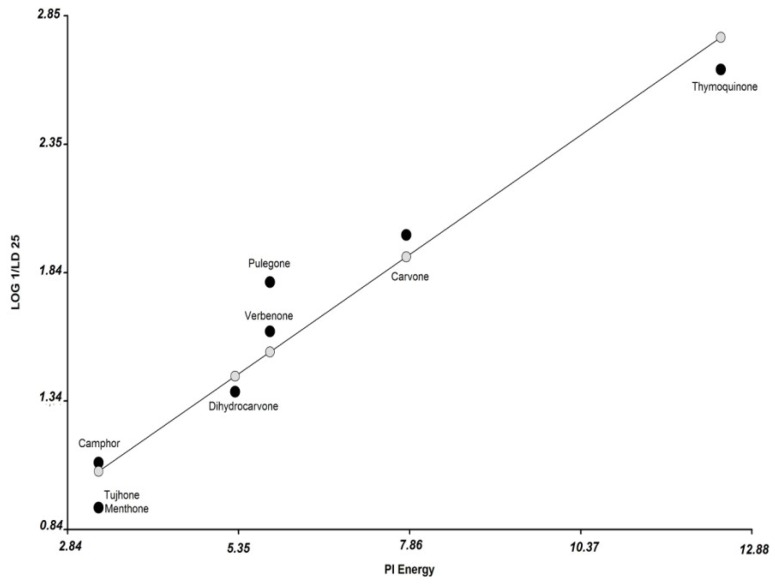
Maize is one the most important staple foods in the world. However, numerous pests, such as fungal pathogens, e.g., Fusarium verticillioides, and insects, such as Sitophlilus zeamais, attack maize grains during storage. Many F. verticillioides strains produce fumonisins, one of the most important mycotoxin that causes toxic effects on human and animal health. This situation is aggravated by the insect fungal vector, Sitophlilus zeamais, which contributes to the dispersal of fungal spores, and through feeding damage, provide entry points for fungal infections. The aim of this study was to evaluate in vitro bioassays, the antifungal activity on F. verticillioides M3125 and repellent effects against S. zeamais of ketone terpenes. In addition, we performed Quantitative structure-activity relationship (Q-SAR) studies between physico-chemical properties of ketone terpenes and the antifungal effect. Thymoquinone was the most active compound against F. verticillioides (Minimum Inhibitory Concentration, MIC: 0.87) affecting the lag phase and the growth rate showing a total inhibition of growth at concentration higher than 2 mM (p < 0.05). The Q-SAR model revealed that the antifungal activity of ketone compounds is related to the electronic descriptor, Pi energy. Thymoquinone showed a strong repellent effect (-77.8 ± 8.5, p < 0.001) against S. zeamais. These findings make an important contribution to the search for new compounds to control two stored pests of maize.
玉米是世界上最重要的主食之一。然而,许多害虫,如真菌病原体,例如轮枝镰孢菌,以及昆虫,如玉米象,在储存期间会侵袭玉米粒。许多轮枝镰孢菌菌株会产生伏马毒素,这是对人类和动物健康造成毒性影响的最重要的霉菌毒素之一。昆虫真菌载体玉米象会加剧这种情况,它有助于真菌孢子的传播,并通过取食损伤为真菌感染提供入口点。本研究的目的是通过体外生物测定评估酮类萜烯对轮枝镰孢菌M3125的抗真菌活性以及对玉米象的驱避作用。此外,我们还进行了酮类萜烯的物理化学性质与抗真菌效果之间的定量构效关系(Q-SAR)研究。百里醌是对轮枝镰孢菌最具活性的化合物(最低抑菌浓度,MIC:0.87),影响延迟期和生长速率,在浓度高于2 mM时显示出完全生长抑制(p < 0.05)。Q-SAR模型表明,酮类化合物的抗真菌活性与电子描述符Pi能量有关。百里醌对玉米象表现出强烈的驱避作用(-77.8 ± 8.5,p < 0.001)。这些发现为寻找控制玉米两种储存害虫的新化合物做出了重要贡献。