Shao Jundong, Xie Hanhan, Huang Hao, Li Zhibin, Sun Zhengbo, Xu Yanhua, Xiao Quanlan, Yu Xue-Feng, Zhao Yuetao, Zhang Han, Wang Huaiyu, Chu Paul K
Institute of Biomedicine and Biotechnology, Shenzhen Institutes of Advanced Technology, Chinese Academy of Sciences, Shenzhen 518055, China.
SZU-NUS Collaborative Innovation Center for Optoelectronic Science and Technology, and Key Laboratory of Optoelectronic Devices and Systems of Ministry of Education and Guangdong Province, College of Optoelectronic Engineering, Shenzhen University, Shenzhen 518060, China.
Nat Commun. 2016 Sep 30;7:12967. doi: 10.1038/ncomms12967.
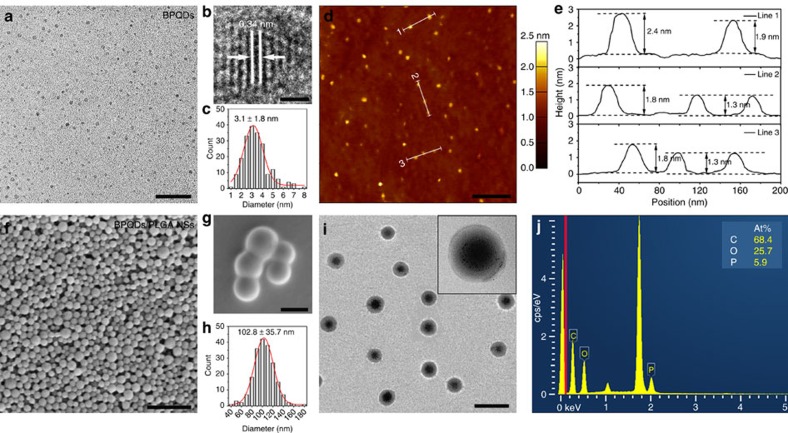
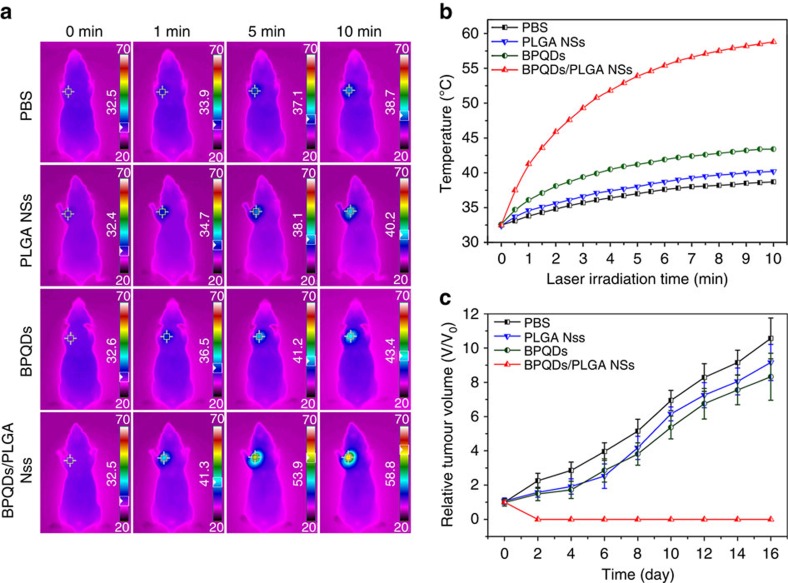
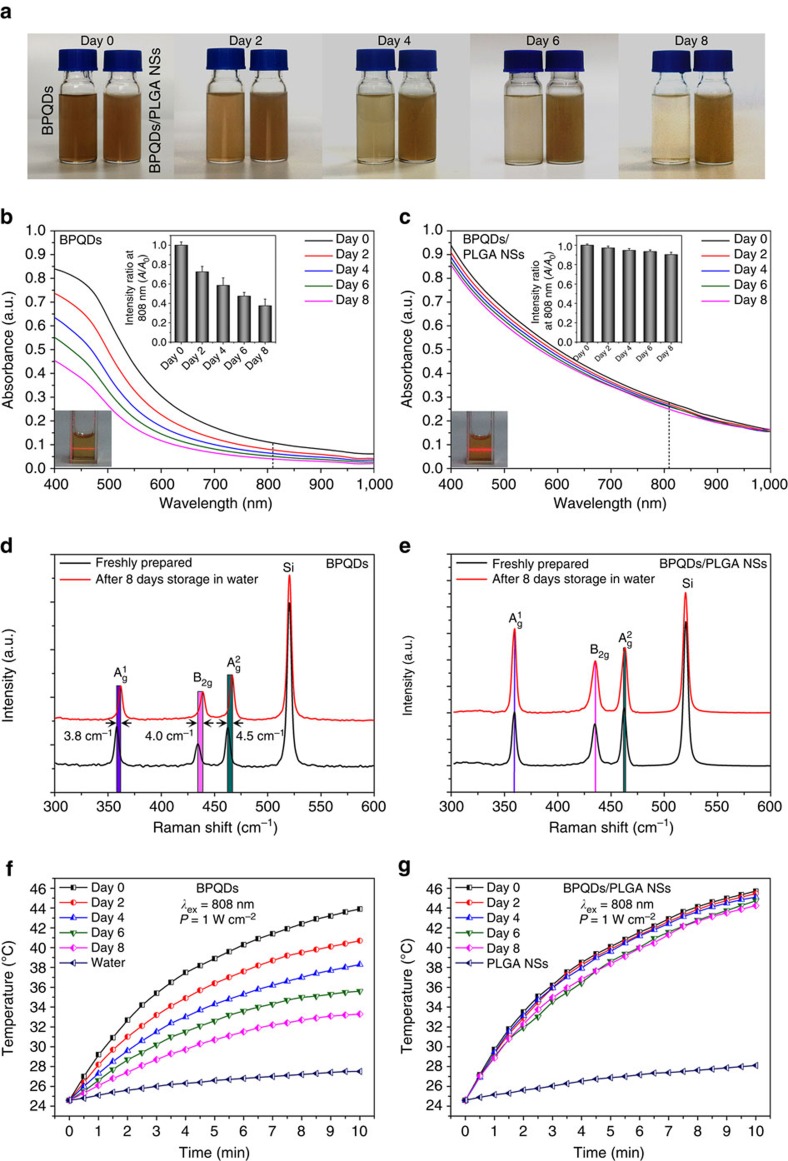
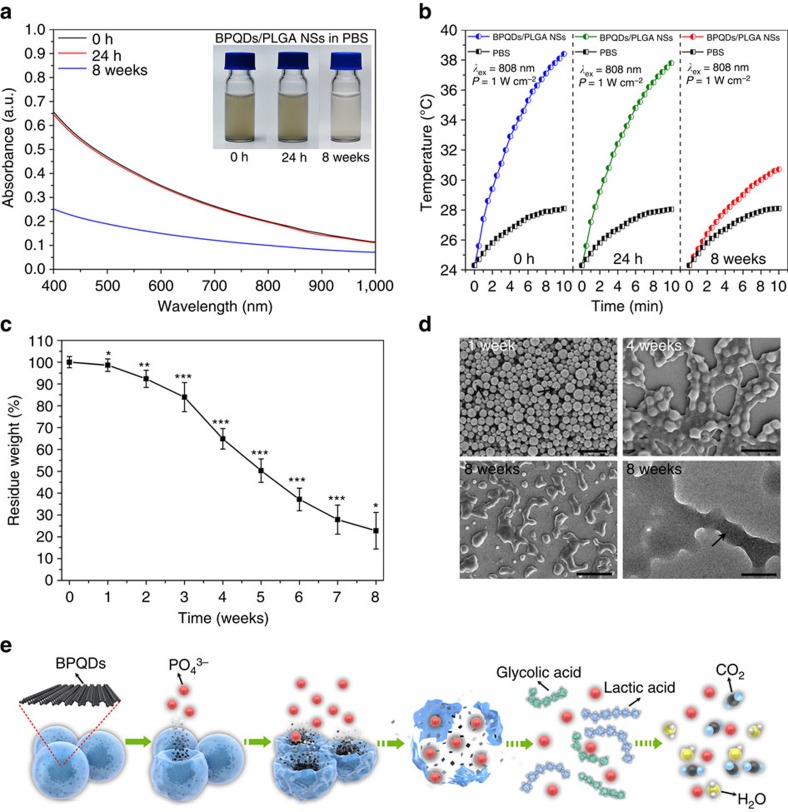
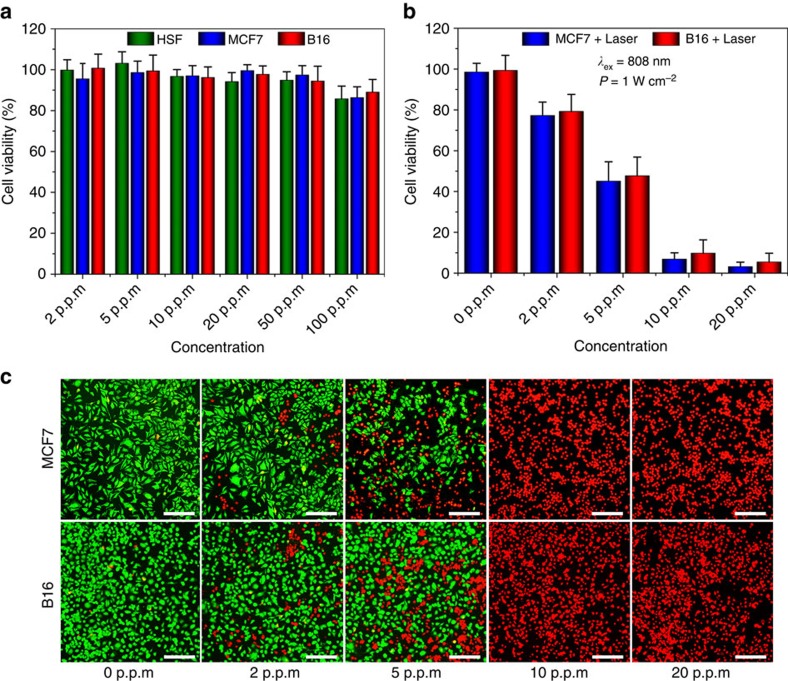
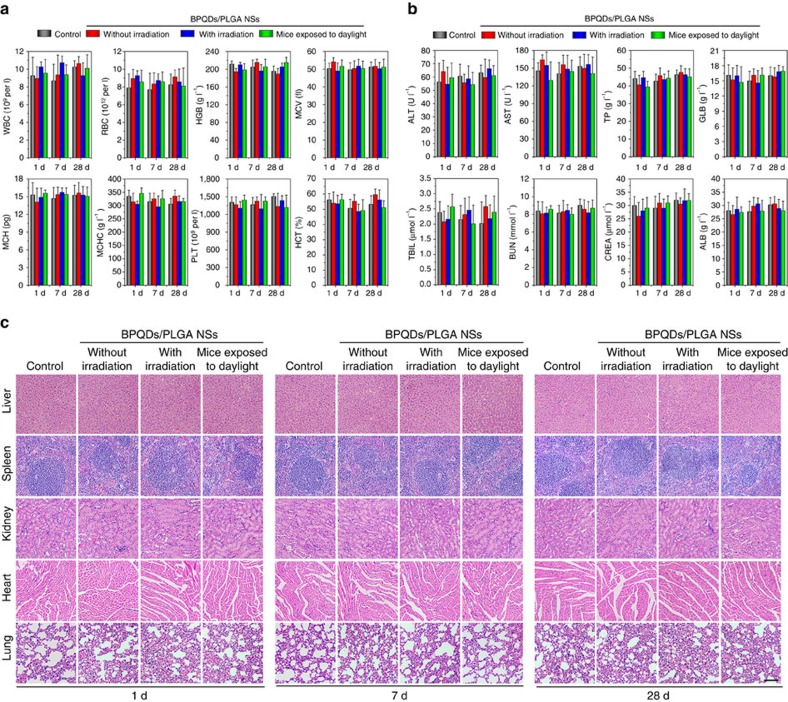
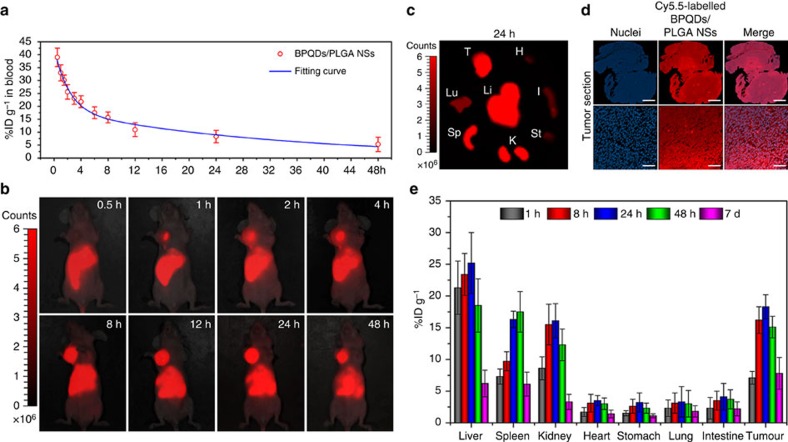
Photothermal therapy (PTT) offers many advantages such as high efficiency and minimal invasiveness, but clinical adoption of PTT nanoagents have been stifled by unresolved concerns such as the biodegradability as well as long-term toxicity. Herein, poly (lactic-co-glycolic acid) (PLGA) loaded with black phosphorus quantum dots (BPQDs) is processed by an emulsion method to produce biodegradable BPQDs/PLGA nanospheres. The hydrophobic PLGA not only isolates the interior BPQDs from oxygen and water to enhance the photothermal stability, but also control the degradation rate of the BPQDs. The in vitro and in vivo experiments demonstrate that the BPQDs/PLGA nanospheres have inappreciable toxicity and good biocompatibility, and possess excellent PTT efficiency and tumour targeting ability as evidenced by highly efficient tumour ablation under near infrared (NIR) laser illumination. These BP-based nanospheres combine biodegradability and biocompatibility with high PTT efficiency, thus promising high clinical potential.
光热疗法(PTT)具有高效、微创等诸多优点,但由于生物可降解性以及长期毒性等尚未解决的问题,PTT纳米制剂的临床应用受到了阻碍。在此,通过乳液法制备了负载黑磷量子点(BPQDs)的聚乳酸-羟基乙酸共聚物(PLGA),以生产可生物降解的BPQDs/PLGA纳米球。疏水性的PLGA不仅将内部的BPQDs与氧气和水隔离开来,以增强光热稳定性,还能控制BPQDs的降解速率。体外和体内实验表明,BPQDs/PLGA纳米球具有极低的毒性和良好的生物相容性,并且在近红外(NIR)激光照射下能够高效消融肿瘤,证明其具有优异的光热治疗效率和肿瘤靶向能力。这些基于BP的纳米球将生物可降解性和生物相容性与高PTT效率相结合,因此具有很高的临床应用潜力。