Martho Kevin Felipe Cruz, de Melo Amanda Teixeira, Takahashi Juliana Possato Fernandes, Guerra Juliana Mariotti, Santos Dayane Cristina da Silva, Purisco Sônia Ueda, Melhem Márcia de Souza Carvalho, Fazioli Raquel Dos Anjos, Phanord Clerlune, Sartorelli Patrícia, Vallim Marcelo A, Pascon Renata C
Instituto de Ciências Ambientais, Química e Farmacêuticas, Universidade Federal de São Paulo, Rua Arthur Ridel, 275, Diadema, SP, Brazil.
Quantitative Pathology Unit, Adolfo Lutz Institute, São Paulo, Brazil.
PLoS One. 2016 Oct 3;11(10):e0163919. doi: 10.1371/journal.pone.0163919. eCollection 2016.
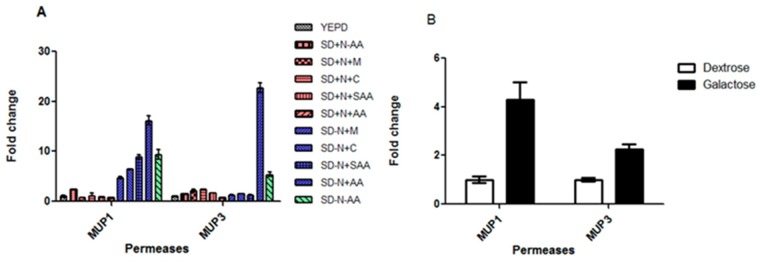
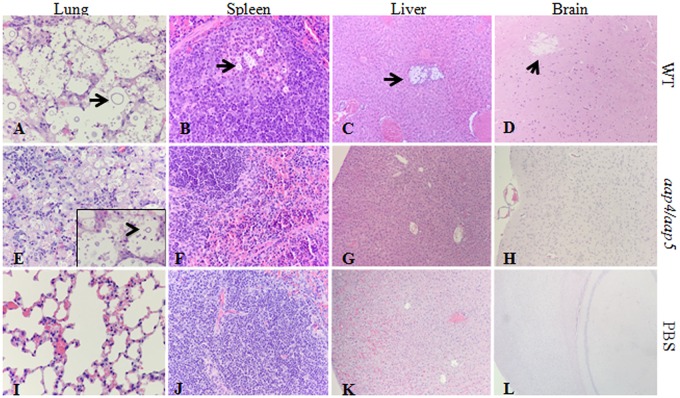
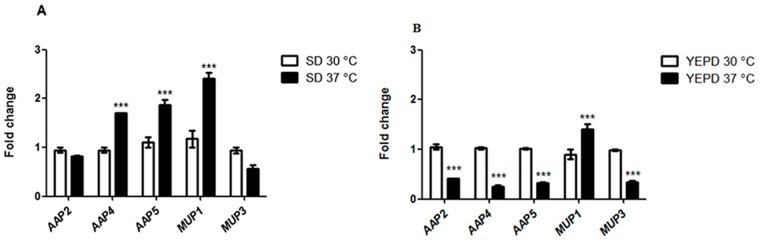
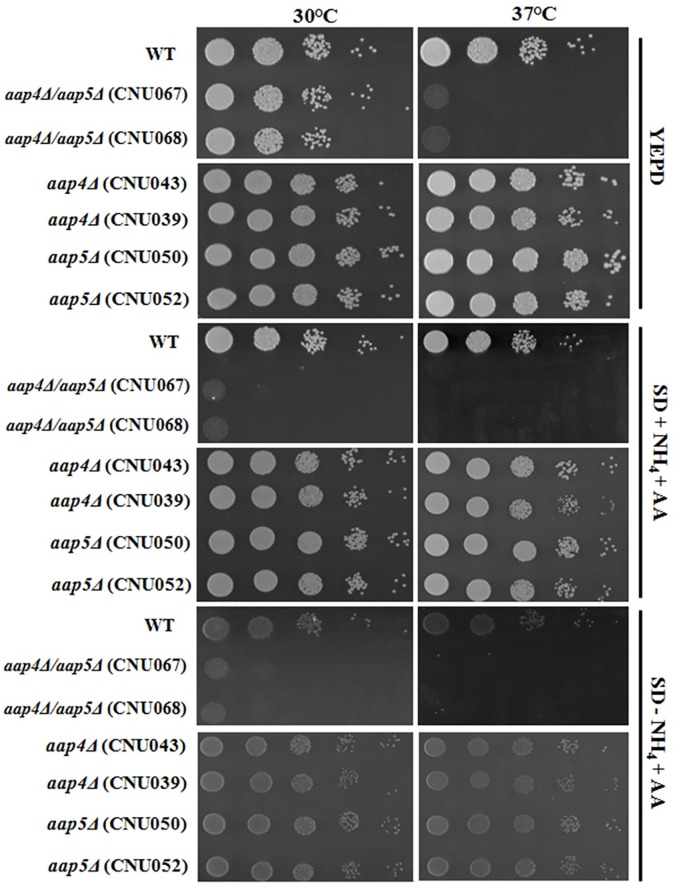
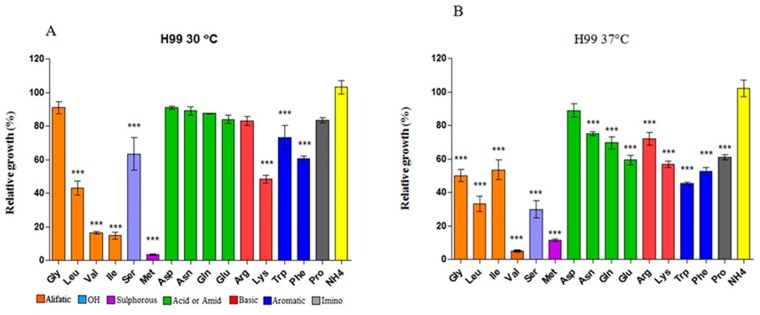
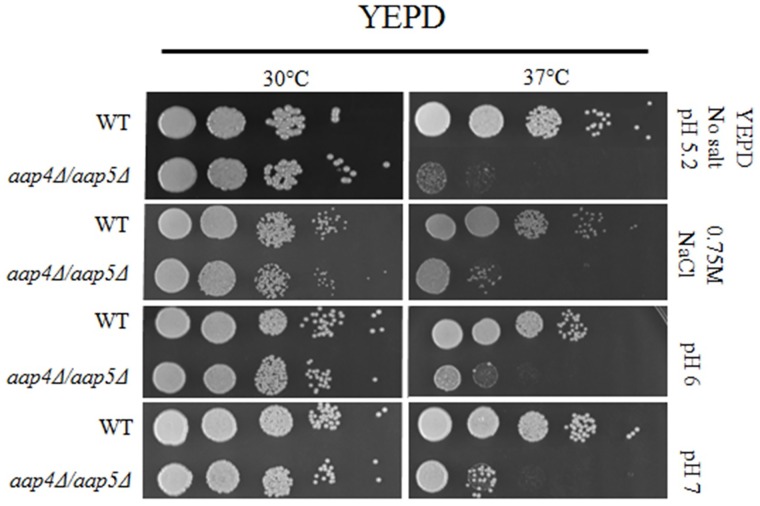
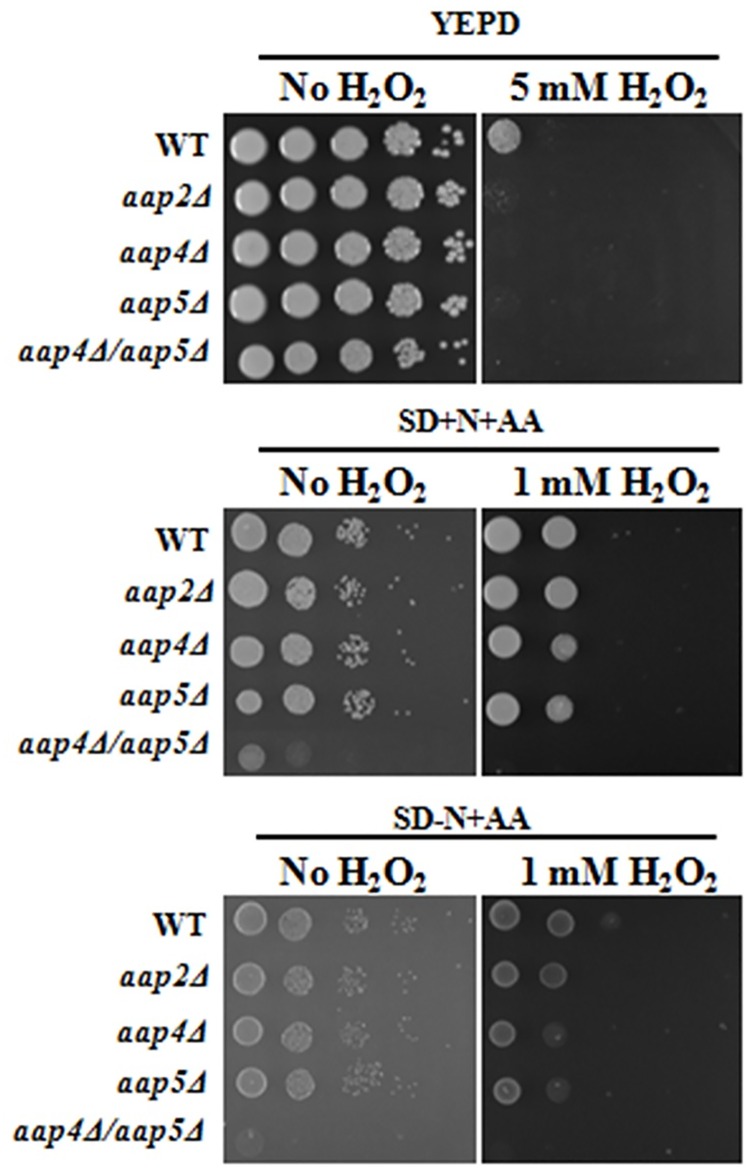
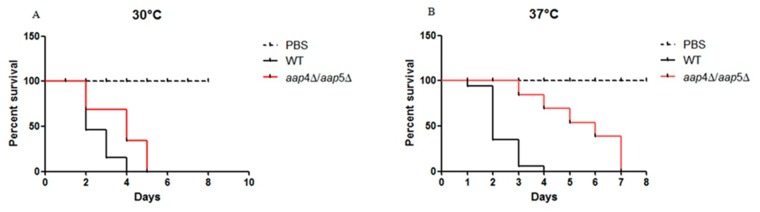
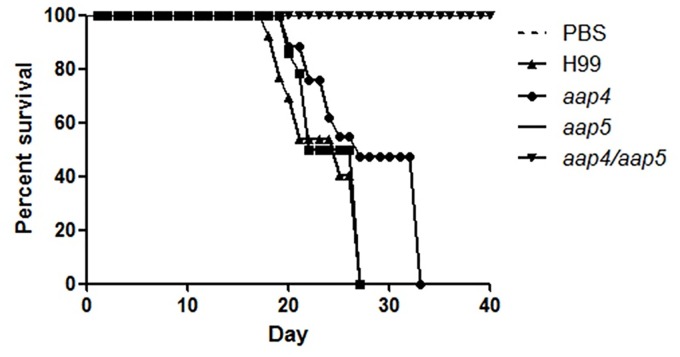
Fungal opportunistic pathogens colonize various environments, from plants and wood to human and animal tissue. Regarding human pathogens, one great challenge during contrasting niche occupation is the adaptation to different conditions, such as temperature, osmolarity, salinity, pressure, oxidative stress and nutritional availability, which may constitute sources of stress that need to be tolerated and overcome. As an opportunistic pathogen, C. neoformans faces exactly these situations during the transition from the environment to the human host, encountering nutritional constraints. Our previous and current research on amino acid biosynthetic pathways indicates that amino acid permeases are regulated by the presence of the amino acids, nitrogen and temperature. Saccharomyces cerevisiae and Candida albicans have twenty-four and twenty-seven genes encoding amino acid permeases, respectively; conversely, they are scarce in number in Basidiomycetes (C. neoformans, Coprinopsis cinerea and Ustilago maydis), where nine to ten permease genes can be found depending on the species. In this study, we have demonstrated that two amino acid permeases are essential for virulence in C. neoformans. Our data showed that C. neoformans uses two global and redundant amino acid permeases, Aap4 and Aap5 to respond correctly to thermal and oxidative stress. Double deletion of these permeases causes growth arrest in C. neoformans at 37°C and in the presence of hydrogen peroxide. The inability to uptake amino acid at a higher temperature and under oxidative stress also led to virulence attenuation in vivo. Our data showed that thermosensitivity caused by the lack of permeases Aap4 and Aap5 can be remedied by alkaline conditions (higher pH) and salinity. Permeases Aap4 and Aap5 are also required during fluconazole stress and they are the target of the plant secondary metabolite eugenol, a potent antifungal inhibitor that targets amino acid permeases. In summary, our work unravels (i) interesting physiological property of C. neoformans regarding its amino acid uptake system; (ii) an important aspect of virulence, which is the need for amino acid permeases during thermal and oxidative stress resistance and, hence, host invasion and colonization; and (iii) provides a convenient prototype for antifungal development, which are the amino acid permeases Aap4/Aap5 and their inhibitor.
真菌机会性病原体定殖于各种环境中,从植物、木材到人类和动物组织。就人类病原体而言,在占据不同生态位的过程中,一个巨大的挑战是适应不同的条件,如温度、渗透压、盐度、压力、氧化应激和营养可用性,这些可能构成需要耐受和克服的应激源。作为一种机会性病原体,新型隐球菌在从环境过渡到人类宿主的过程中恰好面临这些情况,并遭遇营养限制。我们之前和当前对氨基酸生物合成途径的研究表明,氨基酸通透酶受氨基酸、氮和温度的存在调控。酿酒酵母和白色念珠菌分别有24个和27个编码氨基酸通透酶的基因;相反,担子菌(新型隐球菌、灰盖鬼伞和玉米黑粉菌)中的此类基因数量较少,根据物种不同可发现9至10个通透酶基因。在本研究中,我们证明了两种氨基酸通透酶对新型隐球菌的毒力至关重要。我们的数据表明,新型隐球菌利用两种全局性且冗余的氨基酸通透酶Aap4和Aap5来正确应对热应激和氧化应激。这些通透酶的双缺失导致新型隐球菌在37°C和过氧化氢存在的情况下生长停滞。在较高温度和氧化应激条件下无法摄取氨基酸也导致体内毒力减弱。我们的数据表明,由缺乏通透酶Aap4和Aap5引起的热敏感性可通过碱性条件(较高pH值)和盐度来补救。在氟康唑应激期间也需要通透酶Aap4和Aap5,并且它们是植物次生代谢产物丁香酚的作用靶点,丁香酚是一种有效的抗真菌抑制剂,靶向氨基酸通透酶。总之,我们的研究揭示了:(i)新型隐球菌在氨基酸摄取系统方面有趣的生理特性;(ii)毒力的一个重要方面,即在抗热应激和氧化应激以及宿主侵袭和定殖过程中对氨基酸通透酶的需求;(iii)为抗真菌药物开发提供了一个便利的原型,即氨基酸通透酶Aap4/Aap5及其抑制剂。