Department of Informatics, Bioinformatics &Computational Biology - I12, TUM, Garching, Germany.
Graduate School, Center of Doctoral Studies in Informatics and its Applications (CeDoSIA), TUM, Garching, Germany.
Sci Rep. 2016 Oct 7;6:34516. doi: 10.1038/srep34516.
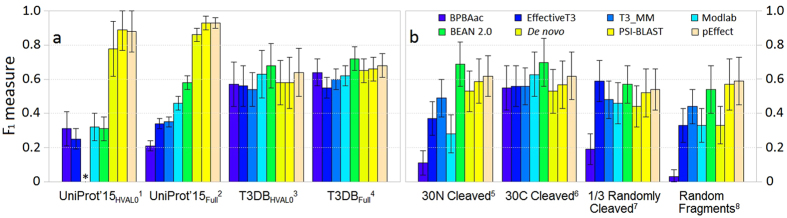
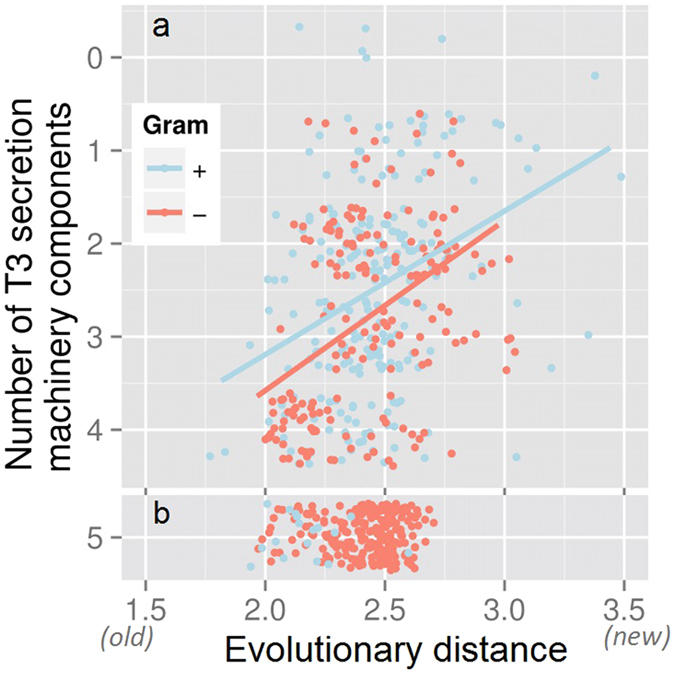
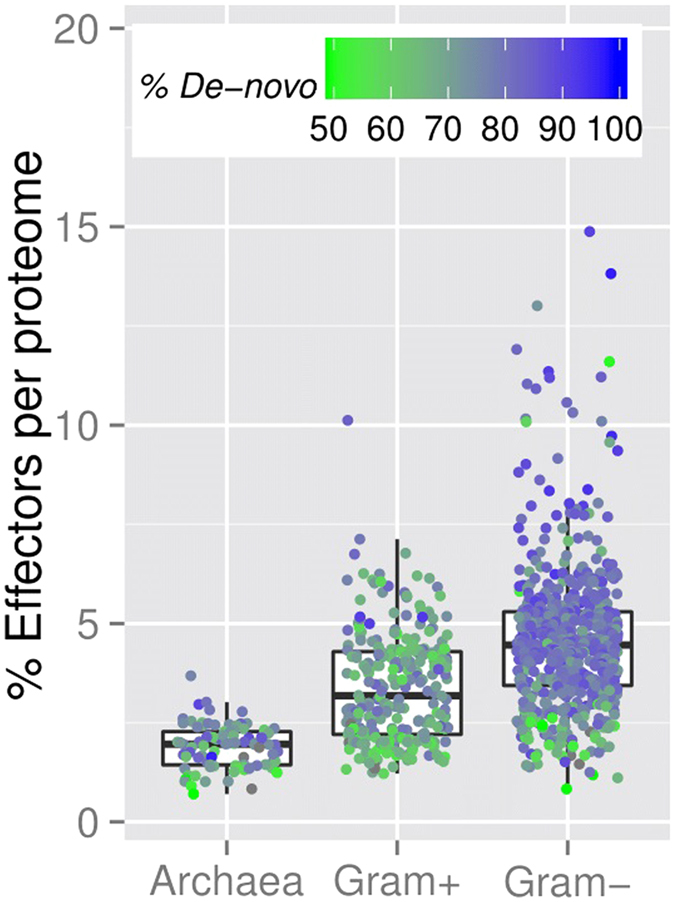
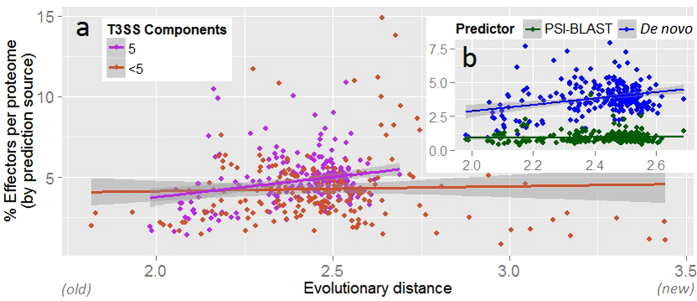
Type III secretion system is a key bacterial symbiosis and pathogenicity mechanism responsible for a variety of infectious diseases, ranging from food-borne illnesses to the bubonic plague. In many Gram-negative bacteria, the type III secretion system transports effector proteins into host cells, converting resources to bacterial advantage. Here we introduce a computational method that identifies type III effectors by combining homology-based inference with de novo predictions, reaching up to 3-fold higher performance than existing tools. Our work reveals that signals for recognition and transport of effectors are distributed over the entire protein sequence instead of being confined to the N-terminus, as was previously thought. Our scan of hundreds of prokaryotic genomes identified previously unknown effectors, suggesting that type III secretion may have evolved prior to the archaea/bacteria split. Crucially, our method performs well for short sequence fragments, facilitating evaluation of microbial communities and rapid identification of bacterial pathogenicity - no genome assembly required. pEffect and its data sets are available at http://services.bromberglab.org/peffect.
III 型分泌系统是一种关键的细菌共生和致病性机制,负责多种传染病,从食源性疾病到黑死病。在许多革兰氏阴性菌中,III 型分泌系统将效应蛋白输送到宿主细胞中,将资源转化为细菌优势。在这里,我们介绍了一种计算方法,通过将基于同源性的推断与从头预测相结合来识别 III 型效应子,其性能比现有工具提高了 3 倍。我们的工作表明,效应子的识别和运输信号分布在整个蛋白质序列上,而不是像以前认为的那样局限于 N 端。我们对数百个原核基因组的扫描发现了以前未知的效应子,这表明 III 型分泌系统可能在古菌/细菌分裂之前就已经进化了。至关重要的是,我们的方法对于短序列片段表现良好,有利于微生物群落的评估和快速鉴定细菌的致病性——不需要基因组组装。pEffect 及其数据集可在 http://services.bromberglab.org/peffect 上获得。