Villa Maria Pia, Shafiek Hanaa, Evangelisti Melania, Rabasco Jole, Cecili Manuela, Montesano Marilisa, Barreto Mario
Pediatric Sleep Disease Center, Child Neurology, NESMOS Dept, School of Medicine and Psychology, Sapienza University of Rome, S. Andrea Hospital, Rome, Italy.
Dept of Chest Diseases, Faculty of Medicine, Alexandria University, Alexandria, Egypt.
ERJ Open Res. 2016 Feb 9;2(1). doi: 10.1183/23120541.00049-2015. eCollection 2016 Jan.
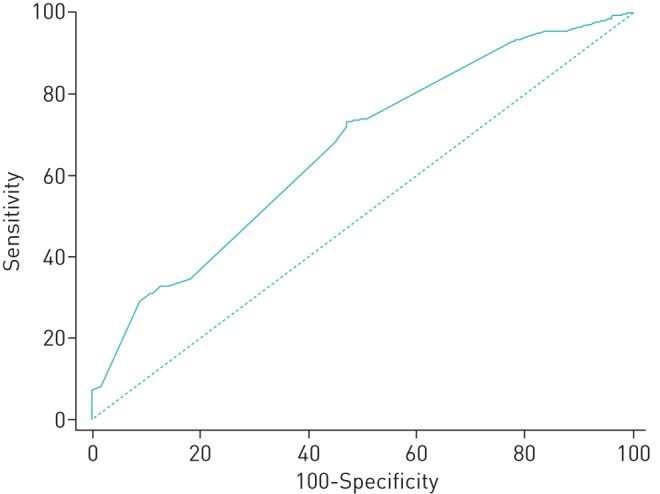
The sleep clinical record (SCR) may be a valid method for detecting children with obstructive sleep apnoea (OSA). This study aimed to evaluate whether there were differences in SCR depending on age and to identify the possible risk factors for OSA development. We enrolled children with sleep disordered breathing between 2013 and 2015, and divided them according to age into preschool- and school-age groups. All patients underwent SCR and polysomnography. OSA was detected in 81.1% and 83.6% of preschool- and school-age groups, respectively. Obesity, malocclusions, nasal septal deviation and inferior turbinate hypertrophy were significantly more prevalent in school-age children (p<0.05); however, only tonsillar hypertrophy had significant hazard ratio (2.3) for OSA development. Saddle nose, nasal hypotonia, oral breathing and tonsillar hypertrophy were significantly more prevalent for development of OSA in preschoolers (p<0.03). The SCR score was significantly higher among preschool children than in school-age children (8.4±2.22 7.9±2.6; p=0.044). Further, SCR score >6.5 had a sensitivity of 74% in predicting OSA in preschool children with positive predictive value of 86% (p=0.0001). Our study confirms the validity of the SCR as a screening tool for patient candidates for a PSG study for suspected OSA, in both school and preschool children.
睡眠临床记录(SCR)可能是检测阻塞性睡眠呼吸暂停(OSA)儿童的一种有效方法。本研究旨在评估SCR是否因年龄而异,并确定OSA发生的可能危险因素。我们纳入了2013年至2015年间患有睡眠呼吸障碍的儿童,并根据年龄将他们分为学龄前和学龄儿童组。所有患者均接受了SCR和多导睡眠图检查。学龄前和学龄儿童组中分别有81.1%和83.6%检测出OSA。肥胖、错牙合、鼻中隔偏曲和下鼻甲肥大在学龄儿童中明显更为普遍(p<0.05);然而,只有扁桃体肥大对OSA发生具有显著的风险比(2.3)。鞍鼻、鼻张力减退、口呼吸和扁桃体肥大在学龄前儿童中对于OSA发生明显更为普遍(p<0.03)。学龄前儿童的SCR评分显著高于学龄儿童(8.4±2.22对7.9±2.6;p=0.044)。此外,SCR评分>6.5在预测学龄前儿童OSA方面的敏感性为74%,阳性预测值为86%(p=0.0001)。我们的研究证实了SCR作为疑似OSA的PSG研究候选患者筛查工具在学龄和学龄前儿童中的有效性。