Bang Oh Young, Kim Eun Hee, Cha Jae Min, Moon Gyeong Joon
Department of Neurology, Samsung Medical Center, Sungkyunkwan University School of Medicine, Seoul, Korea.
Translational and Stem Cell Research Laboratory on Stroke, Samsung Medical Center, Seoul, Korea.
J Stroke. 2016 Sep;18(3):256-266. doi: 10.5853/jos.2016.01263. Epub 2016 Sep 30.
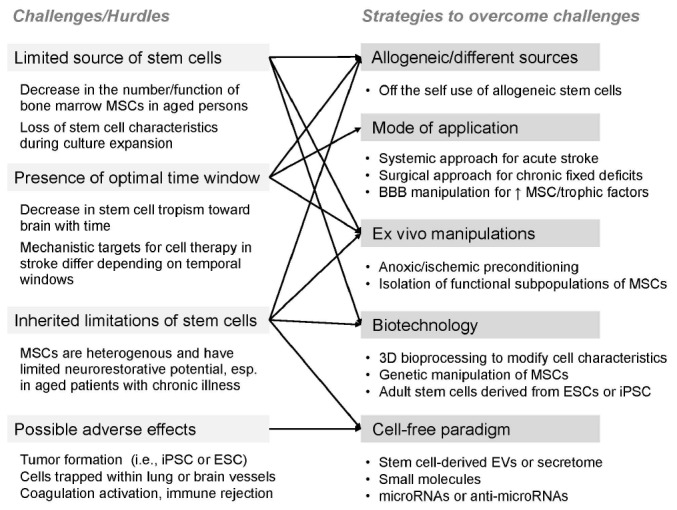
Stroke is one of the leading causes of death and physical disability among adults. It has been 15 years since clinical trials of stem cell therapy in patients with stroke have been conducted using adult stem cells like mesenchymal stem cells and bone marrow mononuclear cells. Results of randomized controlled trials showed that adult stem cell therapy was safe but its efficacy was modest, underscoring the need for new stem cell therapy strategies. The primary limitations of current stem cell therapies include (a) the limited source of engraftable stem cells, (b) the presence of optimal time window for stem cell therapies, (c) inherited limitation of stem cells in terms of growth, trophic support, and differentiation potential, and (d) possible transplanted cell-mediated adverse effects, such as tumor formation. Here, we discuss recent advances that overcome these hurdles in adult stem cell therapy for stroke.
中风是成年人死亡和身体残疾的主要原因之一。自使用间充质干细胞和骨髓单个核细胞等成体干细胞对中风患者进行干细胞治疗的临床试验开展以来,已经过去了15年。随机对照试验的结果表明,成体干细胞治疗是安全的,但其疗效一般,这突出了对新的干细胞治疗策略的需求。当前干细胞治疗的主要局限性包括:(a)可移植干细胞的来源有限;(b)干细胞治疗存在最佳时间窗;(c)干细胞在生长、营养支持和分化潜能方面存在固有局限性;(d)可能存在移植细胞介导的不良反应,如肿瘤形成。在此,我们讨论在成人中风干细胞治疗中克服这些障碍的最新进展。