Capó Xavier, Martorell Miquel, Sureda Antoni, Riera Joan, Drobnic Franchek, Tur Josep Antoni, Pons Antoni
Research Groupon Community Nutrition and Oxidative Stress, Science Laboratory of Physical Activity, Department of Fundamental Biology and Health Sciences, University of Balearic Islands, Crtra, Valldemossa, Palma de Mallorca 07122, Illes Balears, Spain.
CIBER: CB12/03/30038 Fisiopatología de la Obesidad la Nutrición, CIBEROBN, Instituto de Salud Carlos III (ISCIII), University of Balearic Islands, Palma de Mallorca 07122, Illes Balears, Spain.
Nutrients. 2016 Oct 9;8(10):619. doi: 10.3390/nu8100619.
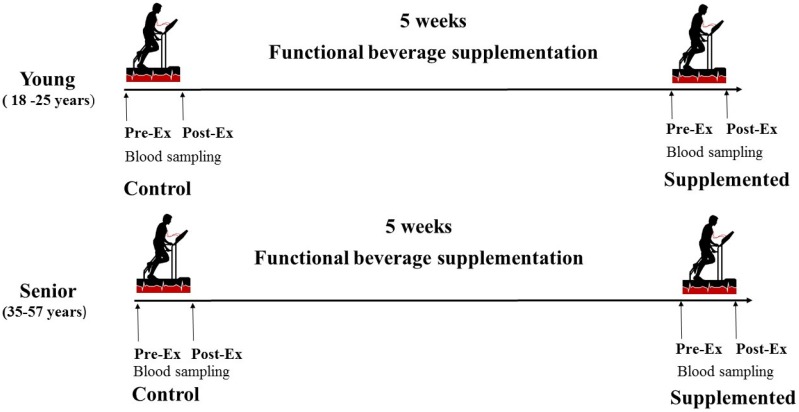
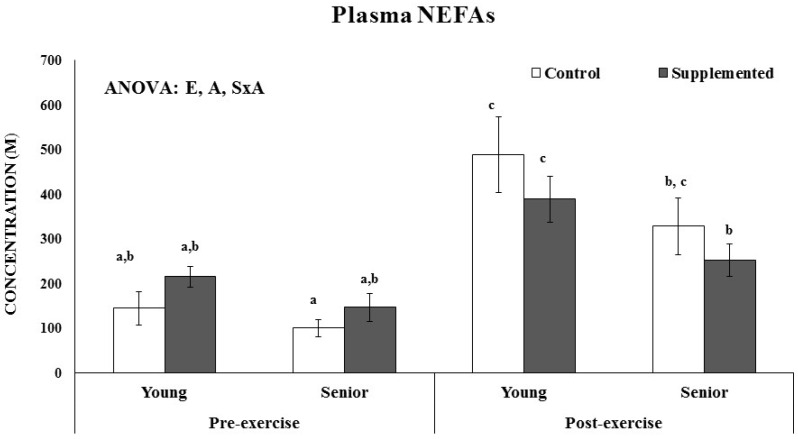
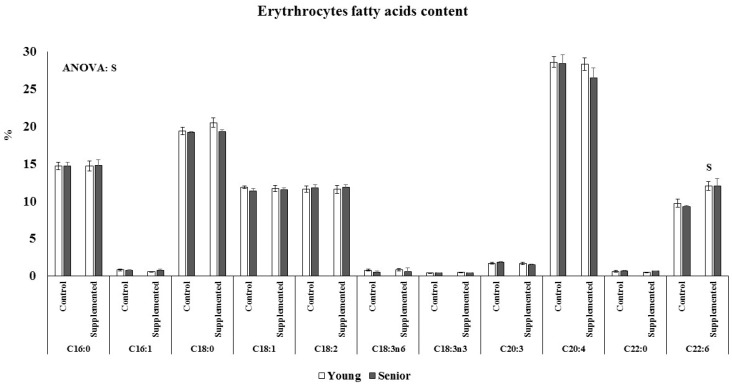
-3-polyunsaturated fatty acids and polyphenols are potential key factors for the treatment and prevention of chronic inflammation associated to ageing and non-communicable diseases. The aim was to analyse effects of an almond and olive oil beverage enriched with α-tocopherol and docosahexaenoic, exercise and age on inflammatory plasma markers, and immune gene expression in peripheral blood mononuclear cells (PBMCs). Five young and five senior athletes who were supplemented for five weeks with a functional beverage performed a stress test under controlled conditions before and after beverage supplementation. Blood samples were taken immediately before and 1 h after each test. Plasma, erythrocytes and PBMCs were isolated. Beverage supplementation increased plasmatic Tumour Necrosis Factor α (TNFα) levels depending on age and exercise. Exercise increased plasma non esterified fatty acids (NEFAs), soluble Intercellular adhesion molecule 3 (sICAM3) and soluble L-selectin (sL-Selectin), and this increase was attenuated by the supplementation. Exercise increased PGE2 plasma levels in supplemented young and in senior placebo athletes. Exercise increased NFkβ-activated levels in PBMCs, which are primed to a pro-inflammatory response increasing pro-inflammatory genes expression after the exercise mainly in the young group after the supplementation. The functional beverage supplementation to young athletes enhances a pro-inflammatory circulating environment in response to the exercise that was less evident in the senior group.
-3多不饱和脂肪酸和多酚是治疗和预防与衰老及非传染性疾病相关的慢性炎症的潜在关键因素。本研究旨在分析富含α-生育酚和二十二碳六烯酸的杏仁和橄榄油饮料、运动以及年龄对炎症血浆标志物和外周血单核细胞(PBMC)中免疫基因表达的影响。五名年轻运动员和五名老年运动员连续五周补充功能性饮料,并在补充饮料前后的受控条件下进行应激测试。每次测试前和测试后1小时立即采集血样。分离血浆、红细胞和PBMC。根据年龄和运动情况,补充饮料会增加血浆肿瘤坏死因子α(TNFα)水平。运动增加了血浆非酯化脂肪酸(NEFA)、可溶性细胞间粘附分子3(sICAM3)和可溶性L-选择素(sL-选择素)水平,而补充饮料可减弱这种增加。运动增加了补充饮料的年轻运动员和老年安慰剂组运动员的血浆PGE2水平。运动增加了PBMC中NFkβ的激活水平,这会引发促炎反应,主要在补充饮料后的年轻组中,运动后促炎基因表达增加。对年轻运动员补充功能性饮料会增强运动引起的促炎循环环境,而在老年组中这种现象不太明显。