Laboratory of Food and Health, Research Group on Quality, Safety and Bioactivity of Plant Foods, Department Food Science and Technology, CEBAS-CSIC, P.O. Box 164, Campus de Espinardo, 30100 Murcia, Spain.
Group of Molecular Immunonutrition in Cancer, Madrid Institute for Advanced Studies in Food (IMDEA-Food), 28049 Madrid, Spain.
Int J Mol Sci. 2021 Jul 25;22(15):7937. doi: 10.3390/ijms22157937.
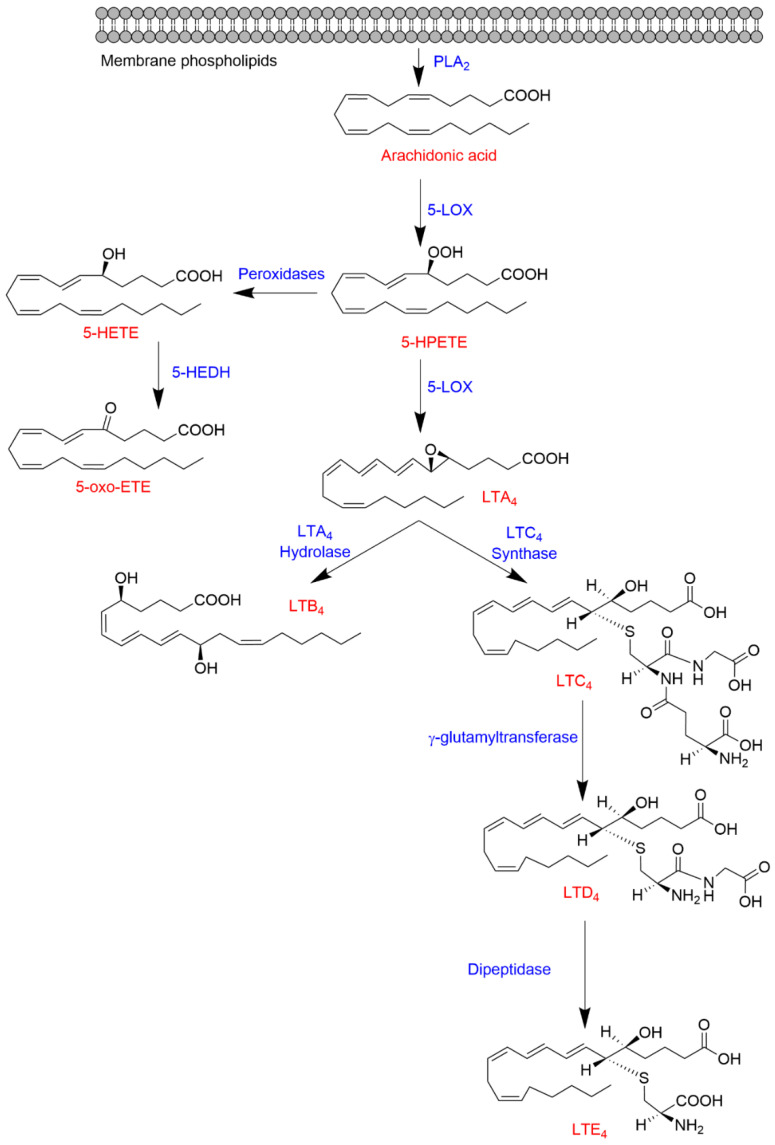
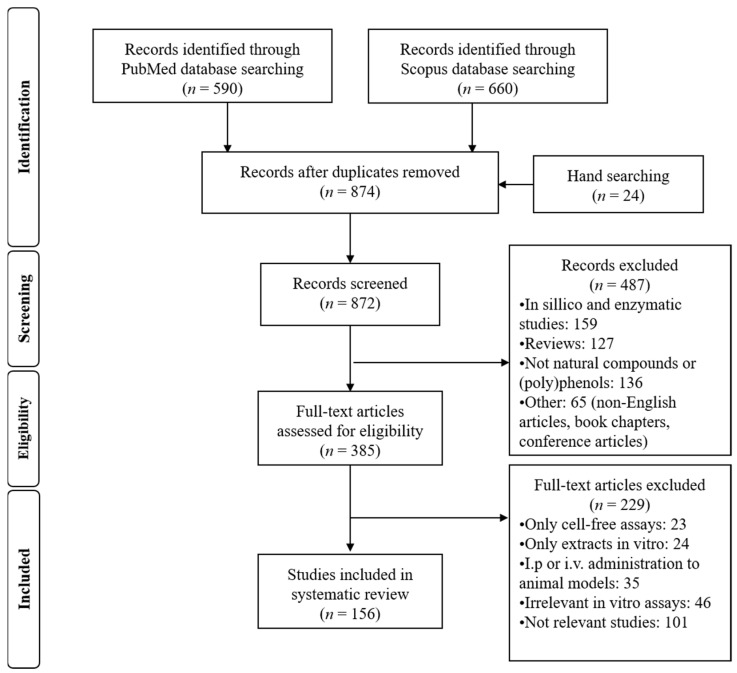
5-Lipoxygenase (5-LOX) plays a key role in inflammation through the biosynthesis of leukotrienes and other lipid mediators. Current evidence suggests that dietary (poly)phenols exert a beneficial impact on human health through anti-inflammatory activities. Their mechanisms of action have mostly been associated with the modulation of pro-inflammatory cytokines (TNF-α, IL-1β), prostaglandins (PGE), and the interaction with NF-κB and cyclooxygenase 2 (COX-2) pathways. Much less is known about the 5-lipoxygenase (5-LOX) pathway as a target of dietary (poly)phenols. This systematic review aimed to summarize how dietary (poly)phenols target the 5-LOX pathway in preclinical and human studies. The number of studies identified is low (5, 24, and 127 human, animal, and cellular studies, respectively) compared to the thousands of studies focusing on the COX-2 pathway. Some (poly)phenolics such as caffeic acid, hydroxytyrosol, resveratrol, curcumin, nordihydroguaiaretic acid (NDGA), and quercetin have been reported to reduce the formation of 5-LOX eicosanoids in vitro. However, the in vivo evidence is inconclusive because of the low number of studies and the difficulty of attributing effects to (poly)phenols. Therefore, increasing the number of studies targeting the 5-LOX pathway would largely expand our knowledge on the anti-inflammatory mechanisms of (poly)phenols.
5-脂氧合酶(5-LOX)通过白三烯和其他脂质介质的生物合成在炎症中发挥关键作用。目前的证据表明,膳食(多)酚通过抗炎活性对人类健康产生有益影响。它们的作用机制主要与促炎细胞因子(TNF-α、IL-1β)、前列腺素(PGE)的调节以及与 NF-κB 和环氧化酶 2(COX-2)途径的相互作用有关。关于膳食(多)酚作为 5-脂氧合酶(5-LOX)途径的靶点的了解要少得多。本系统评价旨在总结膳食(多)酚如何在临床前和人体研究中靶向 5-LOX 途径。与数千项专注于 COX-2 途径的研究相比,确定的研究数量较少(分别为 5、24 和 127 项动物、人体和细胞研究)。一些(多)酚类,如咖啡酸、羟基酪醇、白藜芦醇、姜黄素、去甲二氢愈创木酸(NDGA)和槲皮素,已被报道可减少体外 5-LOX 类二十烷酸的形成。然而,由于研究数量少且难以将效果归因于(多)酚,因此体内证据尚无定论。因此,增加针对 5-LOX 途径的研究数量将大大扩展我们对(多)酚抗炎机制的知识。