UC Berkeley-UCSF Joint Medical Program, School of Public Health, Berkeley, CA, United States of America.
Global Doctors for Choice/Ghana, Bolgatanga, Upper East Region, Ghana.
PLoS One. 2016 Oct 13;11(10):e0164368. doi: 10.1371/journal.pone.0164368. eCollection 2016.
Conscientious objection to abortion, clinicians' refusal to perform legal abortions because of their religious or moral beliefs, has been the subject of increasing debate among bioethicists, policymakers, and public health advocates in recent years. Conscientious objection policies are intended to balance reproductive rights and clinicians' beliefs. However, in practice, clinician objection can act as a barrier to abortion access-impinging on reproductive rights, and increasing unsafe abortion and related morbidity and mortality. There is little information about conscientious objection from a medical or public health perspective. A quantitative instrument is needed to assess prevalence of conscientious objection and to provide insight on its practice. This paper describes the development of a survey instrument to measure conscientious objection to abortion provision.
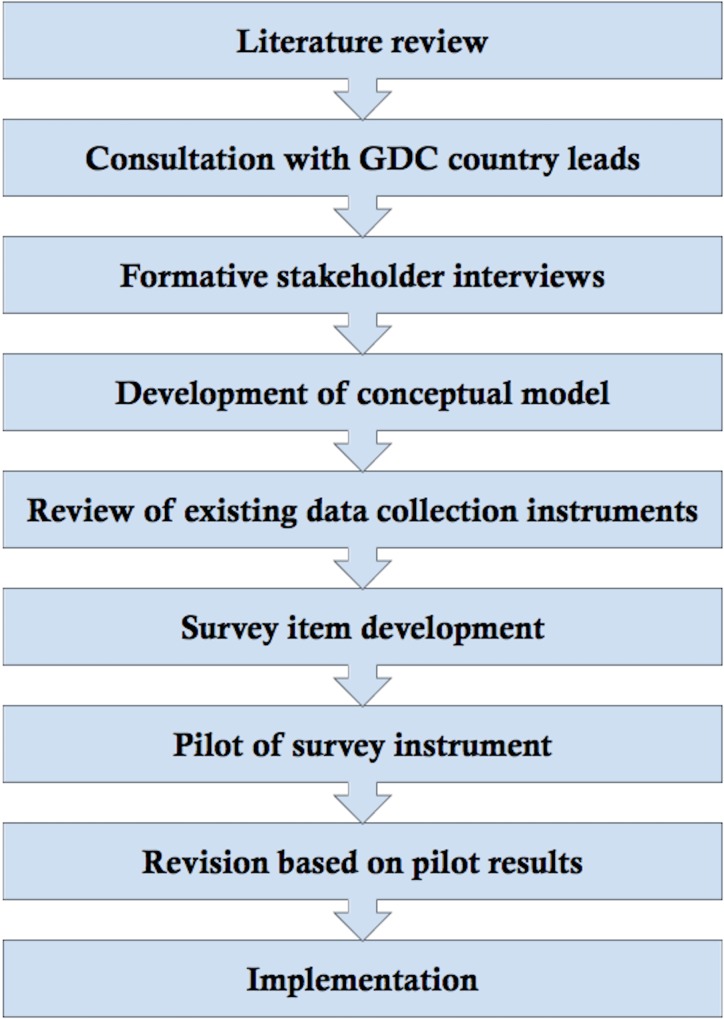
A literature review, and in-depth formative interviews with stakeholders in Colombia were used to develop a conceptual model of conscientious objection. This model led to the development of a survey, which was piloted, and then administered, in Ghana.
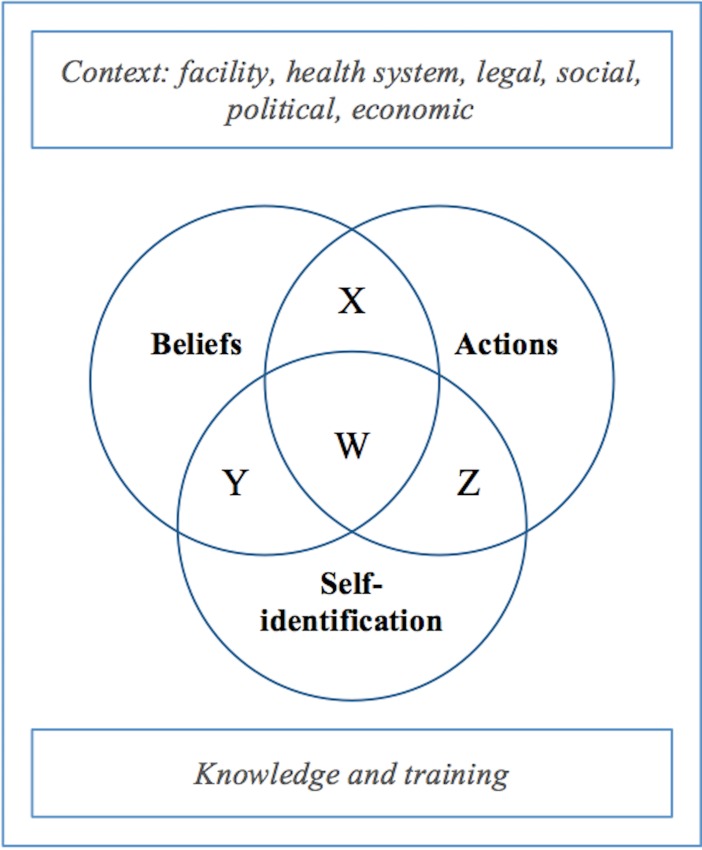
The model posits three domains of conscientious objection that form the basis for the survey instrument: 1) beliefs about abortion and conscientious objection; 2) actions related to conscientious objection and abortion; and 3) self-identification as a conscientious objector.
The instrument is intended to be used to assess prevalence among clinicians trained to provide abortions, and to gain insight on how conscientious objection is practiced in a variety of settings. Its results can inform more effective and appropriate strategies to regulate conscientious objection.
近年来,出于宗教或道德信仰而反对堕胎的医师拒绝进行合法堕胎,这一问题引起了伦理学家、政策制定者和公共卫生倡导者的激烈争论。出于平衡生殖权利和医生信仰的考虑,制定了医师的拒绝堕胎权。然而,在实践中,医生的反对可能会成为堕胎的障碍,侵犯生殖权利,增加不安全堕胎及其相关发病率和死亡率。从医学或公共卫生的角度来看,关于医师拒绝堕胎的信息很少。需要一种定量工具来评估医师拒绝堕胎的普遍性,并深入了解其实施情况。本文描述了一种衡量医师拒绝提供堕胎服务的调查工具的开发。
通过文献回顾和对哥伦比亚利益相关者的深入访谈,制定了一个关于医师拒绝堕胎的概念模型。该模型为调查问卷的开发提供了依据,问卷在加纳进行了试点和实施。
该模型提出了医师拒绝堕胎的三个领域,构成了调查工具的基础:1)关于堕胎和医师拒绝堕胎的信念;2)与医师拒绝堕胎和堕胎相关的行为;3)自我认同为医师拒绝堕胎者。
该工具旨在用于评估接受过堕胎培训的医师中的普遍性,并深入了解在各种环境中如何实施医师拒绝堕胎。其结果可以为更有效和适当的监管医师拒绝堕胎的策略提供信息。