Fleming Valerie, Frith Lucy, Luyben Ans, Ramsayer Beate
Faculty of Education and Health, Liverpool John Moores University, Henry Cotton Building, Trueman Street Liverpool, L3 2ET, Liverpool, UK.
University of Liverpool, Liverpool, UK.
BMC Med Ethics. 2018 Apr 27;19(1):31. doi: 10.1186/s12910-018-0268-3.
Freedom of conscience is a core element of human rights respected by most European countries. It allows abortion through the inclusion of a conscience clause, which permits opting out of providing such services. However, the grounds for invoking conscientious objection lack clarity. Our aim in this paper is to take a step in this direction by carrying out a systematic review of reasons by midwives and nurses for declining, on conscience grounds, to participate in abortion.
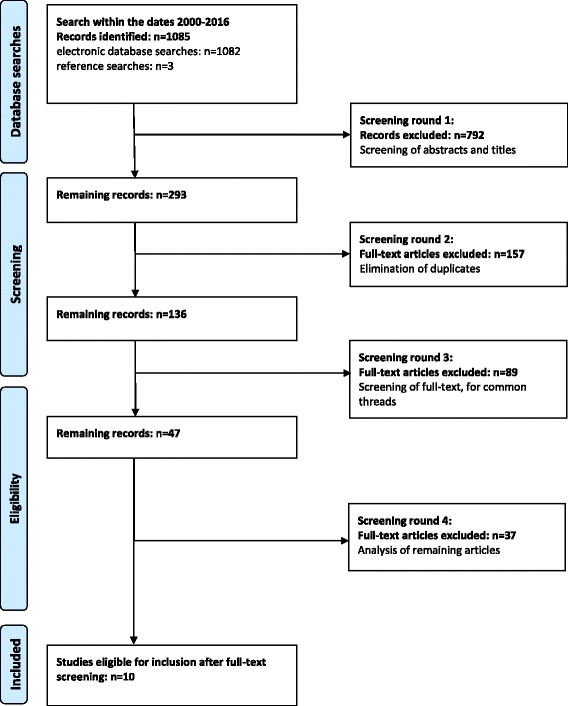
We conducted a systematic review of ethical arguments asking, "What reasons have been reported in the argument based literature for or against conscientious objection to abortion provision by nurses or midwives?" We particularly wanted to identify any discussion of the responsibilities of midwives and nurses in this area. Search terms were conscientious objection and abortion or termination and nurse or midwife or midwives or physicians or doctors or medics within the dates 2000-2016 on: HEIN legal, Medline, CINAHL, Psychinfo, Academic Search Complete, Web of Science including publications in English, German and Dutch. Final articles were subjected to a rigorous analysis, coding and classifying each line into reason mentions, narrow and broad reasons for or against conscientious objection.
Of an initial 1085 articles, 10 were included. We identified 23 broad reasons, containing 116narrow reasons and 269 reason mentions. Eighty one (81) narrow reasons argued in favour of and 35 against conscientious objection. Using predetermined categories of moral, practical, religious or legal reasons, "moral reasons" contained the largest number of narrow reasons (n = 58). The reasons and their associated mentions in this category outnumber those in the sum of the other three categories.
We identified no absolute argument either for or against conscientious objection by midwives or nurses. An invisibility of midwives and nurses exists in the whole debate concerning conscientious objection reflecting a gap between literature and practice, as it is they whom WHO recommend as providers of this service. While the arguments in the literature emphasize the need for provision of conscientious objection, a balanced debate is necessary in this field, which includes all relevant health professionals.
良心自由是大多数欧洲国家尊重的人权核心要素。通过纳入良心条款允许堕胎,该条款允许选择不提供此类服务。然而,援引良心拒服兵役的理由并不明确。本文的目的是朝着这个方向迈出一步,对助产士和护士基于良心拒绝参与堕胎的原因进行系统综述。
我们对伦理论证进行了系统综述,问题是:“在基于论证的文献中,有哪些支持或反对护士或助产士基于良心拒服提供堕胎服务的理由被报道?”我们特别想确定在这一领域对助产士和护士责任的任何讨论。检索词为良心拒服兵役以及堕胎或终止妊娠,以及2000年至2016年期间在以下数据库中的护士或助产士或医师或医生或医务人员:HEIN法律数据库、Medline、CINAHL、Psychinfo、学术搜索完整版、科学网,包括英文、德文和荷兰文出版物。最终文章经过严格分析,将每一行编码并分类为理由提及、支持或反对良心拒服兵役的狭义和广义理由。
最初的1085篇文章中,有10篇被纳入。我们确定了23个广义理由,包含116个狭义理由和269个理由提及。81个狭义理由支持良心拒服兵役,35个反对。使用预定的道德、实际、宗教或法律理由类别,“道德理由”包含的狭义理由数量最多(n = 58)。该类别中的理由及其相关提及超过了其他三个类别的总和。
我们没有发现支持或反对助产士或护士良心拒服兵役的绝对论据。在关于良心拒服兵役的整个辩论中,助产士和护士处于隐身状态,这反映了文献与实践之间的差距,因为世界卫生组织推荐他们作为这项服务的提供者。虽然文献中的论据强调了提供良心拒服兵役的必要性,但在这个领域需要进行平衡的辩论,其中包括所有相关的卫生专业人员。