Guzzo Marissa B, Nguyen Hoa T, Pham Thanh H, Wyszczelska-Rokiel Monika, Jakubowski Hieronim, Wolff Kerstin A, Ogwang Sam, Timpona Joseph L, Gogula Soumya, Jacobs Michael R, Ruetz Markus, Kräutler Bernhard, Jacobsen Donald W, Zhang Guo-Fang, Nguyen Liem
Department of Molecular Biology and Microbiology, Case Western Reserve University School of Medicine, Cleveland, Ohio, United States of America.
Department of Microbiology, Biochemistry and Molecular Genetics, Rutgers University, New Jersey Medical School, Newark, New Jersey, United States of America.
PLoS Pathog. 2016 Oct 19;12(10):e1005949. doi: 10.1371/journal.ppat.1005949. eCollection 2016 Oct.
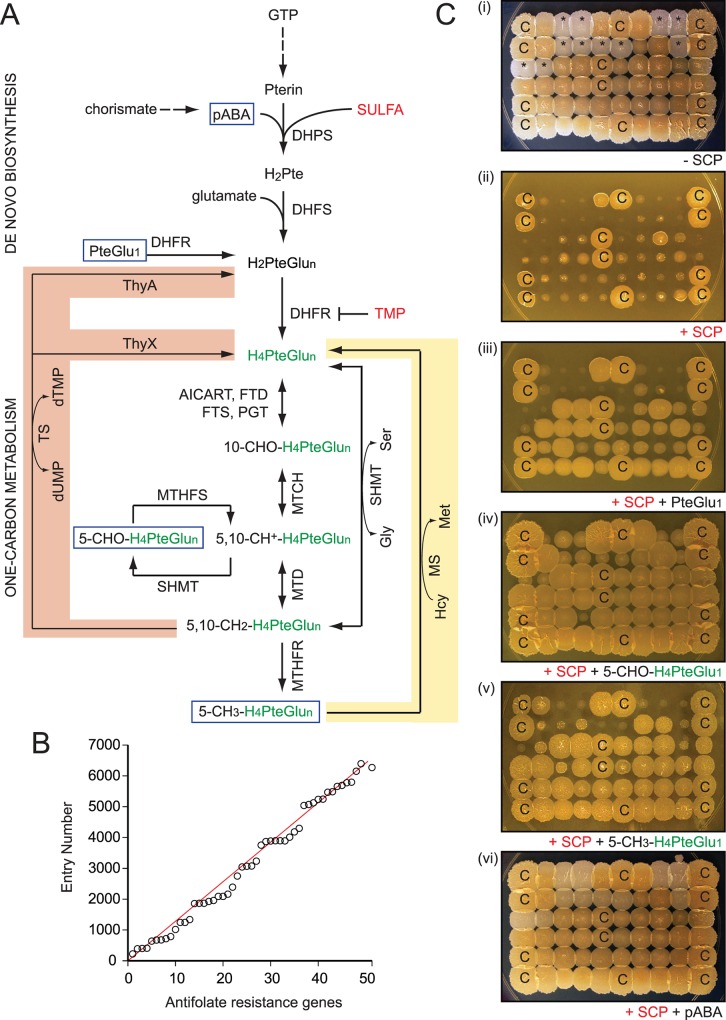
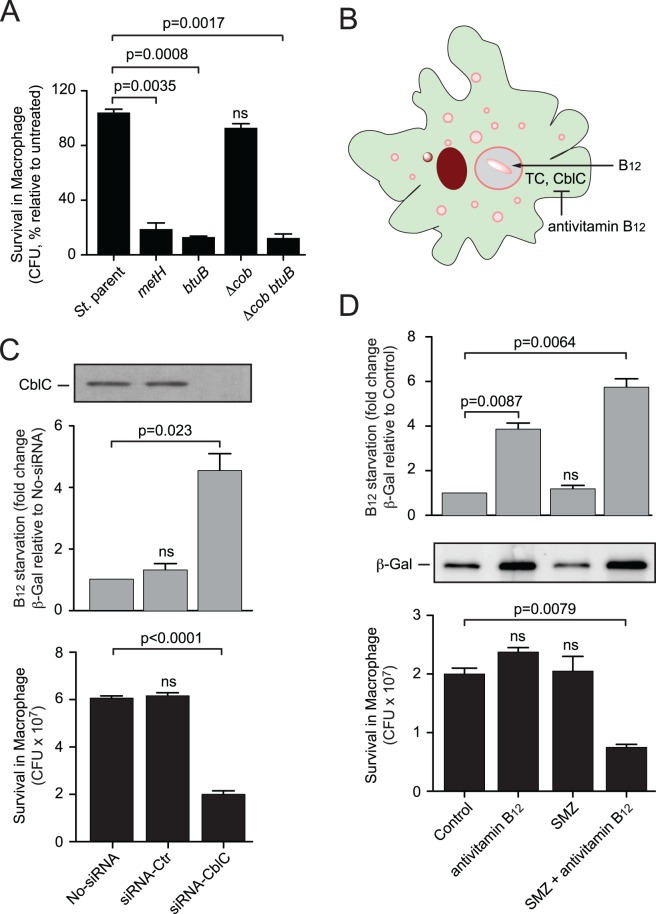
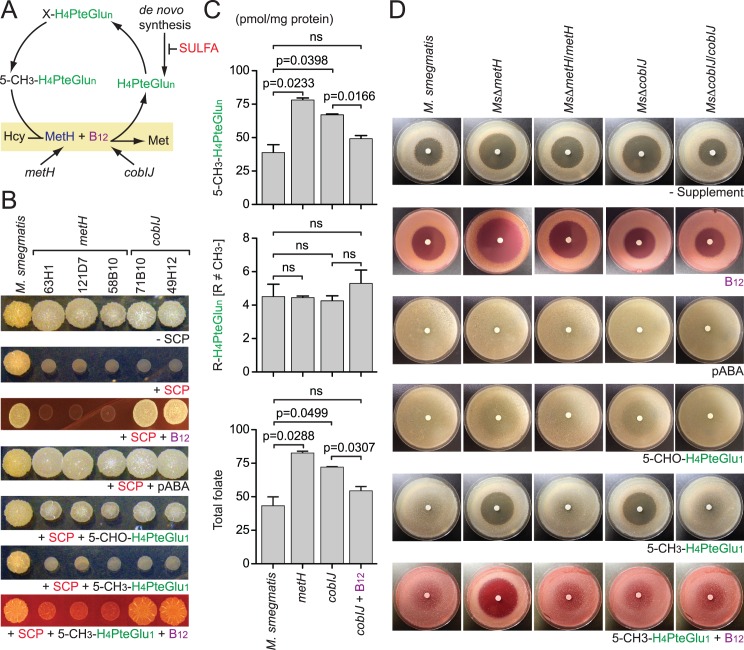
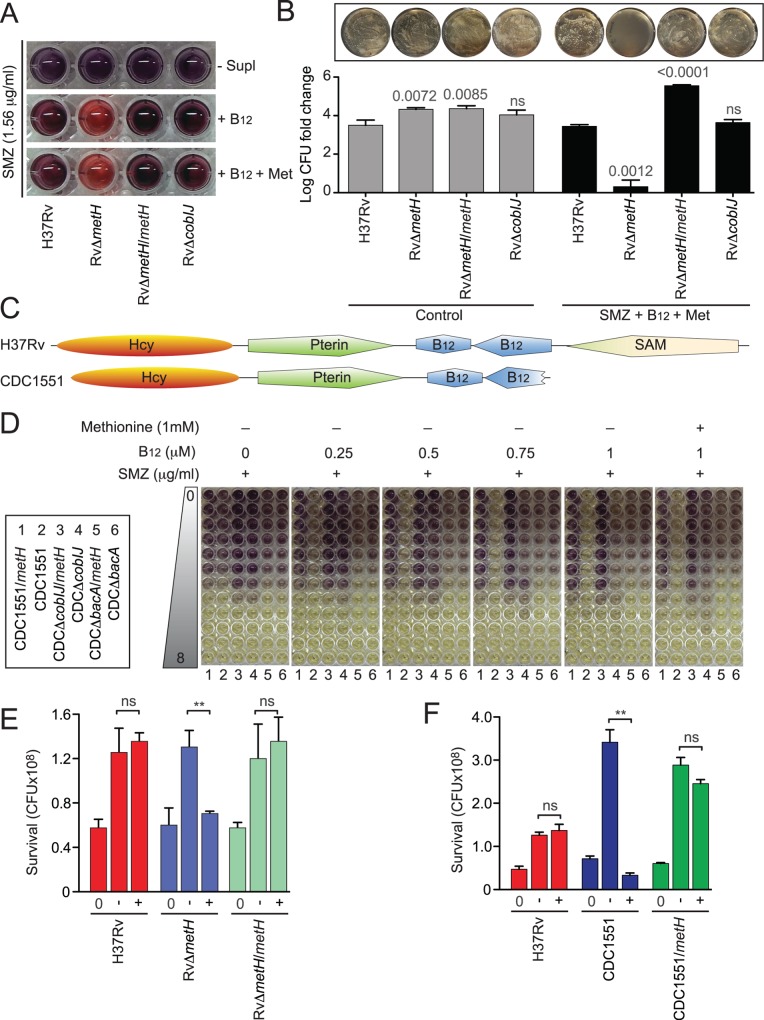
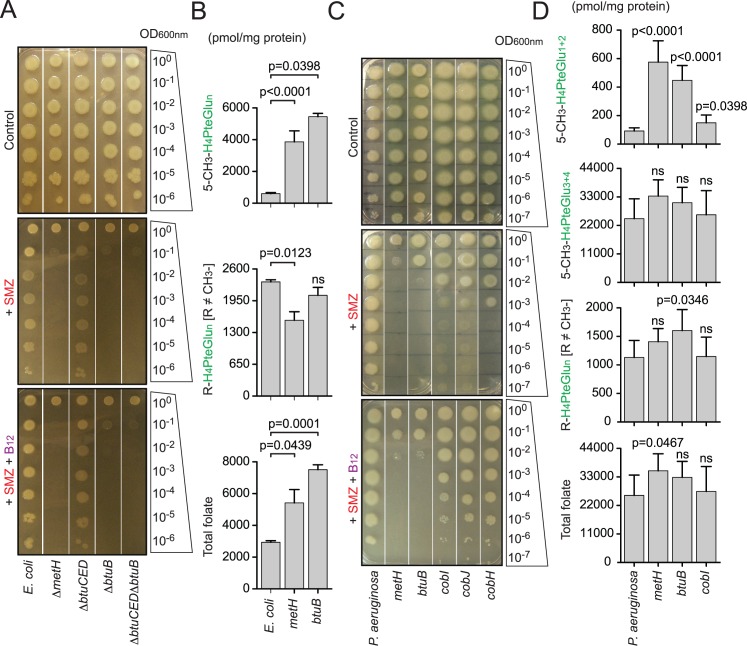
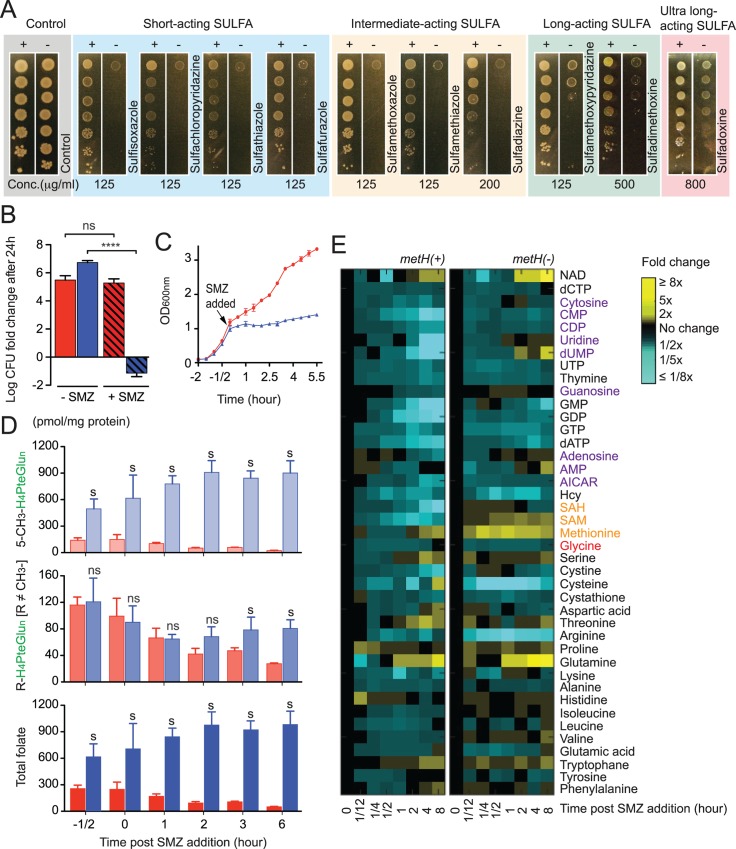
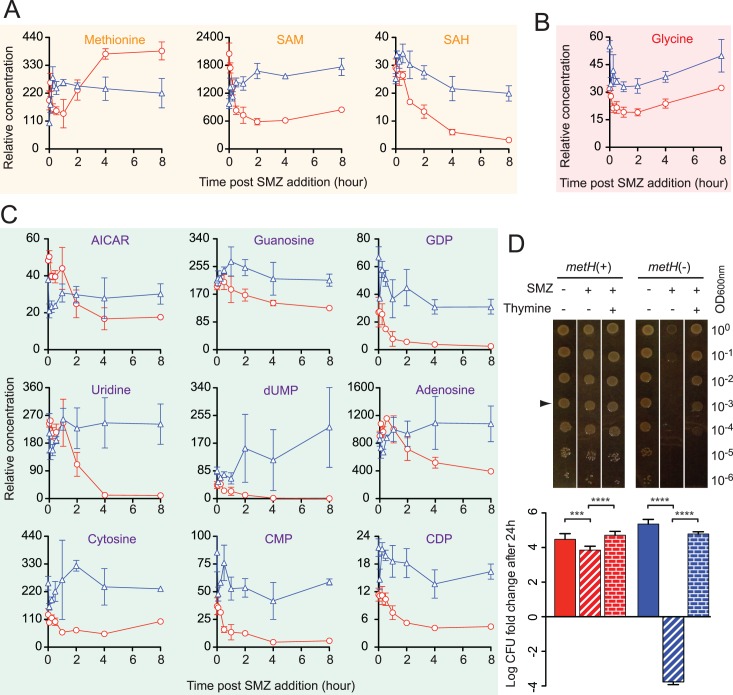
The methylfolate trap, a metabolic blockage associated with anemia, neural tube defects, Alzheimer's dementia, cardiovascular diseases, and cancer, was discovered in the 1960s, linking the metabolism of folate, vitamin B12, methionine and homocysteine. However, the existence or physiological significance of this phenomenon has been unknown in bacteria, which synthesize folate de novo. Here we identify the methylfolate trap as a novel determinant of the bacterial intrinsic death by sulfonamides, antibiotics that block de novo folate synthesis. Genetic mutagenesis, chemical complementation, and metabolomic profiling revealed trap-mediated metabolic imbalances, which induced thymineless death, a phenomenon in which rapidly growing cells succumb to thymine starvation. Restriction of B12 bioavailability, required for preventing trap formation, using an "antivitamin B12" molecule, sensitized intracellular bacteria to sulfonamides. Since boosting the bactericidal activity of sulfonamides through methylfolate trap induction can be achieved in Gram-negative bacteria and mycobacteria, it represents a novel strategy to render these pathogens more susceptible to existing sulfonamides.
甲基叶酸陷阱是一种与贫血、神经管缺陷、阿尔茨海默病性痴呆、心血管疾病和癌症相关的代谢障碍,于20世纪60年代被发现,它将叶酸、维生素B12、蛋氨酸和同型半胱氨酸的代谢联系起来。然而,这种现象在从头合成叶酸的细菌中的存在或生理意义尚不清楚。在此,我们确定甲基叶酸陷阱是细菌被磺胺类药物(一类阻断从头合成叶酸的抗生素)诱导内在死亡的一个新决定因素。遗传诱变、化学互补和代谢组学分析揭示了陷阱介导的代谢失衡,这种失衡诱导了无胸腺死亡,即快速生长的细胞因胸腺嘧啶饥饿而死亡的现象。使用一种“抗维生素B12”分子限制预防陷阱形成所需的B12生物利用度,可使细胞内细菌对磺胺类药物敏感。由于通过诱导甲基叶酸陷阱来增强磺胺类药物的杀菌活性在革兰氏阴性菌和分枝杆菌中均可实现,这代表了一种使这些病原体对现有磺胺类药物更敏感的新策略。