Poersch-Bortolon Liane Balvedi, Pereira Jorge Fernando, Nhani Antonio, Gonzáles Hebert Hernán Soto, Torres Gisele Abigail Montan, Consoli Luciano, Arenhart Rafael Augusto, Bodanese-Zanettini Maria Helena, Margis-Pinheiro Márcia
Departamento de Genética, Instituto de Biociências, Universidade Federal do Rio Grande do Sul, Porto Alegre, RS, Brazil.
Embrapa Trigo, Passo Fundo, RS, Brazil.
Genet Mol Biol. 2016 Oct-Dec;39(4):629-645. doi: 10.1590/1678-4685-GMB-2015-0327. Epub 2016 Oct 20.
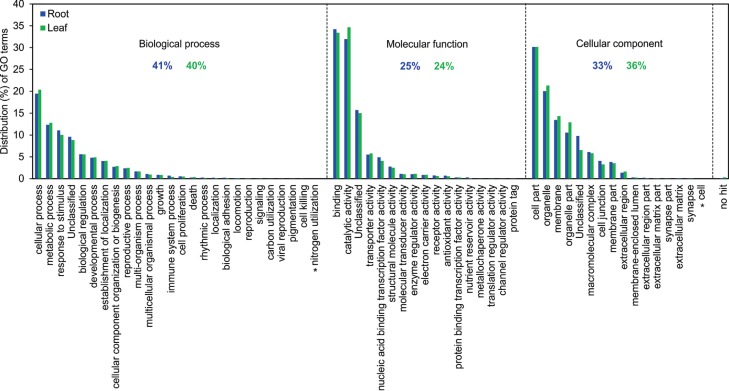
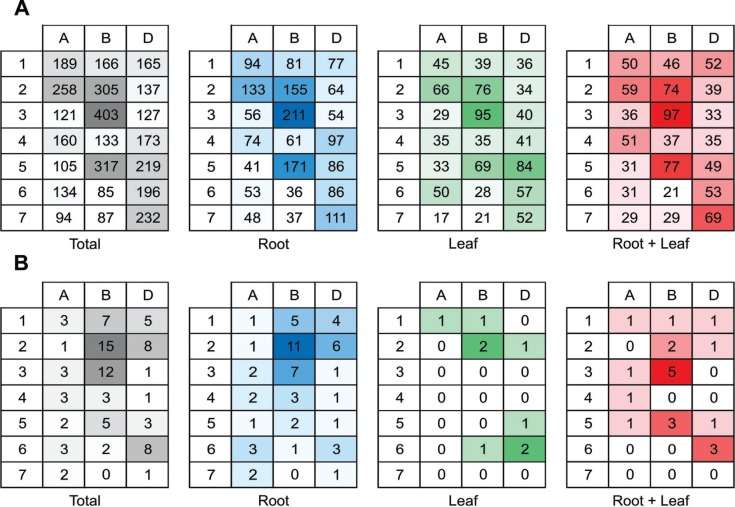
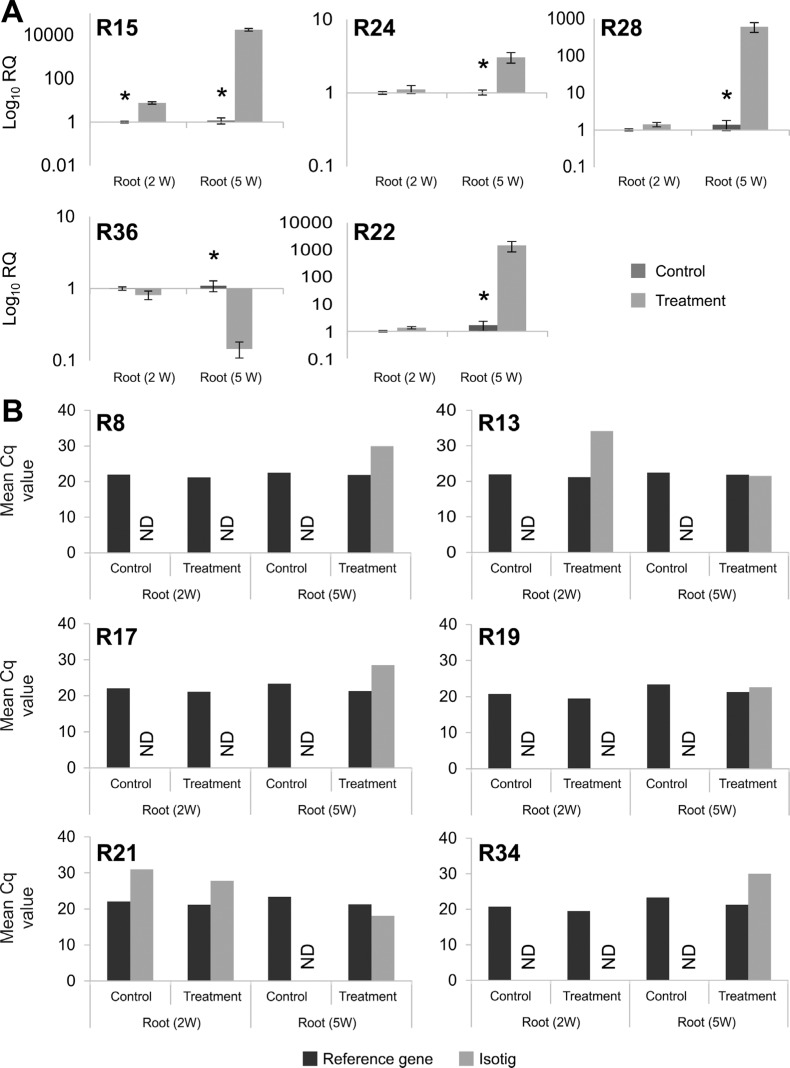
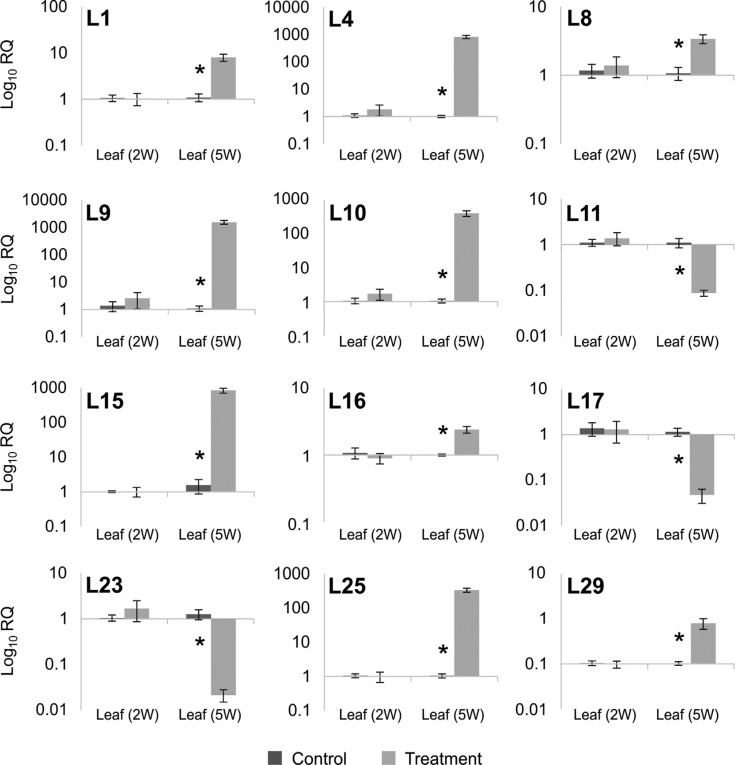
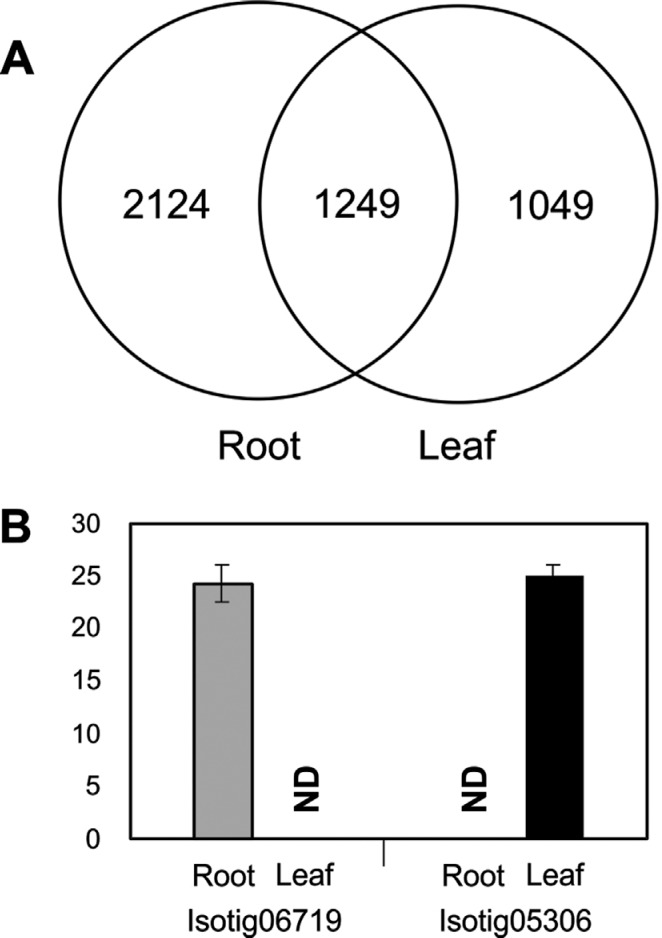
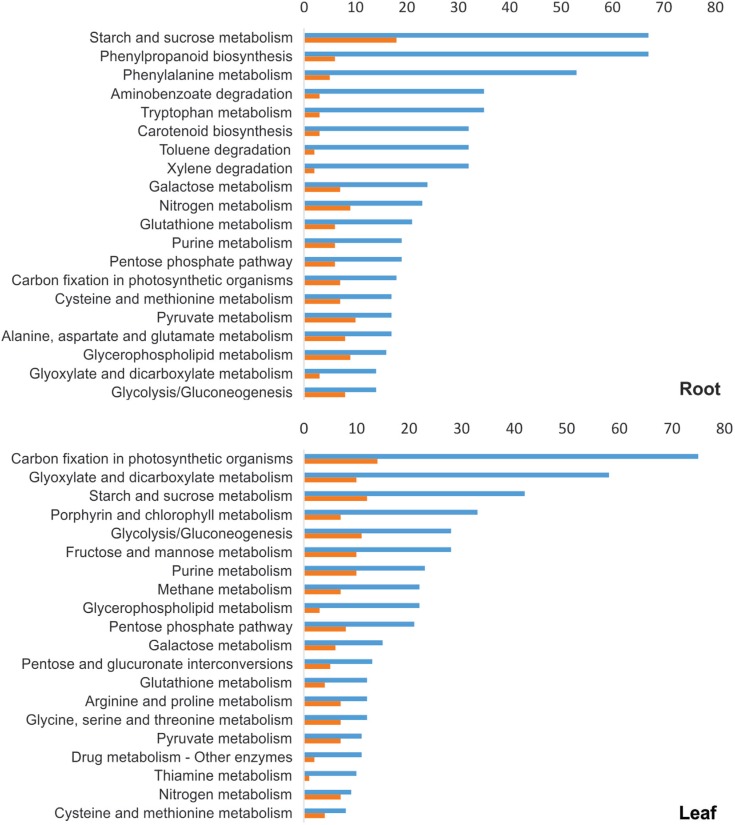
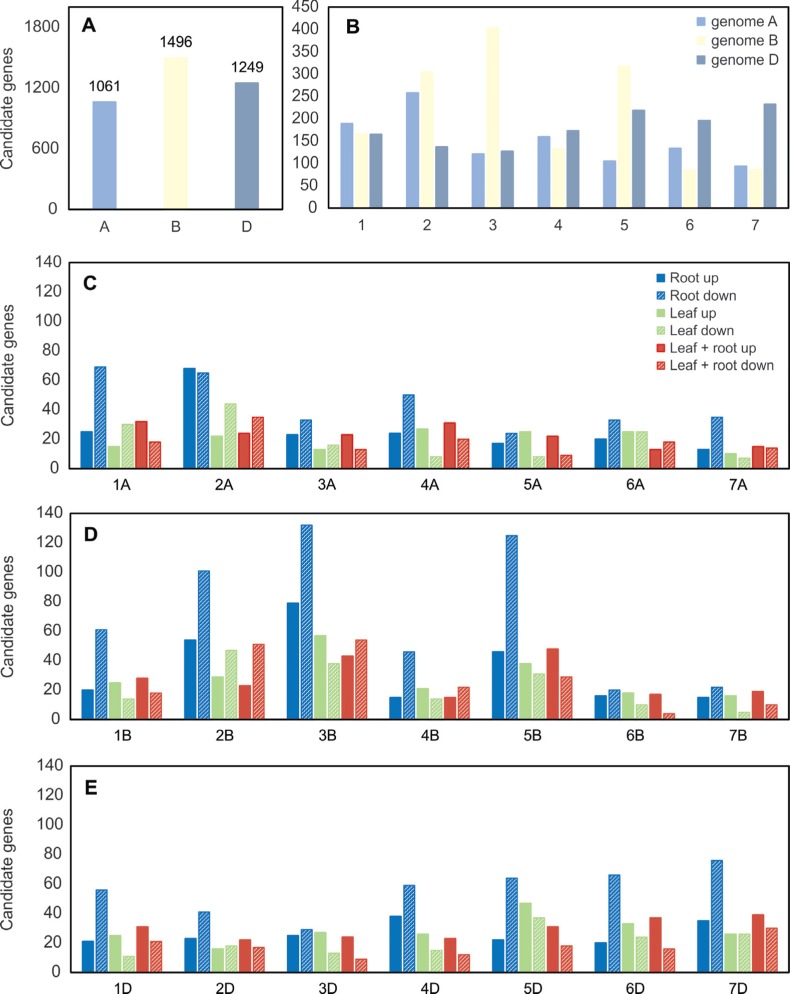
Drought limits wheat production in the Brazilian Cerrado biome. In order to search for candidate genes associated to the response to water deficit, we analyzed the gene expression profiles, under severe drought stress, in roots and leaves of the cultivar MGS1 Aliança, a well-adapted cultivar to the Cerrado. A set of 4,422 candidate genes was found in roots and leaves. The number of down-regulated transcripts in roots was higher than the up-regulated transcripts, while the opposite occurred in leaves. The number of common transcripts between the two tissues was 1,249, while 2,124 were specific to roots and 1,049 specific to leaves. Quantitative RT-PCR analysis revealed a 0.78 correlation with the expression data. The candidate genes were distributed across all chromosomes and component genomes, but a greater number was mapped on the B genome, particularly on chromosomes 3B, 5B and 2B. When considering both tissues, 116 different pathways were induced. One common pathway, among the top three activated pathways in both tissues, was starch and sucrose metabolism. These results pave the way for future marker development and selection of important genes and are useful for understanding the metabolic pathways involved in wheat drought response.
干旱限制了巴西塞拉多生物群落区的小麦产量。为了寻找与水分亏缺响应相关的候选基因,我们分析了适应性良好的塞拉多品种MGS1 Aliança在严重干旱胁迫下根和叶中的基因表达谱。在根和叶中发现了一组4422个候选基因。根中下调转录本的数量高于上调转录本,而叶中情况则相反。两个组织之间的共有转录本数量为1249个,其中2124个是根特有的,1049个是叶特有的。定量逆转录聚合酶链反应分析显示与表达数据的相关性为0.78。候选基因分布在所有染色体和组成基因组中,但更多的基因定位在B基因组上,特别是在3B、5B和2B染色体上。考虑到两个组织,共诱导了116条不同的途径。在两个组织中激活程度最高的三条途径中,有一条共同途径是淀粉和蔗糖代谢。这些结果为未来的标记开发和重要基因的选择铺平了道路,有助于理解小麦干旱响应中涉及的代谢途径。