Impey Soren, Jopson Timothy, Pelz Carl, Tafessu Amanuel, Fareh Fatema, Zuloaga Damian, Marzulla Tessa, Riparip Lara-Kirstie, Stewart Blair, Rosi Susanna, Turker Mitchell S, Raber Jacob
Oregon Stem Cell Center and Department of Pediatrics, Oregon Health and Science University, Portland, OR, 97239, USA.
Department of Cell, Developmental Biology, and Cancer Biology, Oregon Health and Science University, Portland, OR, 97239, USA.
BMC Genomics. 2016 Oct 24;17(1):825. doi: 10.1186/s12864-016-3110-7.
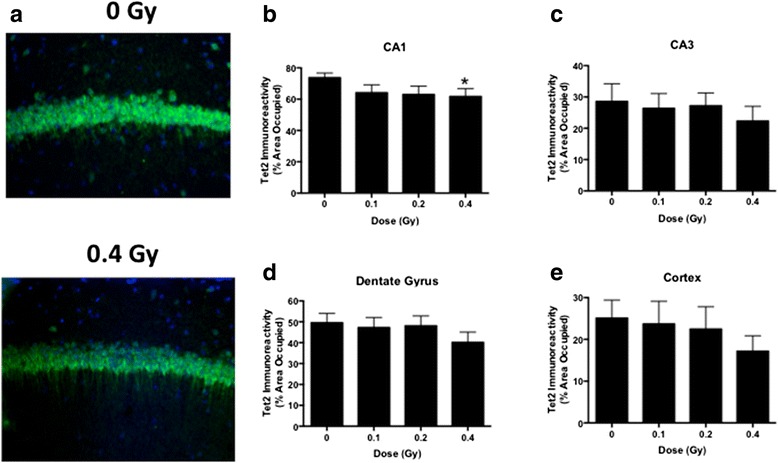
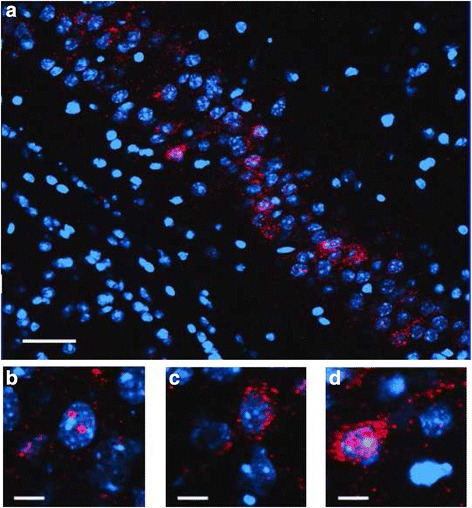
Astronauts are exposed to Fe ions that may pose a significant health hazard during and following prolonged missions in deep space. We showed previously that object recognition requiring the hippocampus, a structure critical for cognitive function, is affected in 2-month-old mice irradiated with Fe ions. Here we examined object recognition in 6-month-old mice irradiated with Fe ions, a biological age more relevant to the typical ages of astronauts. Moreover, because the mechanisms mediating the detrimental effects of Fe ions on hippocampal function are unclear, we examined changes in hippocampal networks involved in synaptic plasticity and memory, gene expression, and epigenetic changes in cytosine methylation (5mC) and hydroxymethylation (5hmC) that could accompany changes in gene expression. We assessed the effects of whole body Fe ion irradiation at early (2 weeks) and late (20 weeks) time points on hippocampus-dependent memory and hippocampal network stability, and whether these effects are associated with epigenetic changes in hippocampal DNA methylation (both 5mC and 5hmC) and gene expression.
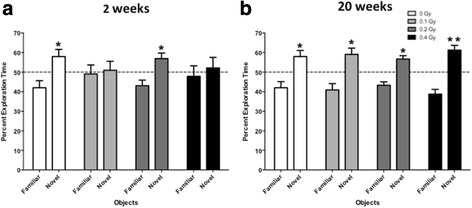
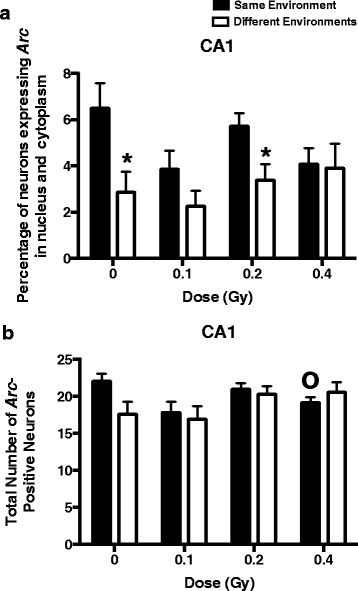
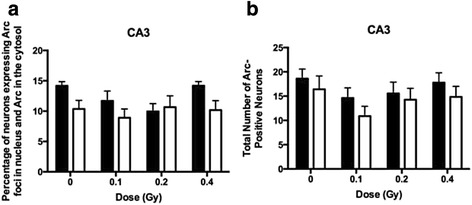
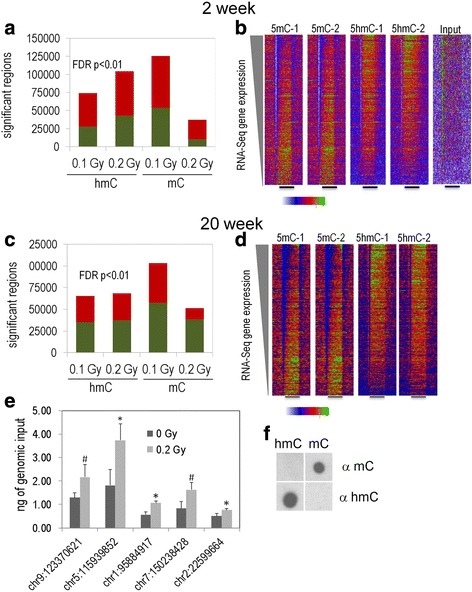
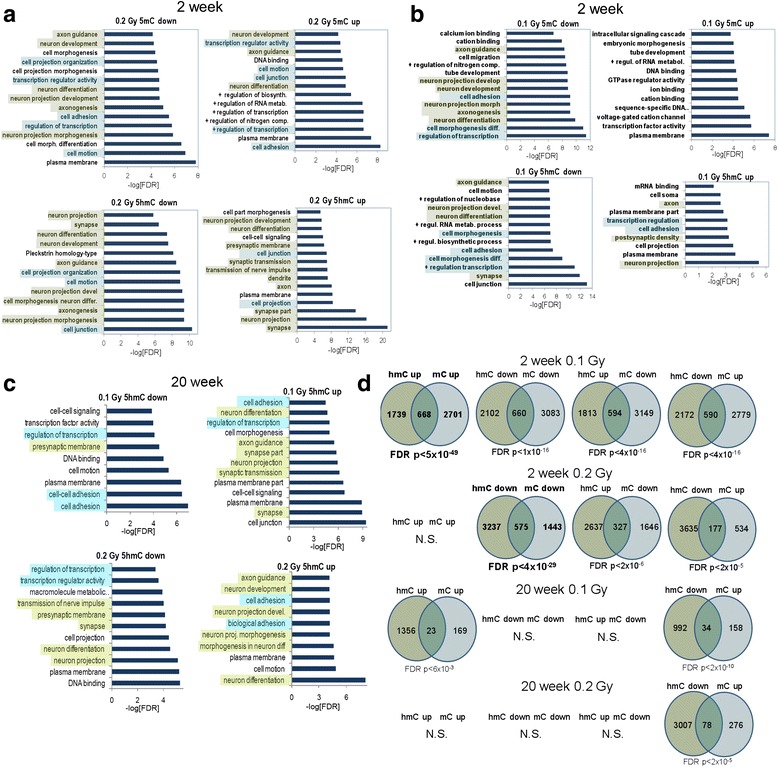
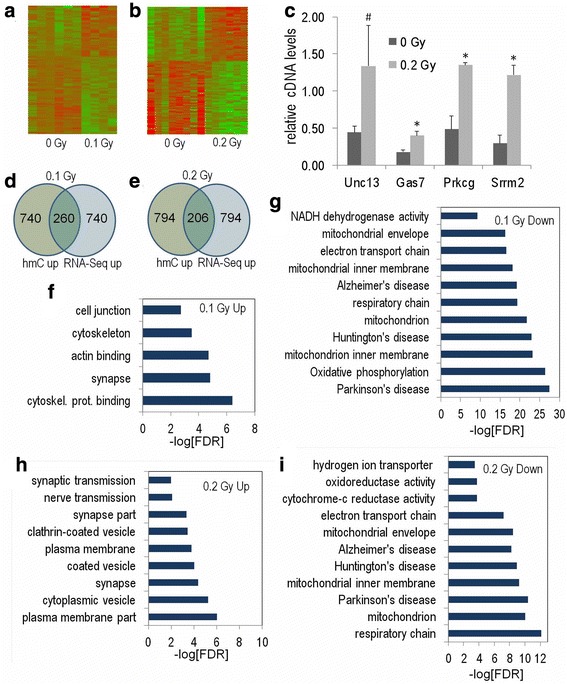
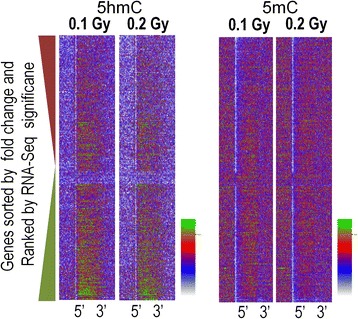
At the two-week time point, object recognition and network stability were impaired following irradiation at the 0.1 and 0.4 Gy dose, but not following irradiation at the 0.2 Gy dose. No impairments in object recognition or network stability were seen at the 20-week time point at any irradiation dose used. Consistent with this pattern, the significance of pathways for gene categories for 5hmC was lower, though not eliminated, at the 20-week time point compared to the 2-week time point. Similarly, significant changes were observed for 5mC gene pathways at the 2-week time point, but no significant gene categories were observed at the 20-week time point. Only the 5hmC changes tracked with gene expression changes.
Dose- and time-dependent epigenomic remodeling in the hippocampus following Fe ion exposure correlates with behavioral changes.
宇航员在长期的深空任务期间及之后会接触到铁离子,这可能对健康构成重大危害。我们之前表明,需要海马体(对认知功能至关重要的结构)参与的物体识别在接受铁离子照射的2月龄小鼠中受到影响。在此,我们研究了接受铁离子照射的6月龄小鼠的物体识别情况,6月龄在生物学年龄上与宇航员的典型年龄更为相关。此外,由于介导铁离子对海马体功能产生有害影响的机制尚不清楚,我们研究了参与突触可塑性和记忆的海马体网络变化、基因表达以及可能伴随基因表达变化的胞嘧啶甲基化(5mC)和羟甲基化(5hmC)的表观遗传变化。我们评估了早期(2周)和晚期(20周)全身铁离子照射对海马体依赖性记忆和海马体网络稳定性的影响,以及这些影响是否与海马体DNA甲基化(5mC和5hmC)和基因表达的表观遗传变化相关。
在两周时间点,0.1 Gy和0.4 Gy剂量照射后物体识别和网络稳定性受损,但0.2 Gy剂量照射后未受损。在20周时间点,使用的任何照射剂量下均未观察到物体识别或网络稳定性受损。与这种模式一致,与2周时间点相比,20周时间点5hmC的基因类别通路的显著性较低,尽管未消除。同样,在2周时间点观察到5mC基因通路有显著变化,但在20周时间点未观察到显著的基因类别。只有5hmC的变化与基因表达变化相关。
铁离子暴露后海马体中剂量和时间依赖性的表观基因组重塑与行为变化相关。