Dietz Pavel, Watson Estelle D, Sattler Matteo C, Ruf Wolfgang, Titze Sylvia, van Poppel Mireille
Department of Physical Activity and Public Health, Institute of Sports Science, University of Graz, Mozartgasse 14, Graz, 8010, Austria.
Centre for Exercise Science and Sports Medicine, School of Therapeutic Sciences, Faculty of Health Sciences, University of Witwatersrand, Private Bag 3, Johannesburg, 2050, South Africa.
BMC Pregnancy Childbirth. 2016 Oct 26;16(1):326. doi: 10.1186/s12884-016-1121-7.
Physical activity (PA) during pregnancy has been shown to be associated with several positive effects for mother, fetus, and offspring. Heart rate variability (HRV) is a noninvasive and surrogate marker to determine fetal overall health and the development of fetal autonomic nervous system. In addition, it has been shown to be significantly influenced by maternal behavior. However, the influence of maternal PA on HRV has not yet been systematically reviewed. Therefore, the aim of this systematic review was to assess the influence of regular maternal PA on maternal, fetal or infant HRV.
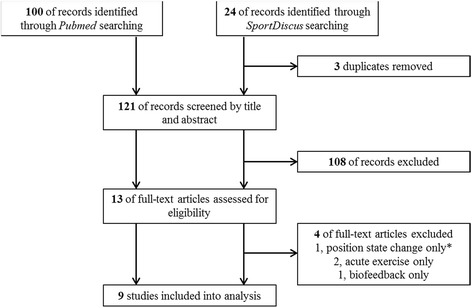
A systematic literature search following a priori formulated criteria of studies that examined the influence of regular maternal PA (assessed for a minimum period of 6 weeks) on maternal, fetal or infant HRV was performed in the databases Pubmed and SPORTDiscus. Quality of each study was assessed using the standardized Quality Assessment Tool for Quantitative Studies (QATQS).
Nine articles were included into the present systematic review: two intervention studies, one prospective longitudinal study, and six post-hoc analysis of subsets of the longitudinal study. Of these articles four referred to maternal HRV, five to fetal HRV, and one to infant HRV. The overall global rating for the standardized quality assessment of the articles was moderate to weak. The articles regarding the influence of maternal PA on maternal HRV indicated contrary results. Five of five articles regarding the influence of maternal PA on fetal HRV showed increases of fetal HRV on most parameters depending on maternal PA. The article referring to infant HRV (measured one month postnatal) showed an increased HRV.
Based on the current evidence available, our overall conclusion is that the hypothesis that maternal PA influences maternal HRV cannot be supported, but there is a trend that maternal PA might increase fetal and infant HRV (clinical conclusion). Therefore, we recommend that further, high quality studies addressing the influence of maternal PA on HRV should be performed (methodological conclusion).
孕期身体活动(PA)已被证明对母亲、胎儿和后代有多种积极影响。心率变异性(HRV)是一种用于确定胎儿整体健康状况和胎儿自主神经系统发育的非侵入性替代指标。此外,它已被证明会受到母亲行为的显著影响。然而,母亲PA对HRV的影响尚未得到系统综述。因此,本系统综述的目的是评估母亲定期进行PA对母亲、胎儿或婴儿HRV的影响。
在PubMed和SPORTDiscus数据库中,按照预先制定的标准,对研究母亲定期进行PA(评估期至少为6周)对母亲、胎儿或婴儿HRV影响的研究进行系统文献检索。使用标准化的定量研究质量评估工具(QATQS)评估每项研究的质量。
本系统综述纳入了9篇文章:2项干预研究、1项前瞻性纵向研究以及对纵向研究子集的6项事后分析。其中4篇文章涉及母亲HRV,5篇涉及胎儿HRV,1篇涉及婴儿HRV。文章标准化质量评估的总体全球评级为中等至较弱。关于母亲PA对母亲HRV影响的文章得出了相反的结果。关于母亲PA对胎儿HRV影响的5篇文章中有5篇显示,取决于母亲的PA,大多数参数下胎儿HRV会增加。涉及婴儿HRV(出生后1个月测量)的文章显示HRV增加。
基于现有证据,我们的总体结论是,母亲PA影响母亲HRV这一假设得不到支持,但有趋势表明母亲PA可能会增加胎儿和婴儿的HRV(临床结论)。因此,我们建议应开展进一步的高质量研究,以探讨母亲PA对HRV的影响(方法学结论)。