Clinical Microbiology, Cantonal Hospital of Aarau, Aarau, Switzerland.
Clinical Microbiology, labormedizinisches Zentrum Dr. Risch AG, Berne, Switzerland.
PLoS One. 2016 Oct 31;11(10):e0164260. doi: 10.1371/journal.pone.0164260. eCollection 2016.
The technical, biological, and inter-center reproducibility of matrix-assisted laser desorption ionization-time of flight mass spectrometry (MALDI TOF MS) typing data has not yet been explored. The aim of this study is to compare typing data from multiple centers employing bioinformatics using bacterial strains from two past outbreaks and non-related strains.
MATERIAL/METHODS: Participants received twelve extended spectrum betalactamase-producing E. coli isolates and followed the same standard operating procedure (SOP) including a full-protein extraction protocol. All laboratories provided visually read spectra via flexAnalysis (Bruker, Germany). Raw data from each laboratory allowed calculating the technical and biological reproducibility between centers using BioNumerics (Applied Maths NV, Belgium).
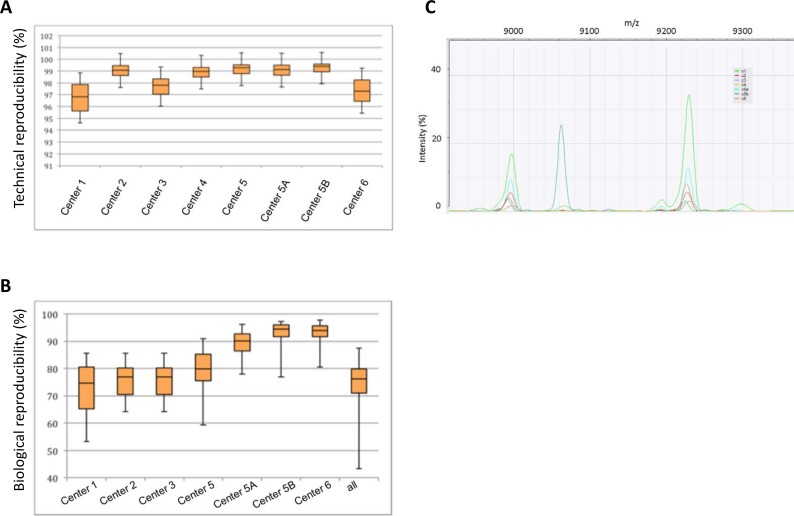
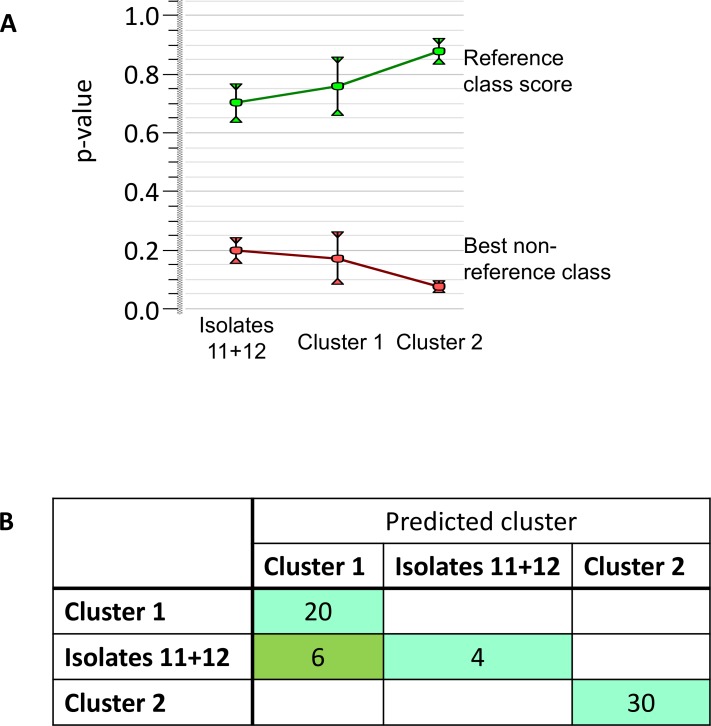
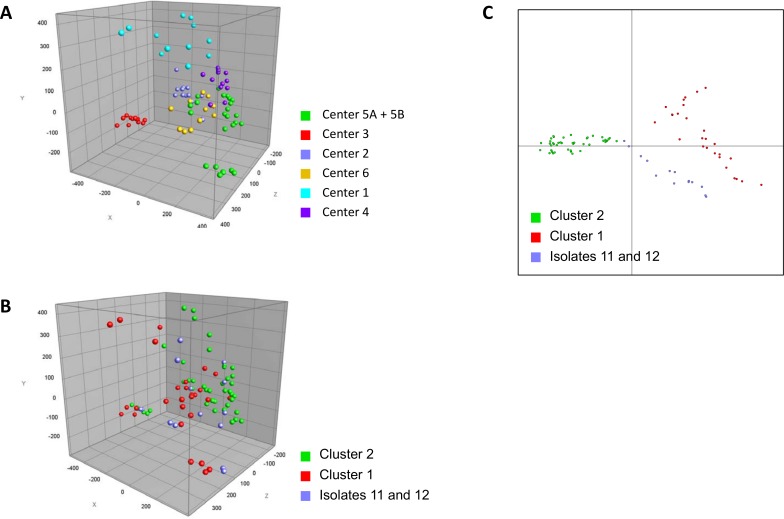
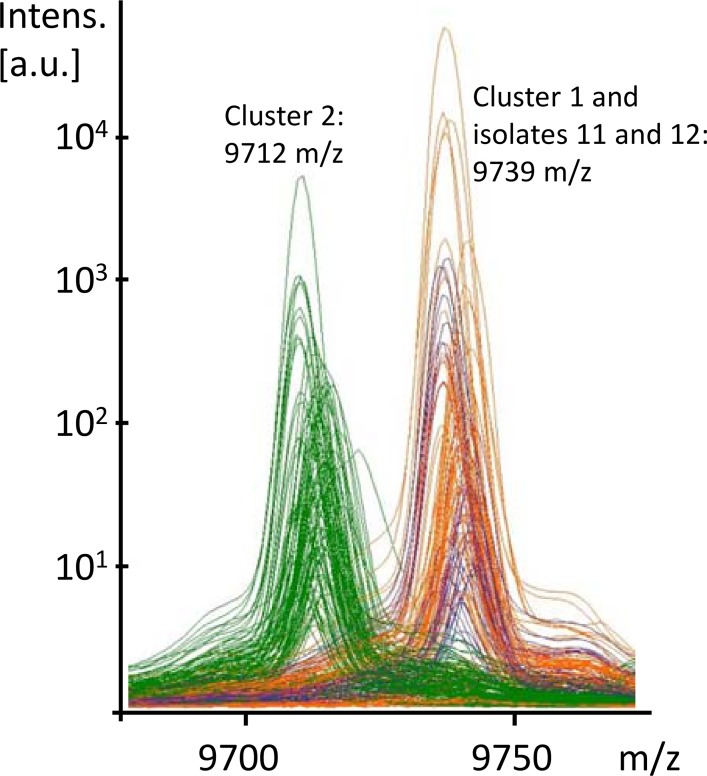
Technical and biological reproducibility ranged between 96.8-99.4% and 47.6-94.4%, respectively. The inter-center reproducibility showed a comparable clustering among identical isolates. Principal component analysis indicated a higher tendency to cluster within the same center. Therefore, we used a discriminant analysis, which completely separated the clusters. Next, we defined a reference center and performed a statistical analysis to identify specific peaks to identify the outbreak clusters. Finally, we used a classifier algorithm and a linear support vector machine on the determined peaks as classifier. A validation showed that within the set of the reference center, the identification of the cluster was 100% correct with a large contrast between the score with the correct cluster and the next best scoring cluster.
Based on the sufficient technical and biological reproducibility of MALDI-TOF MS based spectra, detection of specific clusters is possible from spectra obtained from different centers. However, we believe that a shared SOP and a bioinformatics approach are required to make the analysis robust and reliable.
基质辅助激光解吸电离飞行时间质谱(MALDI-TOF MS)分型数据的技术、生物学和中心间可重复性尚未得到探索。本研究的目的是比较使用来自两次暴发的细菌株和非相关菌株的生物信息学对多个中心的分型数据。
材料/方法:参与者收到 12 个扩展谱β-内酰胺酶产生大肠埃希菌分离株,并遵循相同的标准操作程序(SOP),包括全蛋白提取方案。所有实验室均通过 flexAnalysis(德国 Bruker)提供目视可读光谱。每个实验室的原始数据允许使用 BioNumerics(比利时 Applied Maths NV)计算中心之间的技术和生物学重复性。
技术和生物学重复性分别为 96.8-99.4%和 47.6-94.4%。中心间的可重复性显示出相同分离株之间聚类的可比性。主成分分析表明,聚类在同一中心内的趋势更高。因此,我们使用判别分析,该分析完全分离了聚类。接下来,我们定义了一个参考中心,并进行了统计分析,以确定特定的峰来识别暴发聚类。最后,我们使用分类器算法和线性支持向量机对确定的峰进行分类。验证表明,在参考中心的集合内,聚类的识别率为 100%,正确聚类的得分与下一个最佳得分聚类之间的差异非常大。
基于 MALDI-TOF MS 基于光谱的充分技术和生物学可重复性,可以从不同中心获得的光谱中检测到特定的聚类。然而,我们认为需要共享 SOP 和生物信息学方法,以使分析稳健可靠。