Canonico Barbara, Cesarini Erica, Salucci Sara, Luchetti Francesca, Falcieri Elisabetta, Di Sario Gianna, Palma Fulvio, Papa Stefano
Department of Biomolecular Sciences, University of Urbino Carlo Bo, Urbino, Italy.
IGM, CNR, Rizzoli Orthopaedic Institute, Bologna, Italy; Department of Biomolecular Sciences, University of Urbino Carlo Bo, Urbino, Italy.
PLoS One. 2016 Oct 31;11(10):e0165780. doi: 10.1371/journal.pone.0165780. eCollection 2016.
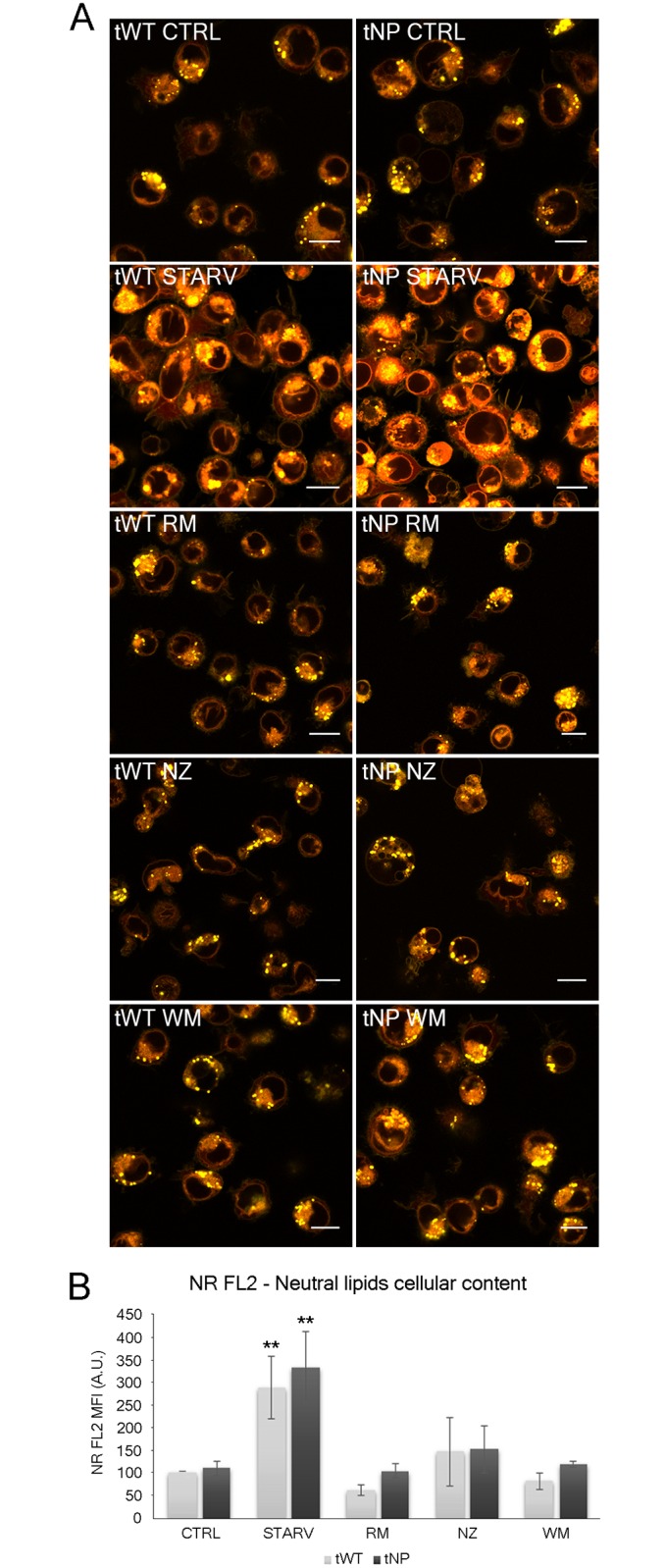
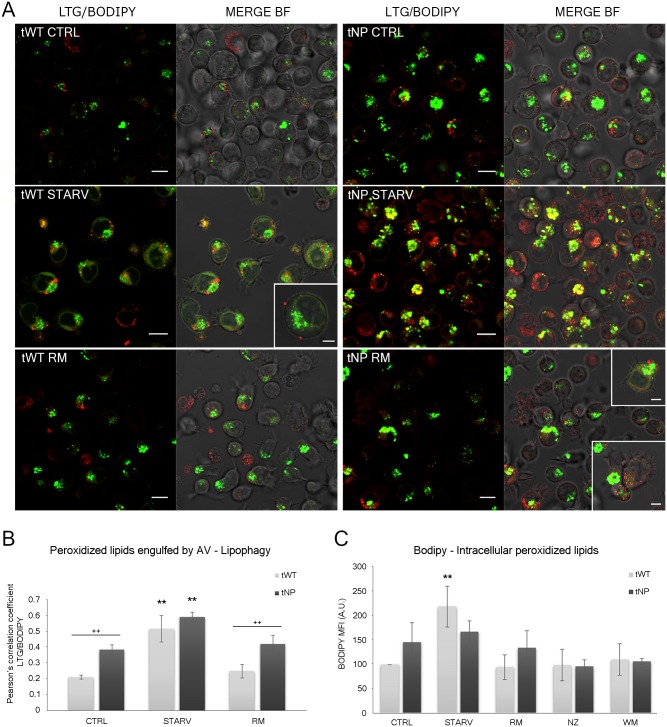
Niemann-Pick disease type A (NP-A) and type B (NP-B) are lysosomal storage diseases (LSDs) caused by sphingomyelin accumulation in lysosomes relying on reduced or absent acid sphingomyelinase. A considerable body of evidence suggests that lysosomal storage in many LSD impairs autophagy, resulting in the accumulation of poly-ubiquitinated proteins and dysfunctional mitochondria, ultimately leading to cell death. Here we test this hypothesis in a cellular model of Niemann-Pick disease type B, in which autophagy has never been studied. The basal autophagic pathway was first examined in order to evaluate its functionality using several autophagy-modulating substances such as rapamycin and nocodazole. We found that human NP-B B lymphocytes display considerable alteration in their autophagic vacuole accumulation and mitochondrial fragmentation, as well as mitophagy induction (for damaged mitochondria clearance). Furthermore, lipid traceability of intra and extra-cellular environments shows lipid accumulation in NP-B B lymphocytes and also reveals their peculiar trafficking/management, culminating in lipid microparticle extrusion (by lysosomal exocytosis mechanisms) or lipophagy. All of these features point to the presence of a deep autophagy/mitophagy alteration revealing autophagic stress and defective mitochondrial clearance. Hence, rapamycin might be used to regulate autophagy/mitophagy (at least in part) and to contribute to the clearance of lysosomal aberrant lipid storage.
A型尼曼-匹克病(NP-A)和B型尼曼-匹克病(NP-B)是溶酶体贮积病(LSDs),由溶酶体中鞘磷脂蓄积引起,原因是酸性鞘磷脂酶减少或缺乏。大量证据表明,许多溶酶体贮积病中的溶酶体贮积会损害自噬,导致多泛素化蛋白和功能失调的线粒体蓄积,最终导致细胞死亡。在此,我们在B型尼曼-匹克病的细胞模型中验证这一假说,此前从未对该模型的自噬进行过研究。首先检测基础自噬途径,以便使用几种自噬调节物质(如雷帕霉素和诺考达唑)评估其功能。我们发现,人类NP-B B淋巴细胞在自噬空泡蓄积、线粒体碎片化以及线粒体自噬诱导(用于清除受损线粒体)方面表现出显著改变。此外,细胞内和细胞外环境的脂质追踪显示,NP-B B淋巴细胞中存在脂质蓄积,还揭示了它们独特的转运/管理方式,最终导致脂质微粒挤出(通过溶酶体胞吐机制)或脂质自噬。所有这些特征都表明存在深度自噬/线粒体自噬改变,揭示了自噬应激和线粒体清除缺陷。因此,雷帕霉素或许可用于调节自噬/线粒体自噬(至少部分调节),并有助于清除溶酶体异常脂质贮积。