Department of Medical Biotechnology, Faculty of Biochemistry Biophysics and Biotechnology, Jagiellonian University, 30-387, Krakow, Poland.
Department of Physics of Nanostructures and Nanotechnology, Institute of Physics, Jagiellonian University, 30-387, Krakow, Poland.
Redox Biol. 2020 Jul;34:101572. doi: 10.1016/j.redox.2020.101572. Epub 2020 May 19.
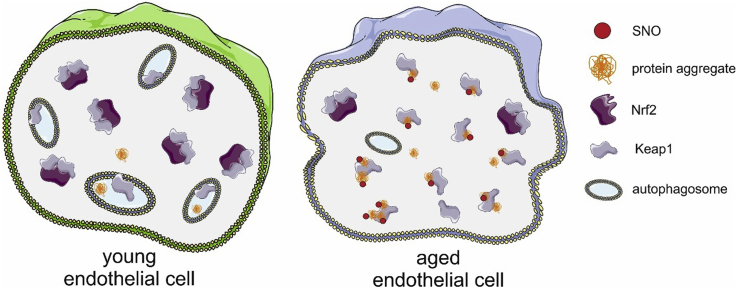
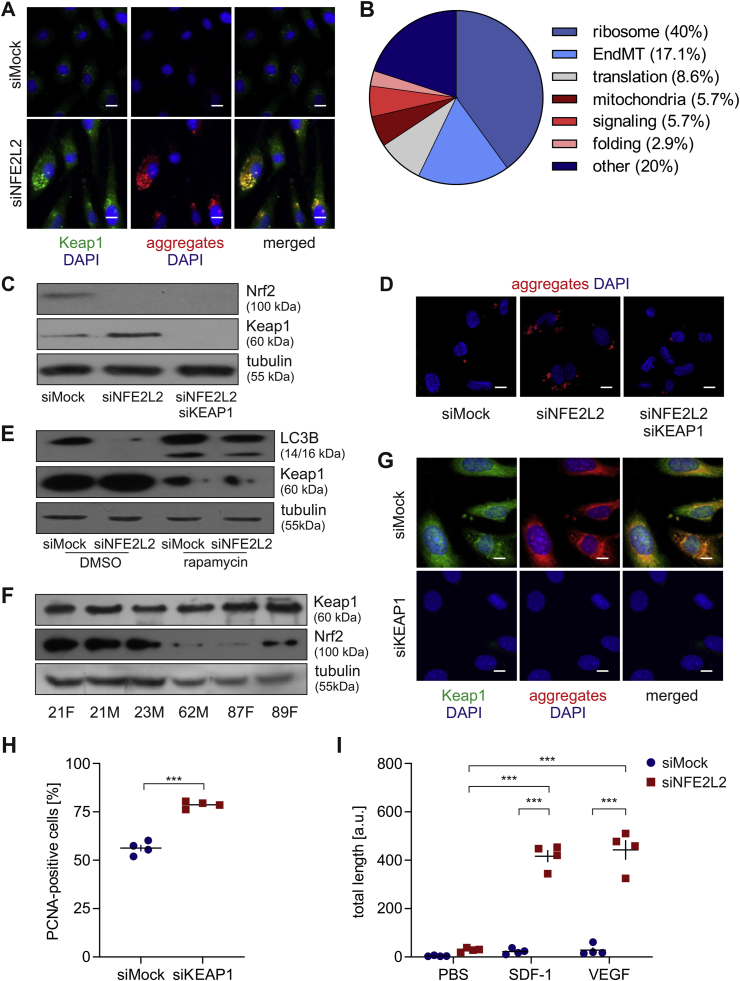
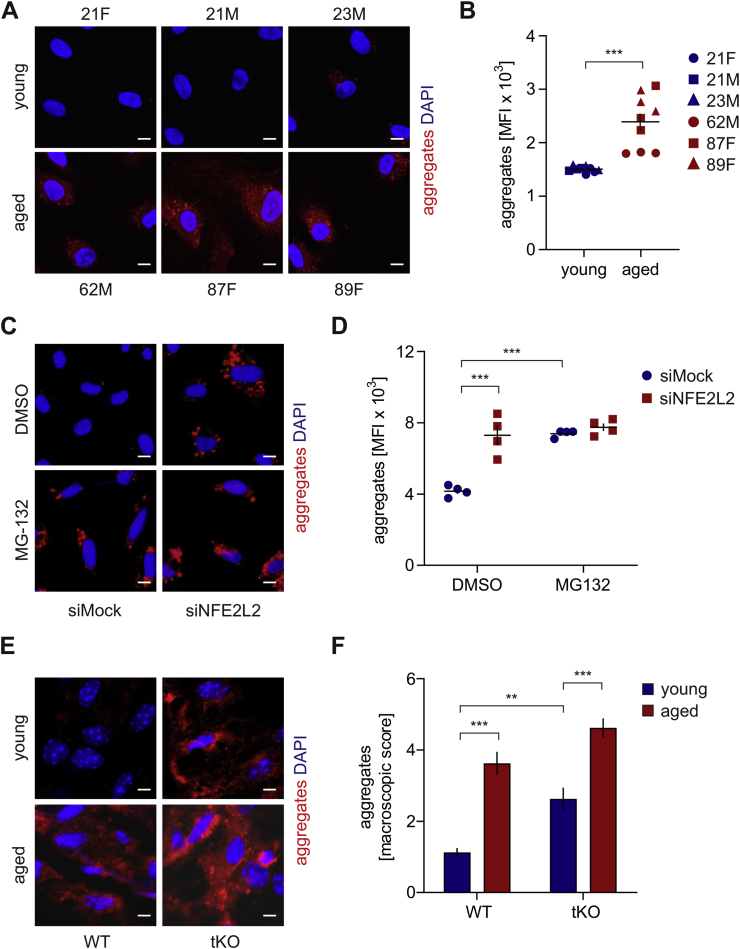
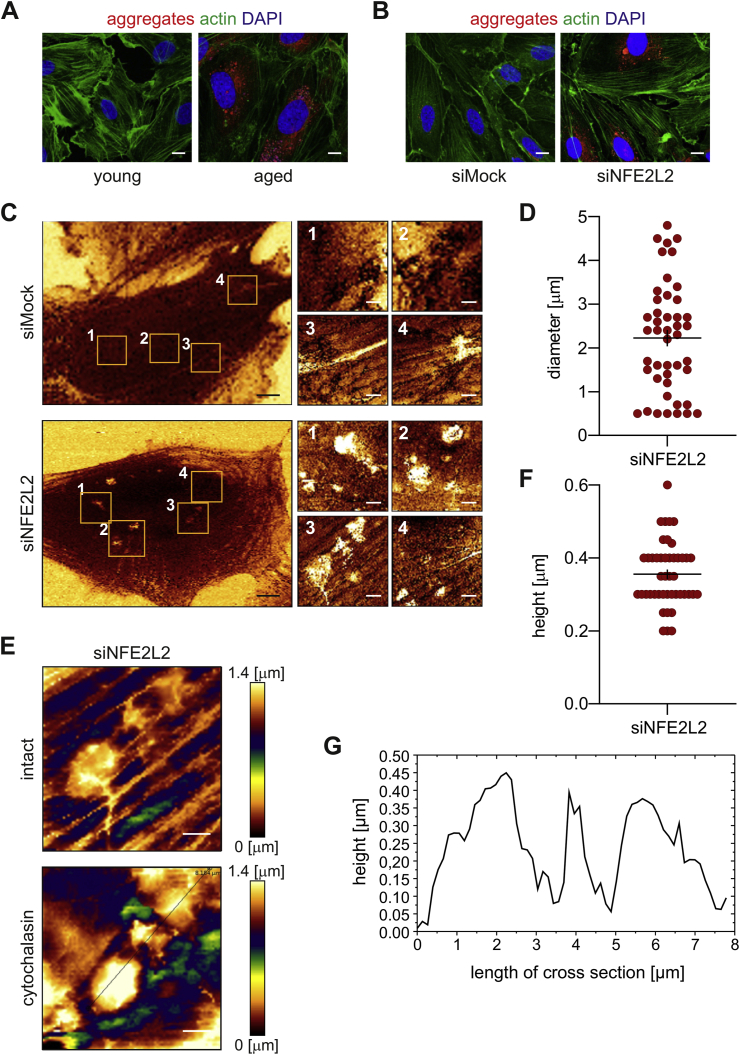
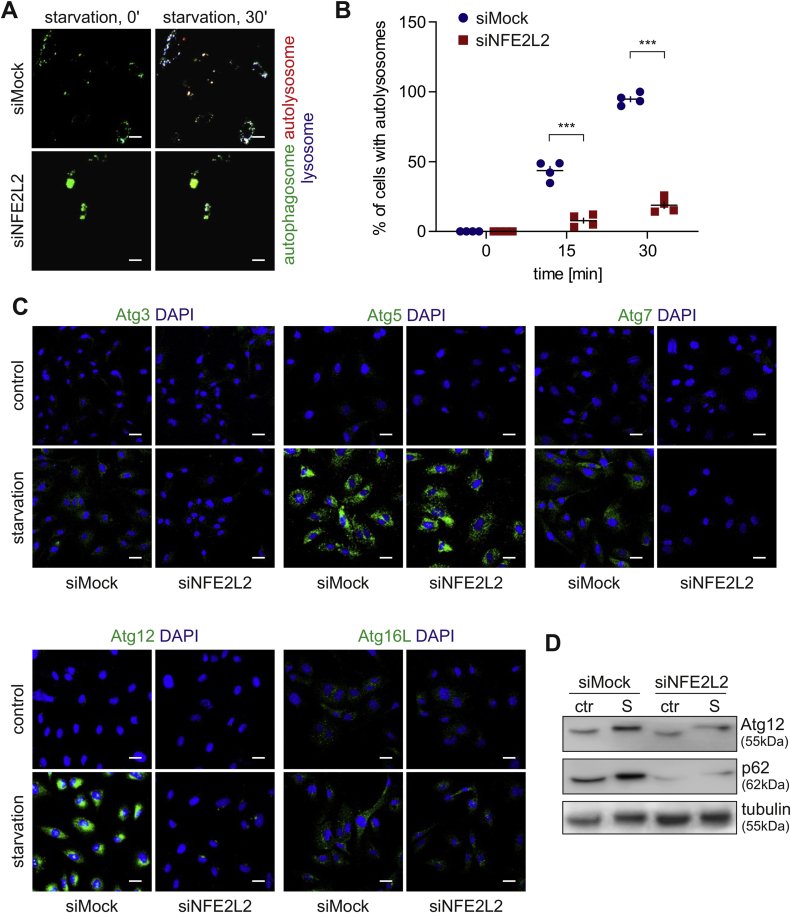
The breach of proteostasis, leading to the accumulation of protein aggregates, is a hallmark of ageing and age-associated disorders, up to now well-established in neurodegeneration. Few studies have addressed the issue of dysfunctional cell response to protein deposition also for the cardiovascular system. However, the molecular basis of proteostasis decline in vascular cells, as well as its relation to ageing, are not understood. Recent studies have indicated the associations of Nrf2 transcription factor, the critical modulator of cellular stress-response, with ageing and premature senescence. In this report, we outline the significance of protein aggregation in physiological and premature ageing of murine and human endothelial cells (ECs). Our study shows that aged donor-derived and prematurely senescent Nrf2-deficient primary human ECs, but not those overexpressing dominant-negative Nrf2, exhibit increased accumulation of protein aggregates. Such phenotype is also found in the aortas of aged mice and young Nrf2 tKO mice. Ageing-related loss of proteostasis in ECs depends on Keap1, well-known repressor of Nrf2, recently perceived as a key independent regulator of EC function and protein S-nitrosation (SNO). Deposition of protein aggregates in ECs is associated with impaired autophagy. It can be counteracted by Keap1 depletion, S-nitrosothiol reductant or rapamycin treatment. Our results show that Keap1:Nrf2 protein balance and Keap1-dependent SNO predominate Nrf2 transcriptional activity-driven mechanisms in governing proteostasis in ageing ECs.
蛋白质平衡的破坏导致蛋白质聚集体的积累,这是衰老和与年龄相关疾病的标志,这在神经退行性疾病中已经得到了很好的证实。很少有研究涉及到心血管系统中蛋白质沉积引起的细胞功能障碍反应问题。然而,血管细胞中蛋白质稳定性下降的分子基础及其与衰老的关系尚不清楚。最近的研究表明,Nrf2 转录因子与衰老和过早衰老有关,Nrf2 是细胞应激反应的关键调节剂。在本报告中,我们概述了蛋白质聚集在小鼠和人内皮细胞(ECs)的生理和过早衰老中的意义。我们的研究表明,来自老年供体的和过早衰老的 Nrf2 缺陷型原代人 ECs ,而不是那些过表达显性负性 Nrf2 的细胞,表现出蛋白质聚集体的积累增加。这种表型也存在于老年小鼠和年轻 Nrf2 tKO 小鼠的主动脉中。ECs 中与衰老相关的蛋白质稳定性丧失依赖于 Keap1 ,Keap1 是 Nrf2 的已知抑制剂,最近被认为是 EC 功能和蛋白质 S-亚硝基化(SNO)的关键独立调节剂。ECs 中蛋白质聚集体的沉积与自噬受损有关。可以通过 Keap1 耗竭、S-亚硝基硫醇还原剂或雷帕霉素处理来对抗。我们的结果表明,在衰老的 ECs 中,Keap1:Nrf2 蛋白平衡和 Keap1 依赖性 SNO 优先于 Nrf2 转录活性驱动的机制来调节蛋白质稳定性。