Dachtler James, Fox Kevin
Department of Psychology, Durham University, Durham, United Kingdom.
School of Biosciences, Cardiff University, Cardiff, United Kingdom.
J Neurosci Res. 2017 Jan 2;95(1-2):518-526. doi: 10.1002/jnr.23850.
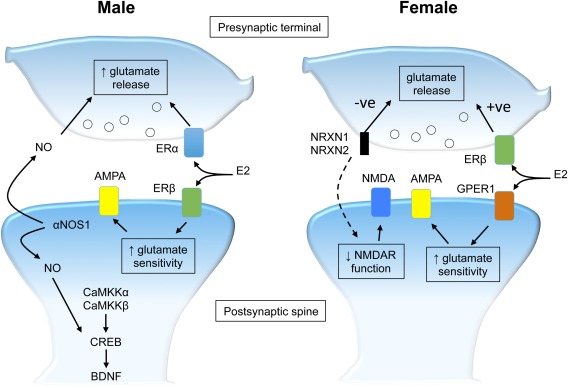
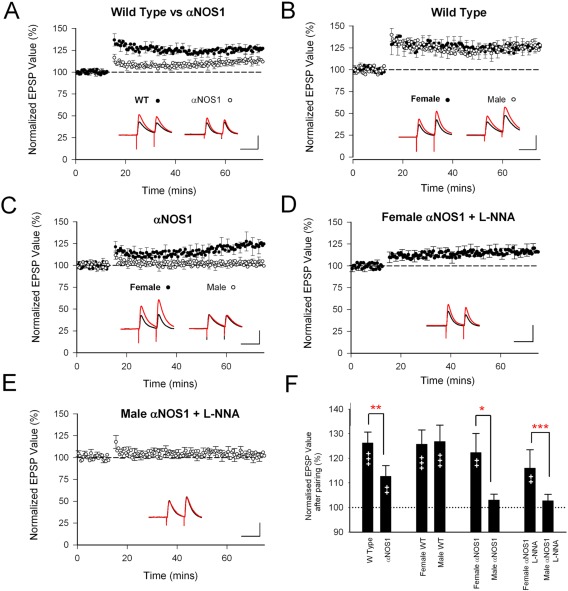
The difference between male and female behavior and male and female susceptibility to a number of neuropsychiatric conditions is not controversial. From a biological perspective, one might expect to see at least some of these differences underpinned by identifiable physical differences in the brain. This Mini-Review focuses on evidence that plasticity mechanisms differ between males and females and ask at what scale of organization the differences might exist, at the systems level, the circuits level, or the synaptic level. Emerging evidence suggests that plasticity differences may extend to the scale of synaptic mechanisms. In particular, the CaMKK, NOS1 and estrogen receptor pathways show sexual dimorphisms with implications for plasticity in the hippocampus and cerebral cortex. © 2016 The Authors. Journal of Neuroscience Research Published by Wiley Periodicals, Inc.
男性与女性的行为差异以及对多种神经精神疾病易感性的差异并无争议。从生物学角度来看,人们可能期望看到这些差异中至少有一些是由大脑中可识别的生理差异所支撑的。本综述聚焦于男性和女性之间可塑性机制存在差异的证据,并探讨这些差异可能存在于何种组织层面,是系统层面、回路层面还是突触层面。新出现的证据表明,可塑性差异可能延伸至突触机制层面。特别是,钙调蛋白依赖性蛋白激酶激酶(CaMKK)、一氧化氮合酶1(NOS1)和雌激素受体途径表现出性别二态性,这对海马体和大脑皮层的可塑性具有重要意义。© 2016作者。《神经科学研究杂志》由威利期刊公司出版。