Melloul Elise, Luiggi Stéphanie, Anaïs Leslie, Arné Pascal, Costa Jean-Marc, Fihman Vincent, Briard Benoit, Dannaoui Eric, Guillot Jacques, Decousser Jean-Winoc, Beauvais Anne, Botterel Françoise
EA 7380 Dynamyc, Université Paris Est Créteil, Ecole nationale vétérinaire de d'Alfort, IMRB, Créteil, France.
Ecole nationale vétérinaire de Maisons-Alfort, Maisons-Alfort, France.
PLoS One. 2016 Nov 21;11(11):e0166325. doi: 10.1371/journal.pone.0166325. eCollection 2016.
Biofilms are communal structures of microorganisms that have long been associated with a variety of persistent infections poorly responding to conventional antibiotic or antifungal therapy. Aspergillus fumigatus fungus and Stenotrophomonas maltophilia bacteria are examples of the microorganisms that can coexist to form a biofilm especially in the respiratory tract of immunocompromised patients or cystic fibrosis patients. The aim of the present study was to develop and assess an in vitro model of a mixed biofilm associating S. maltophilia and A. fumigatus by using analytical and quantitative approaches.
An A. fumigatus strain (ATCC 13073) expressing a Green Fluorescent Protein (GFP) and an S. maltophilia strain (ATCC 13637) were used. Fungal and bacterial inocula (105 conidia/mL and 106 cells/mL, respectively) were simultaneously deposited to initiate the development of an in vitro mixed biofilm on polystyrene supports at 37°C for 24 h. The structure of the biofilm was analysed via qualitative microscopic techniques like scanning electron and transmission electron microscopy, and fluorescence microscopy, and by quantitative techniques including qPCR and crystal violet staining.
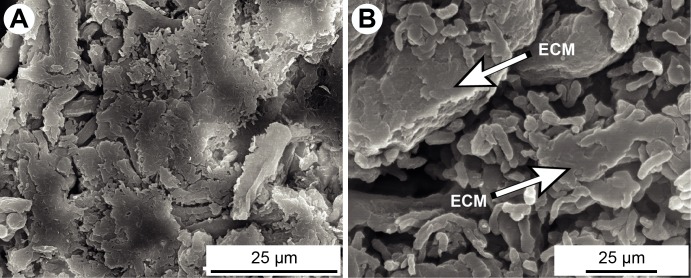
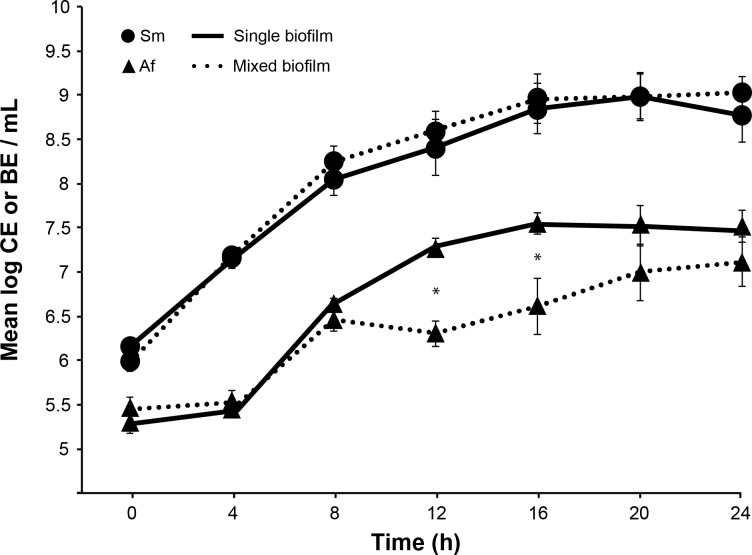
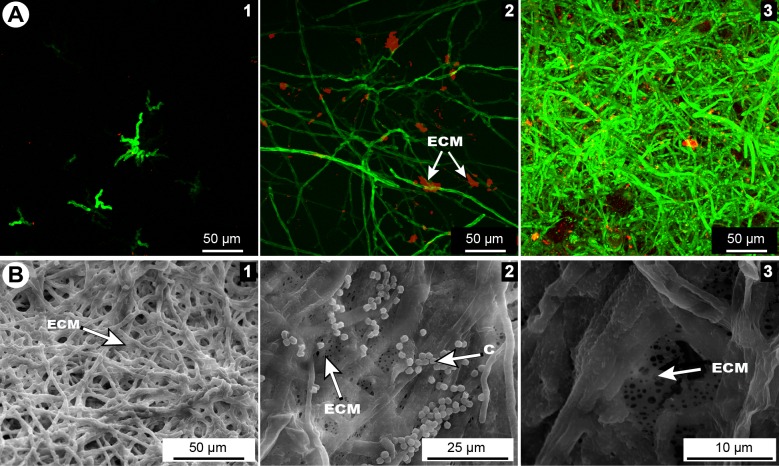
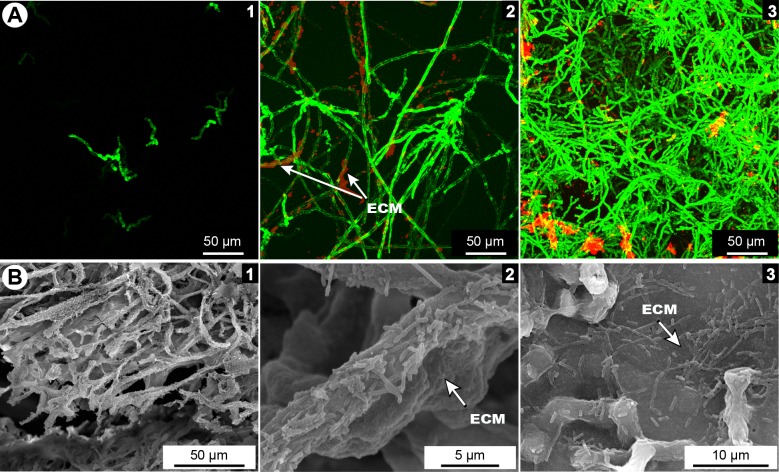
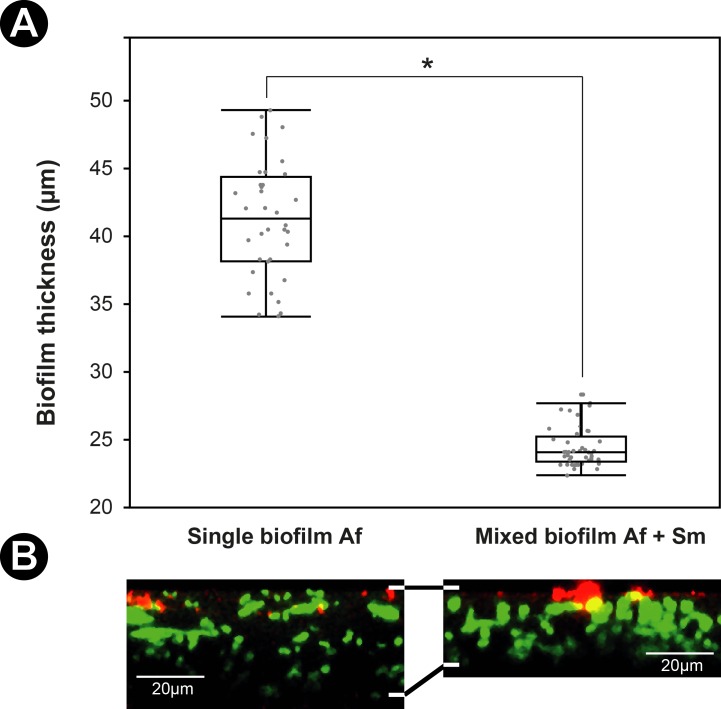
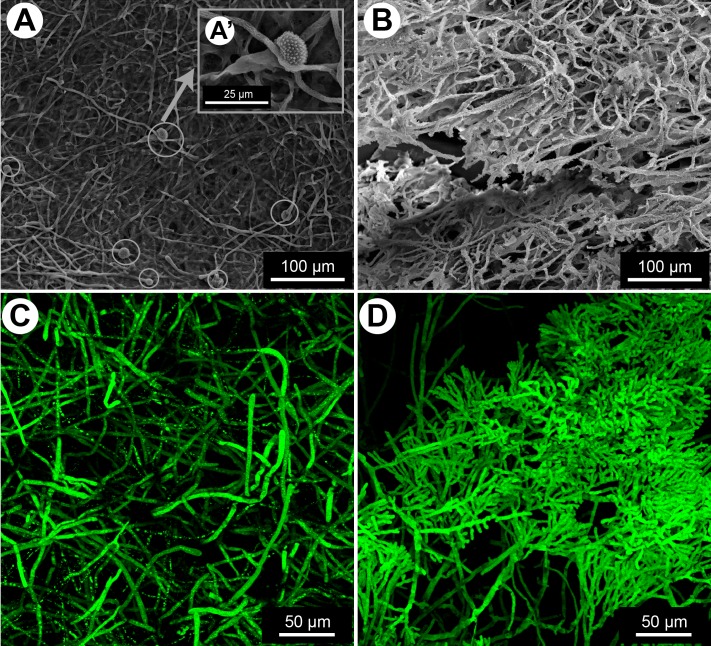
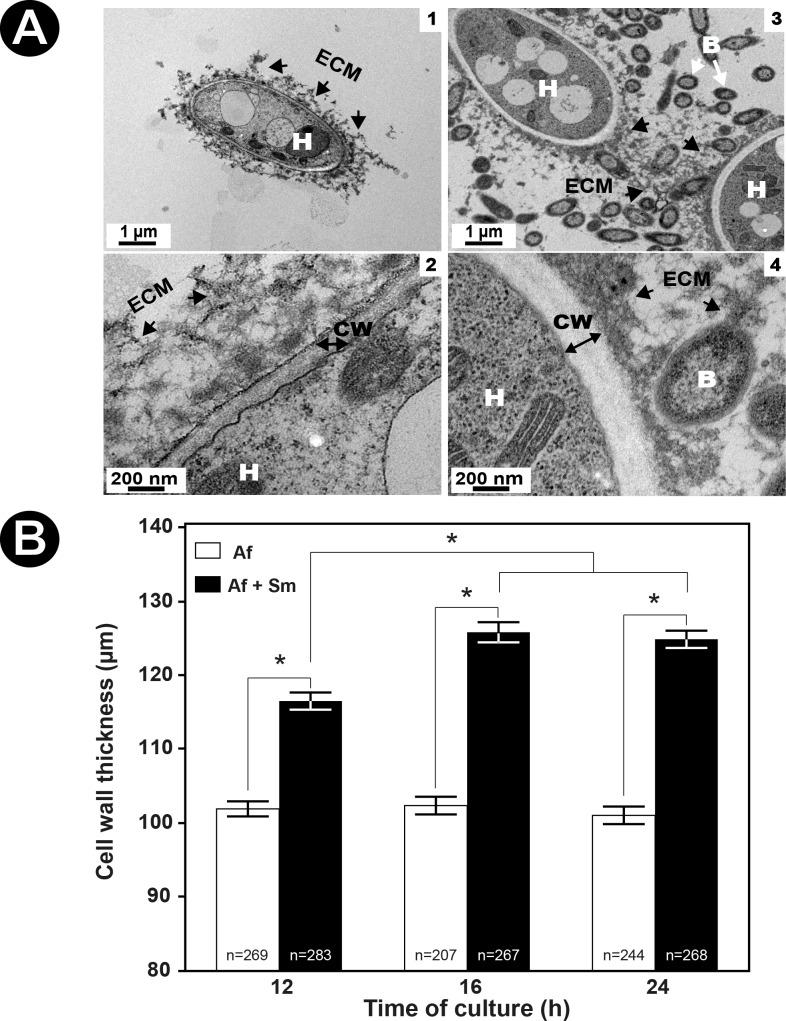
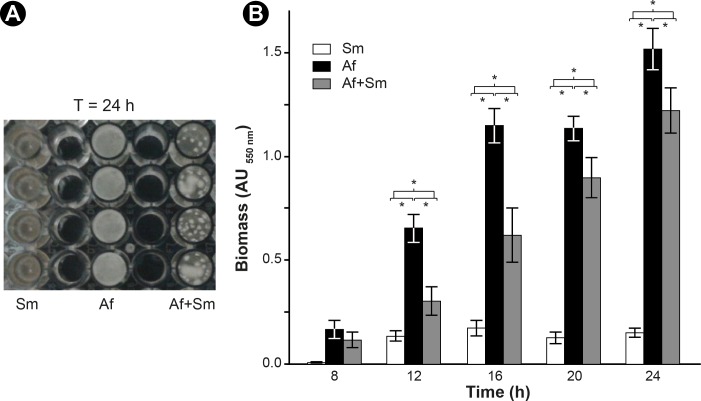
Analytic methods revealed typical structures of biofilm with production of an extracellular matrix (ECM) enclosing fungal hyphae and bacteria. Quantitative methods showed a decrease of A. fumigatus growth and ECM production in the mixed biofilm with antibiosis effect of the bacteria on the fungi seen as abortive hyphae, limited hyphal growth, fewer conidia, and thicker fungal cell walls.
For the first time, a mixed A. fumigatus-S. maltophilia biofilm was validated by various analytical and quantitative approaches and the bacterial antibiosis effect on the fungus was demonstrated. The mixed biofilm model is an interesting experimentation field to evaluate efficiency of antimicrobial agents and to analyse the interactions between the biofilm and the airways epithelium.
生物膜是微生物的群落结构,长期以来一直与多种对传统抗生素或抗真菌治疗反应不佳的持续性感染相关。烟曲霉和嗜麦芽窄食单胞菌就是这样的微生物,它们可以共存形成生物膜,尤其是在免疫功能低下患者或囊性纤维化患者的呼吸道中。本研究的目的是通过分析和定量方法建立并评估嗜麦芽窄食单胞菌和烟曲霉混合生物膜的体外模型。
使用一株表达绿色荧光蛋白(GFP)的烟曲霉菌株(ATCC 13073)和一株嗜麦芽窄食单胞菌菌株(ATCC 13637)。将真菌和细菌接种物(分别为10⁵个分生孢子/mL和10⁶个细胞/mL)同时接种,在37°C下于聚苯乙烯载体上启动体外混合生物膜的形成,持续24小时。通过扫描电子显微镜、透射电子显微镜和荧光显微镜等定性显微镜技术以及包括qPCR和结晶紫染色在内的定量技术分析生物膜的结构。
分析方法揭示了生物膜的典型结构,其产生包围真菌菌丝和细菌的细胞外基质(ECM)。定量方法显示,在混合生物膜中烟曲霉的生长和ECM产生减少,细菌对真菌的抗菌作用表现为菌丝发育异常、菌丝生长受限、分生孢子减少以及真菌细胞壁增厚。
首次通过多种分析和定量方法验证了烟曲霉 - 嗜麦芽窄食单胞菌混合生物膜,并证明了细菌对真菌的抗菌作用。混合生物膜模型是评估抗菌剂效率以及分析生物膜与气道上皮细胞之间相互作用的一个有趣的实验领域。