Ramírez Granillo Adrián, Canales María Gabriela Medina, Espíndola María Esther Sánchez, Martínez Rivera María Angeles, de Lucio Victor Manuel Bautista, Tovar Aída Verónica Rodríguez
Laboratorio de Micología Médica, Depto. de Microbiología, Escuela Nacional de Ciencias Biológicas (ENCB), Instituto Politécnico Nacional (IPN). Carpio y Plan de Ayala s/n, Col. Casco de Santo Tomás, Del. Miguel Hidalgo, 11340, Mexico City, Mexico.
Unidad de Microscopía ENCB, IPN, 11340, Mexico City, Mexico.
BMC Microbiol. 2015 Feb 15;15:33. doi: 10.1186/s12866-015-0363-2.
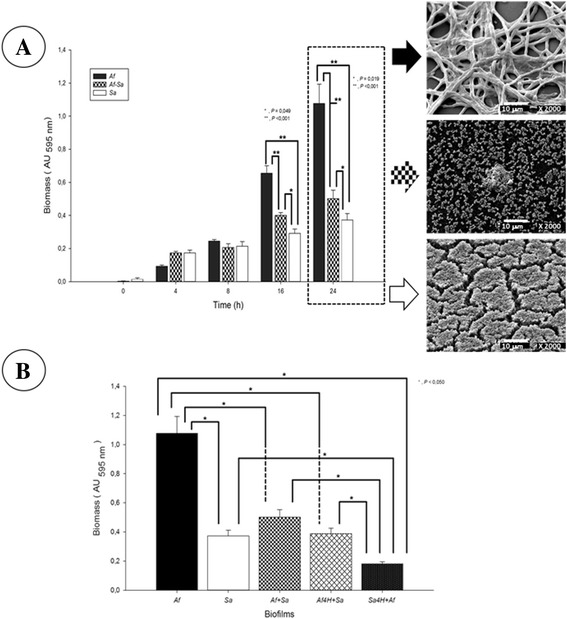
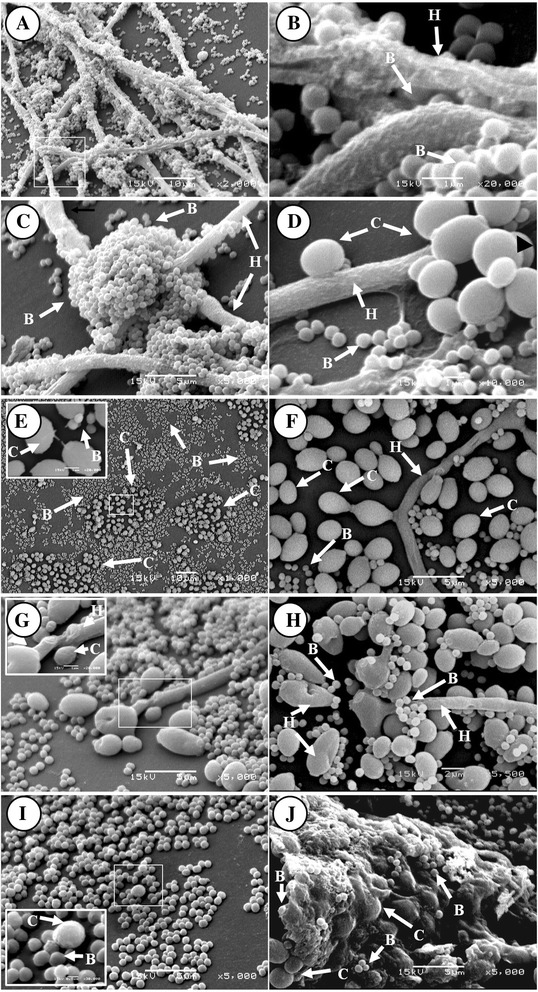
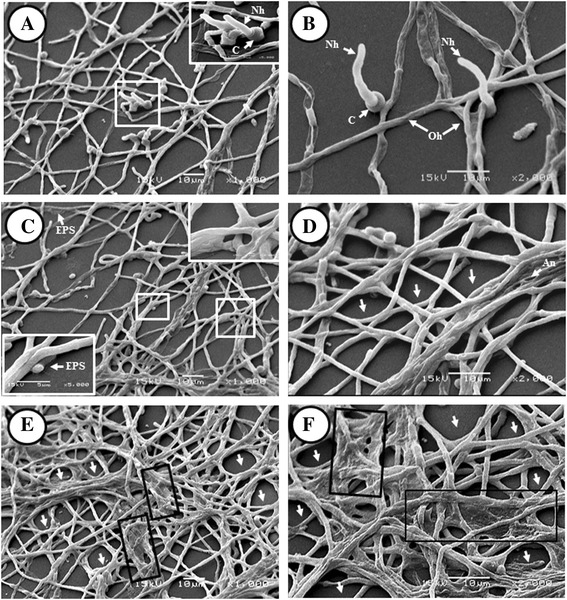
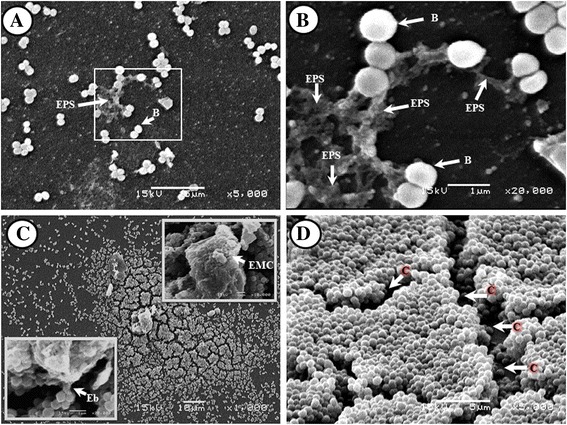
Microorganisms of different species interact in several ecological niches, even causing infection. During the infectious process, a biofilm of single or multispecies can develop. Aspergillus fumigatus and Staphyloccocus aureus are etiologic agents that can cause infectious keratitis. We analyzed in vitro single A. fumigatus and S. aureus, and mixed A. fumigatus-S. aureus biofilms. Both isolates were from patients with infectious keratitis. Structure of the biofilms was analyzed through microscopic techniques including scanning electron microscopy (SEM), transmission electron microscopy (TEM), confocal, and fluorescence microscopy (CLSM) in mixed biofilm as compared with the single A. fumigatus biofilm.
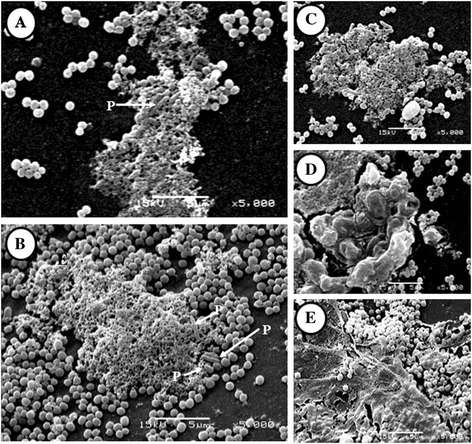
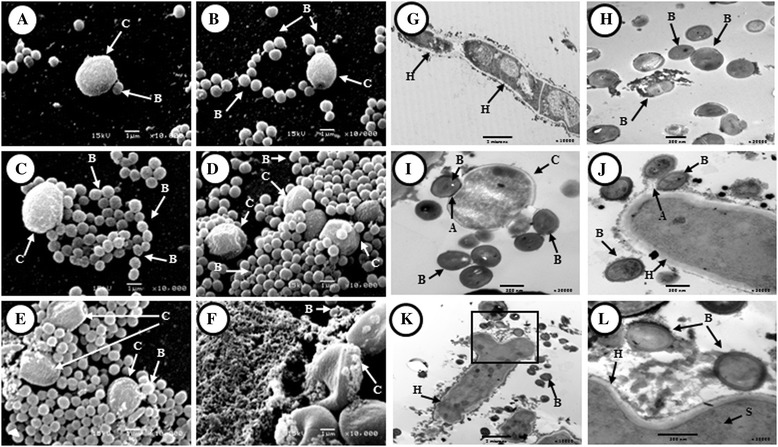
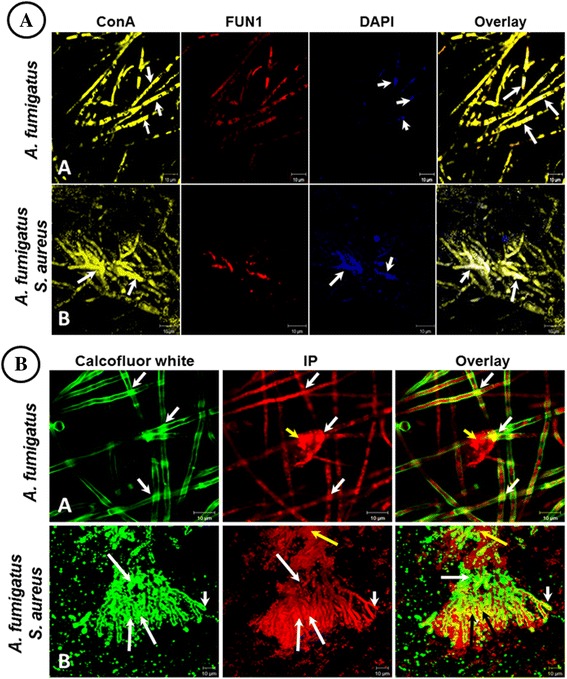
To our knowledge, this is the first time that the structural characteristics of the mixed biofilm A. fumigatus-A. fumigatus were described and shown. S. aureus sharply inhibited the development of biofilm formed by A. fumigatus, regardless of the stage of biofilm formation and bacterial inoculum. Antibiosis effect of bacterium on fungus was as follows: scarce production of A. fumigatus biofilm; disorganized fungal structures; abortive hyphae; and limited hyphal growth; while conidia also were scarce, have modifications in their surface and presented lyses. Antagonist effect did not depend on bacterial concentration, which could probably be due to cell-cell contact interactions and release of bacterial products. In addition, we present images about the co-localization of polysaccharides (glucans, mannans, and chitin), and DNA that form the extracellular matrix (ECM). In contrast, single biofilms showed extremely organized structures: A. fumigatus showed abundant hyphal growth, hyphal anastomosis, and channels, as well as some conidia, and ECM. S. aureus showed microcolonies and cell-to-cell bridges and ECM.
Herein we described the antibiosis relationship of S. aureus against A. fumigatus during in vitro biofilm formation, and report the composition of the ECM formed.
不同物种的微生物在多个生态位中相互作用,甚至会引发感染。在感染过程中,可能会形成单物种或多物种生物膜。烟曲霉和金黄色葡萄球菌是可导致感染性角膜炎的病原体。我们对体外培养的单种烟曲霉和金黄色葡萄球菌以及烟曲霉 - 金黄色葡萄球菌混合生物膜进行了分析。这两种分离株均来自感染性角膜炎患者。通过显微镜技术,包括扫描电子显微镜(SEM)、透射电子显微镜(TEM)、共聚焦显微镜和荧光显微镜(CLSM),对混合生物膜的结构进行分析,并与单种烟曲霉生物膜进行比较。
据我们所知,这是首次描述并展示烟曲霉 - 金黄色葡萄球菌混合生物膜的结构特征。金黄色葡萄球菌显著抑制了烟曲霉形成生物膜,无论生物膜形成阶段和细菌接种量如何。细菌对真菌的抗菌作用如下:烟曲霉生物膜产生稀少;真菌结构紊乱;菌丝发育异常;菌丝生长受限;同时分生孢子也稀少,其表面有改变并出现溶解。拮抗作用不依赖于细菌浓度,这可能是由于细胞间接触相互作用和细菌产物的释放。此外,我们展示了构成细胞外基质(ECM)的多糖(葡聚糖、甘露聚糖和几丁质)和DNA共定位的图像。相比之下,单种生物膜显示出极其有序的结构:烟曲霉显示出丰富的菌丝生长、菌丝吻合和通道,以及一些分生孢子和ECM。金黄色葡萄球菌显示出微菌落、细胞间桥和ECM。
在此我们描述了体外生物膜形成过程中金黄色葡萄球菌对烟曲霉的抗菌关系,并报告了所形成的ECM的组成。