Chandrasekaran Akshaya, Idelchik Maria Del Pilar Sosa, Melendez J Andrés
SUNY Polytechnic Institute, Colleges of Nanoscale Science and Engineering, 257 Fuller Road, Albany, NY 12203, USA.
SUNY Polytechnic Institute, Colleges of Nanoscale Science and Engineering, 257 Fuller Road, Albany, NY 12203, USA.
Redox Biol. 2017 Apr;11:91-102. doi: 10.1016/j.redox.2016.11.005. Epub 2016 Nov 16.
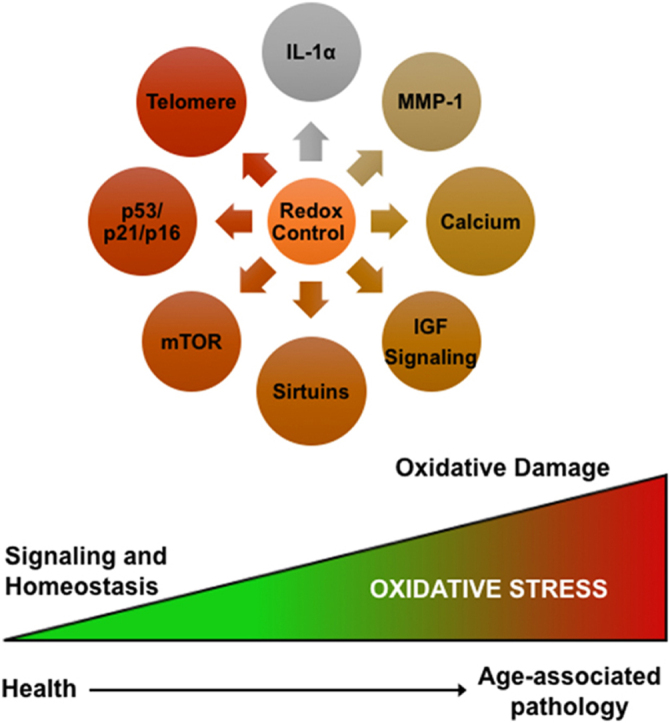
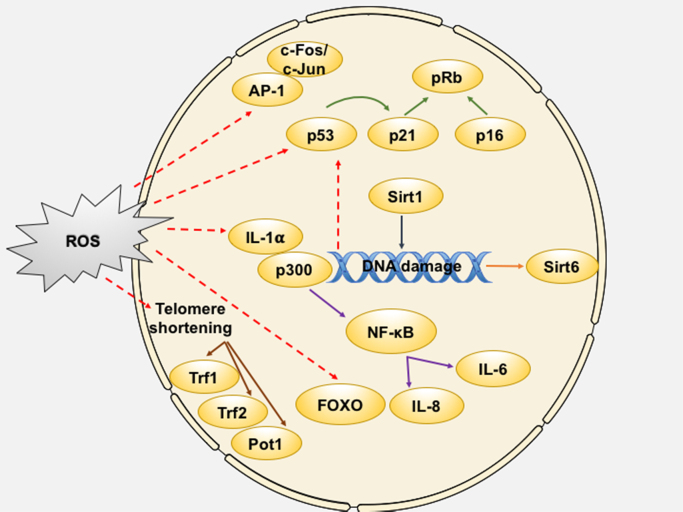
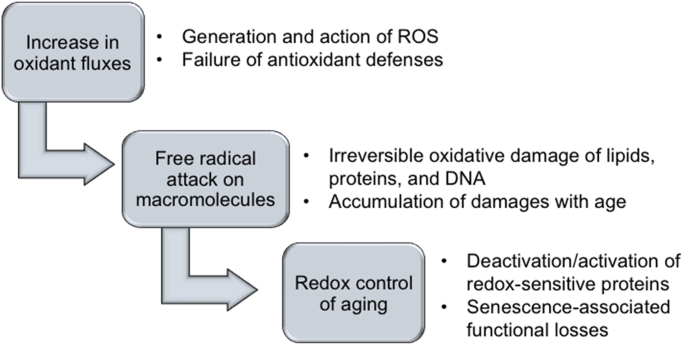
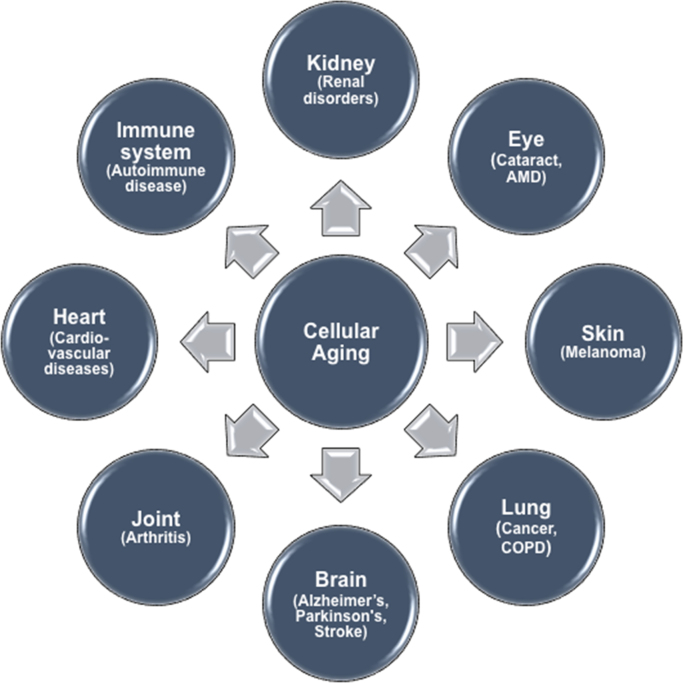
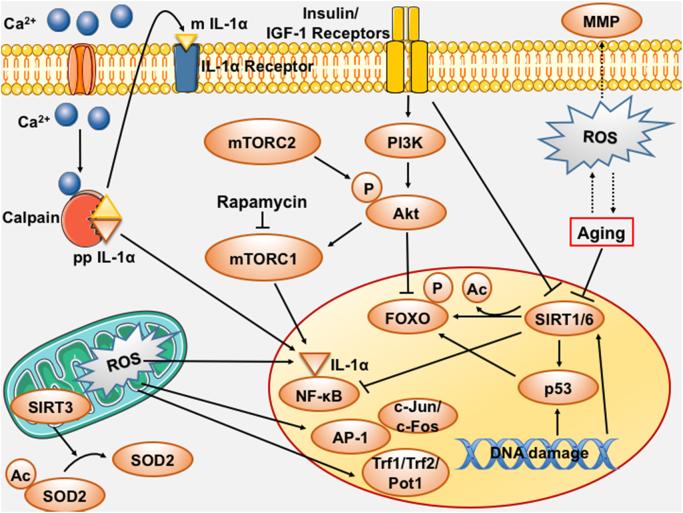
The signaling networks that drive the aging process, associated functional deterioration, and pathologies has captured the scientific community's attention for decades. While many theories exist to explain the aging process, the production of reactive oxygen species (ROS) provides a signaling link between engagement of cellular senescence and several age-associated pathologies. Cellular senescence has evolved to restrict tumor progression but the accompanying senescence-associated secretory phenotype (SASP) promotes pathogenic pathways. Here, we review known biological theories of aging and how ROS mechanistically control senescence and the aging process. We also describe the redox-regulated signaling networks controlling the SASP and its important role in driving age-related diseases. Finally, we discuss progress in designing therapeutic strategies that manipulate the cellular redox environment to restrict age-associated pathology.
驱动衰老过程、相关功能衰退和病理状况的信号网络数十年来一直吸引着科学界的关注。虽然存在许多理论来解释衰老过程,但活性氧(ROS)的产生在细胞衰老的发生与几种与年龄相关的病理状况之间提供了一个信号联系。细胞衰老的进化是为了限制肿瘤进展,但随之而来的衰老相关分泌表型(SASP)会促进致病途径。在这里,我们回顾了已知的衰老生物学理论,以及ROS如何从机制上控制衰老和衰老过程。我们还描述了控制SASP的氧化还原调节信号网络及其在引发与年龄相关疾病中的重要作用。最后,我们讨论了在设计操纵细胞氧化还原环境以限制与年龄相关病理状况的治疗策略方面所取得的进展。