Hoppeler Hans
Department of Anatomy, University of Bern Bern, Switzerland.
Front Physiol. 2016 Nov 16;7:483. doi: 10.3389/fphys.2016.00483. eCollection 2016.
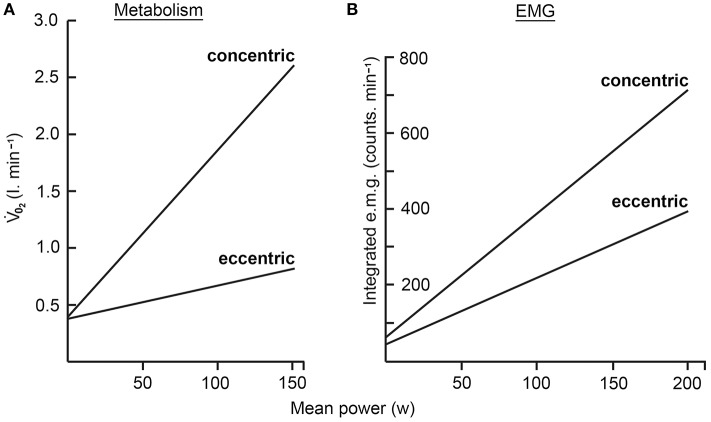
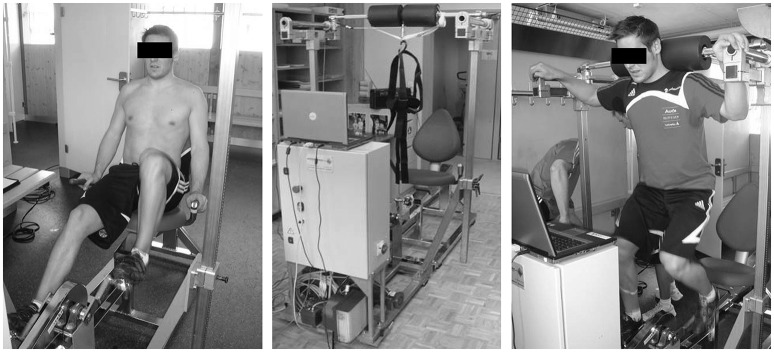
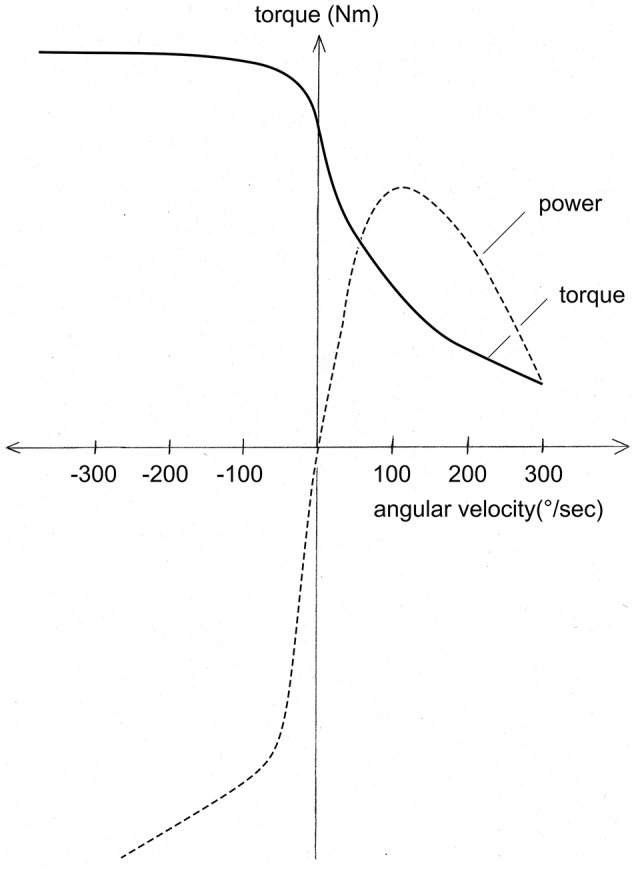
Over the last 20 years a number of studies have been published using progressive eccentric exercise protocols on motorized ergometers or similar devices that allow for controlled application of eccentric loads. Exercise protocols ramp eccentric loads over an initial 3 weeks period in order to prevent muscle damage and delayed onset muscle soreness. Final training loads reach 400-500 W in rehabilitative settings and over 1200 W in elite athletes. Training is typically carried out three times per week for durations of 20-30 min. This type of training has been characterizes as moderate load eccentric exercise. It has also been denoted RENEW (Resistance Exercise via Negative Eccentric Work by LaStayo et al., 2014). It is distinct from plyometric exercises (i.e., drop jumps) that impose muscle loads of several thousand Watts on muscles and tendons. It is also distinct from eccentric overload training whereby loads in a conventional strength training setting are increased in the eccentric phase of the movement to match concentric loads. Moderate load eccentric exercise (or RENEW) has been shown to be similarly effective as conventional strength training in increasing muscle strength and muscle volume. However, as carried out at higher angular velocities of joint movement, it reduces joint loads. A hallmark of moderate load eccentric exercise is the fact that the energy requirements are typically 4-fold smaller than in concentric exercise of the same load. This makes moderate load eccentric exercise training the tool of choice in medical conditions with limitations in muscle energy supply. The use and effectiveness of moderate load eccentric exercise has been demonstrated mostly in small scale studies for cardiorespiratory conditions, sarcopenia of old age, cancer, diabetes type 2, and neurological conditions. It has also been used effectively in the prevention and rehabilitation of injuries of the locomotor system in particular the rehabilitation after anterior cruciate ligament surgery.
在过去20年里,已经发表了许多研究,这些研究在电动测力计或类似设备上采用渐进式离心运动方案,这些设备能够控制离心负荷的施加。运动方案在最初3周内逐渐增加离心负荷,以防止肌肉损伤和延迟性肌肉酸痛。在康复环境中,最终训练负荷达到400 - 500瓦,在精英运动员中超过1200瓦。训练通常每周进行三次,每次持续20 - 30分钟。这种训练类型被描述为中等负荷离心运动。它也被命名为RENEW(由LaStayo等人于2014年提出的通过负向离心工作进行的抗阻运动)。它不同于对肌肉和肌腱施加数千瓦肌肉负荷的增强式运动(即跳深)。它也不同于离心超负荷训练,在传统力量训练环境中,离心超负荷训练是在运动的离心阶段增加负荷以匹配向心负荷。中等负荷离心运动(或RENEW)在增加肌肉力量和肌肉体积方面已被证明与传统力量训练同样有效。然而,由于在更高的关节运动角速度下进行,它会降低关节负荷。中等负荷离心运动的一个特点是,其能量需求通常比相同负荷的向心运动小4倍。这使得中等负荷离心运动训练成为肌肉能量供应受限的医疗状况下的首选工具。中等负荷离心运动的使用和效果大多在针对心肺疾病、老年肌肉减少症、癌症、2型糖尿病和神经疾病的小规模研究中得到了证实。它也已有效地用于运动系统损伤的预防和康复,特别是前交叉韧带手术后的康复。