Abarca-Vargas Rodolfo, Peña Malacara Carlos F, Petricevich Vera L
Facultad de Medicina, Universidad Autónoma del Estado de Morelos (UAEM), Calle Leñeros, Esquina Iztaccíhuatl s/n, Cuernavaca, Morelos, C.P. 62350, Mexico.
Departamento de Ingeniería Celular y Biocatálisis, Instituto de Biotecnología, Universidad Nacional Autónoma de México, Cuernavaca, Morelos, C.P. 62250, Mexico.
Antioxidants (Basel). 2016 Dec 2;5(4):45. doi: 10.3390/antiox5040045.
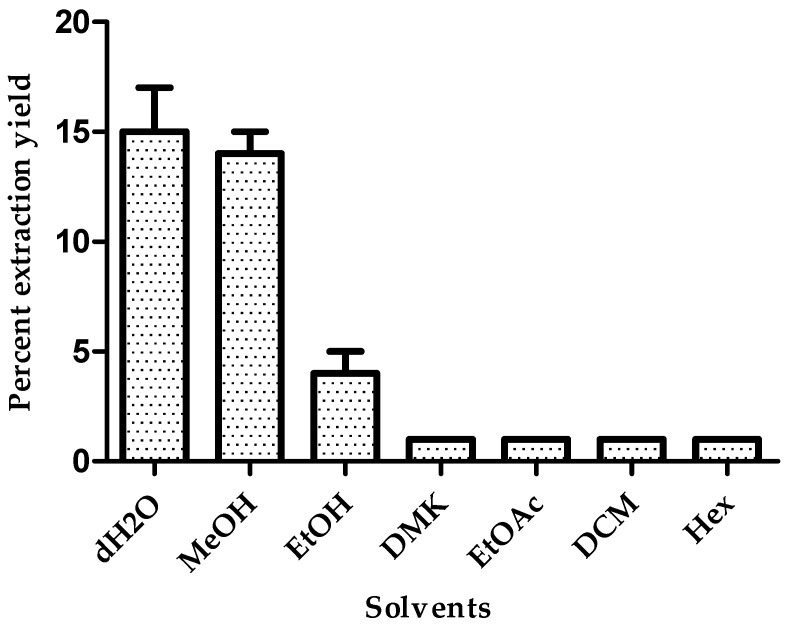
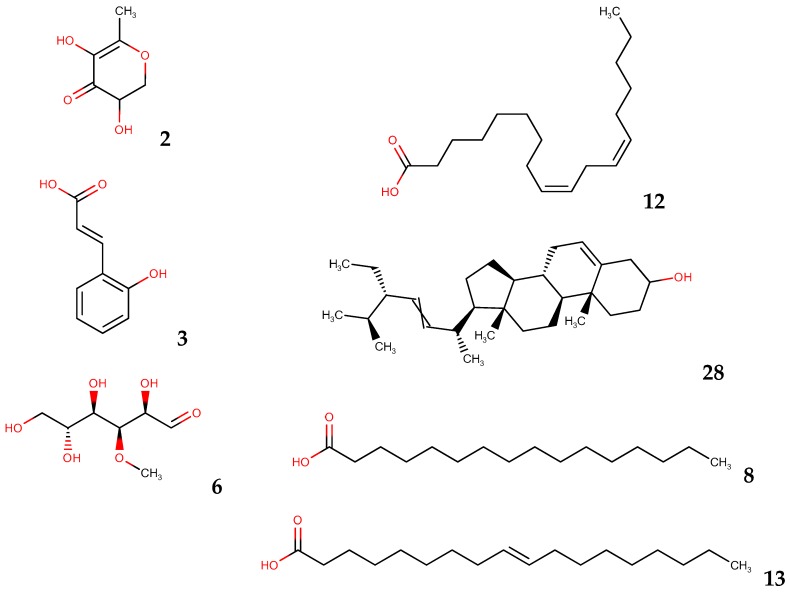
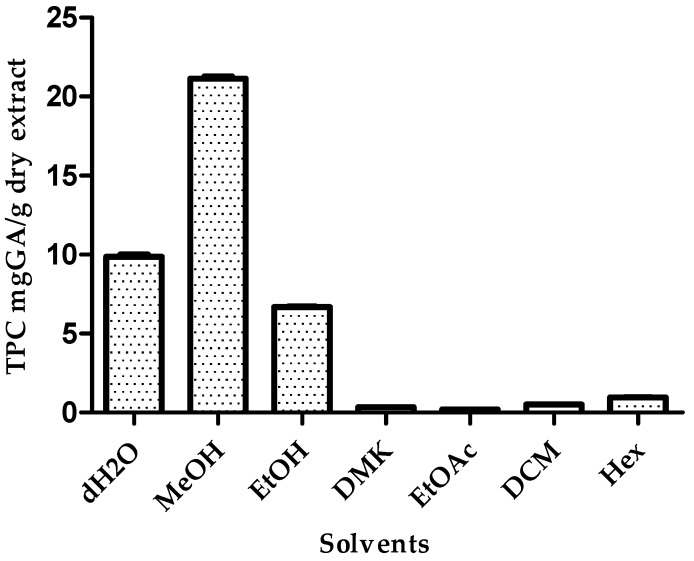
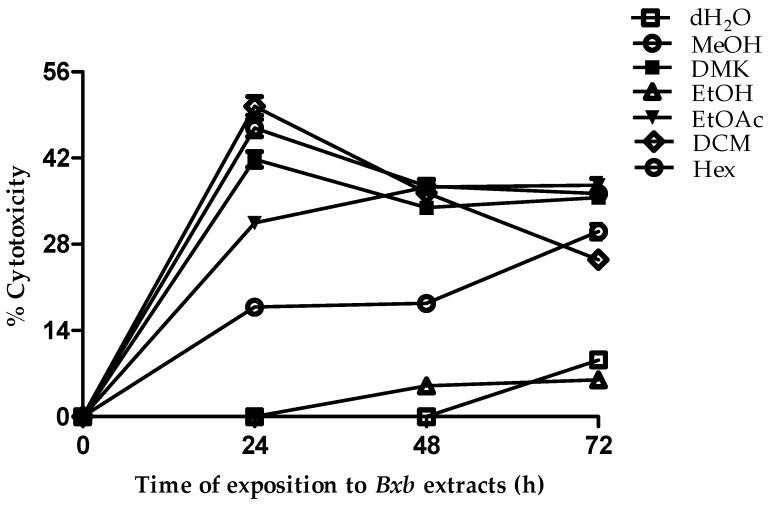
is widely used in traditional Mexican medicine to treat several diseases. This study was designed to characterize the chemical constituents of extracts with antioxidant and cytotoxic activities using different solvents. The extraction solvents used were as follows: distilled water (dH₂O), methanol (MeOH), acetone (DMK), ethanol (EtOH), ethyl acetate (EtOAc), dichloromethane (DCM), and hexane (Hex) (100%) at an extraction temperature of 26 °C. Analysis of bioactive compounds present in the extracts included the application of common phytochemical screening assays, GC-MS analysis, and cytotoxicity and antioxidant assays. The results show that the highest extraction yield was observed with water and methanol. The maximum total phenolic content amount and highest antioxidant potential were obtained when extraction with methanol was used. With the exceptions of water and ethanol extractions, all other extracts showed cytotoxicity ranging between 31% and 50%. The prevailing compounds in water, methanol, ethanol, and acetone solvents were as follows: 4H-pyran-4-one, 2,3-dihydro-3, 5-dihydroxy-6-methyl (2), 2-propenoic acid, 3-(2-hydrophenyl)-(E)- (3), and 3--methyl-d-glucose (6). By contrast, the major components in the experiments using solvents such as EtOH, DMK, EtOAc, DCM, and Hex were n-hexadecanoic acid (8), 9,12-octadecadienoic acid (Z,Z) (12); 9-octadecenoic acid (E)- (13), and stigmasta-5,22-dien-3-ol (28).
它在墨西哥传统医学中被广泛用于治疗多种疾病。本研究旨在表征使用不同溶剂提取的具有抗氧化和细胞毒性活性的提取物的化学成分。所使用的提取溶剂如下:蒸馏水(dH₂O)、甲醇(MeOH)、丙酮(DMK)、乙醇(EtOH)、乙酸乙酯(EtOAc)、二氯甲烷(DCM)和己烷(Hex)(100%),提取温度为26°C。对提取物中存在的生物活性化合物的分析包括应用常见的植物化学筛选试验、气相色谱-质谱联用(GC-MS)分析以及细胞毒性和抗氧化试验。结果表明,用水和甲醇提取时观察到最高的提取率。使用甲醇提取时获得了最大的总酚含量和最高的抗氧化潜力。除水和乙醇提取物外,所有其他提取物的细胞毒性在31%至50%之间。水、甲醇、乙醇和丙酮溶剂中的主要化合物如下:4H-吡喃-4-酮,2,3-二氢-3,5-二羟基-6-甲基(2),2-丙烯酸,3-(2-羟基苯基)-(E)-(3),以及3-O-甲基-D-葡萄糖(6)。相比之下,使用乙醇、丙酮、乙酸乙酯、二氯甲烷和己烷等溶剂的实验中的主要成分是正十六烷酸(8)、9,12-十八碳二烯酸(Z,Z)(12);9-十八碳烯酸(E)-(13),以及豆甾-5,22-二烯-3-醇(28)。