Selestino Neta Maria Cipriano, Vittorazzi Catia, Guimarães Aline Cristina, Martins João Damasceno Lopes, Fronza Marcio, Endringer Denise Coutinho, Scherer Rodrigo
a Department of Pharmacy , Post-Graduated Program of Pharmaceutical Sciences University Vila Velha , Espírito Santo , Brazil.
Pharm Biol. 2017 Dec;55(1):190-197. doi: 10.1080/13880209.2016.1254251.
Orange Jessamine [Murraya paniculata L. (Rutaceae)] has been used worldwide in folk medicine as an anti-inflammatory, antibiotic and analgesic.
The objective of this study is to investigate the in vitro antioxidant, cytotoxic, antibacterial and antifungal activity and the time-kill curve studies of orange jessamine essential oil and β-caryophyllene, as well as the chemical composition of the essential oil.
The cytotoxic activity of M. paniculata and β-caryophyllene (7.8-500 μg/mL) was evaluated using the MTT assay on normal fibroblasts and hepatoma cells. The minimal inhibitory concentration and time-kill curves (24 h) were evaluated against those of Staphylococcus aureus, Escherichia coli, Salmonella typhimurium, Enterococcus faecallis, Aspergillus (niger, fumigates and parasiticum) and F. solani by the broth microdilution method. The antioxidant activity was measured by the DPPH and ABTS assays. Chemical composition was evaluated by GC/MS analyses.
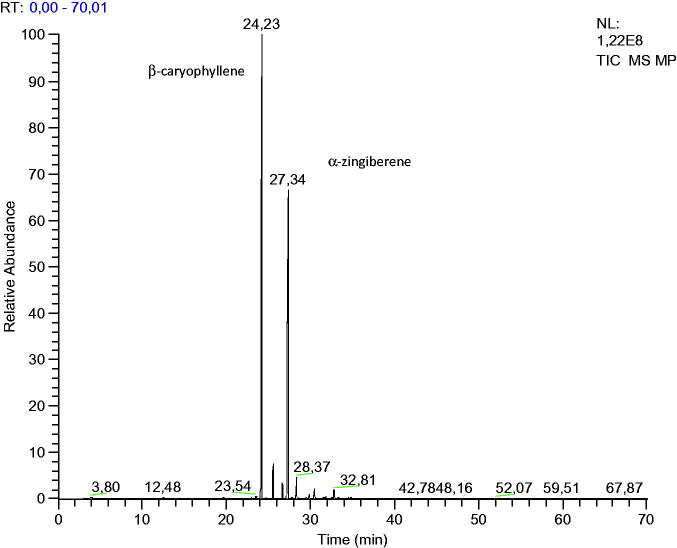
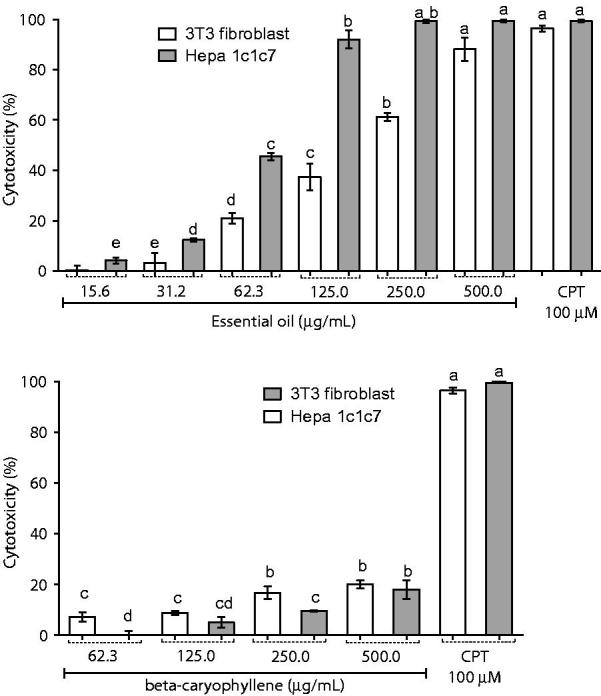
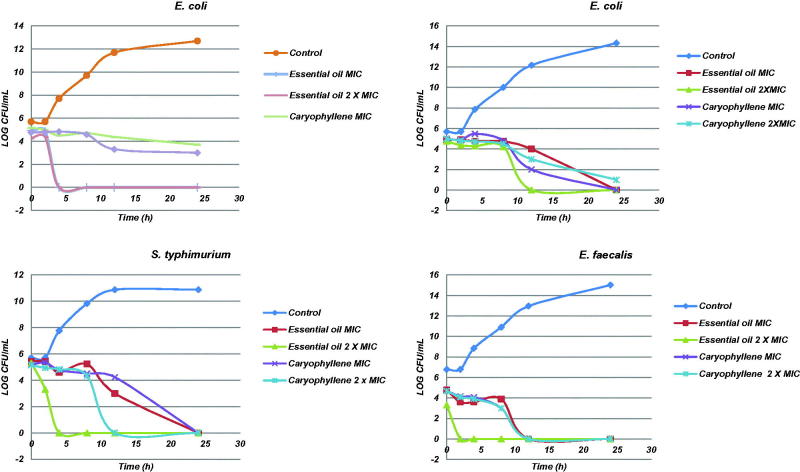
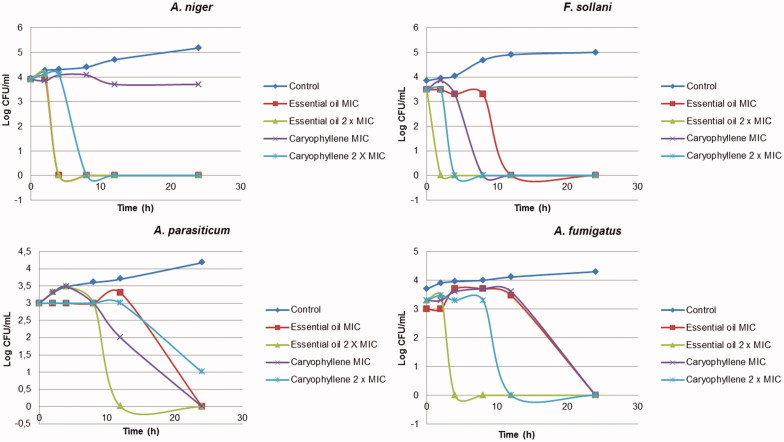
GC/MS analyses identified 13 compounds, with β-caryophyllene as the major compound. The oil exhibited moderate antibacterial activity (MIC <1.0 mg/mL) and strong antifungal activity. Time-kill curve studies showed that either the essential oil or β-caryophyllene presented rapid bacterial killing (4 h for S. aureus) and fungicidal effect (2-4 h for F. solani); however, both displayed weak free radical scavenger capacity. The cytotoxic activity exhibited a prominent selective effect against hepatoma cancer cells (IC value =63.7 μg/mL) compared with normal fibroblasts (IC value =195.0 μg/mL), whereas the β-caryophyllene showed low cytotoxicity.
The experimental data suggest that the activities of M. paniculata essential oil are due to the synergistic action among its components.
九里香[Murraya paniculata L.(芸香科)]在世界各地的民间医学中被用作抗炎、抗菌和止痛药物。
本研究旨在调查九里香精油和β-石竹烯的体外抗氧化、细胞毒性、抗菌和抗真菌活性以及时间-杀菌曲线研究,以及精油的化学成分。
使用MTT法在正常成纤维细胞和肝癌细胞上评估九里香和β-石竹烯(7.8-500μg/mL)的细胞毒性活性。通过肉汤微量稀释法评估对金黄色葡萄球菌、大肠杆菌、鼠伤寒沙门氏菌、粪肠球菌、曲霉(黑曲霉、烟曲霉和寄生曲霉)和茄病镰刀菌的最低抑菌浓度和时间-杀菌曲线(24小时)。通过DPPH和ABTS测定法测量抗氧化活性。通过GC/MS分析评估化学成分。
GC/MS分析鉴定出13种化合物,其中β-石竹烯为主要化合物。该精油表现出中等抗菌活性(MIC<1.0mg/mL)和较强抗真菌活性。时间-杀菌曲线研究表明,精油或β-石竹烯均呈现快速杀菌(对金黄色葡萄球菌4小时)和杀真菌作用(对茄病镰刀菌2-4小时);然而,两者均表现出较弱的自由基清除能力。与正常成纤维细胞(IC值=195.0μg/mL)相比,细胞毒性活性对肝癌细胞表现出显著的选择性作用(IC值=63.7μg/mL),而β-石竹烯表现出低细胞毒性。
实验数据表明,九里香精油的活性归因于其成分之间的协同作用。